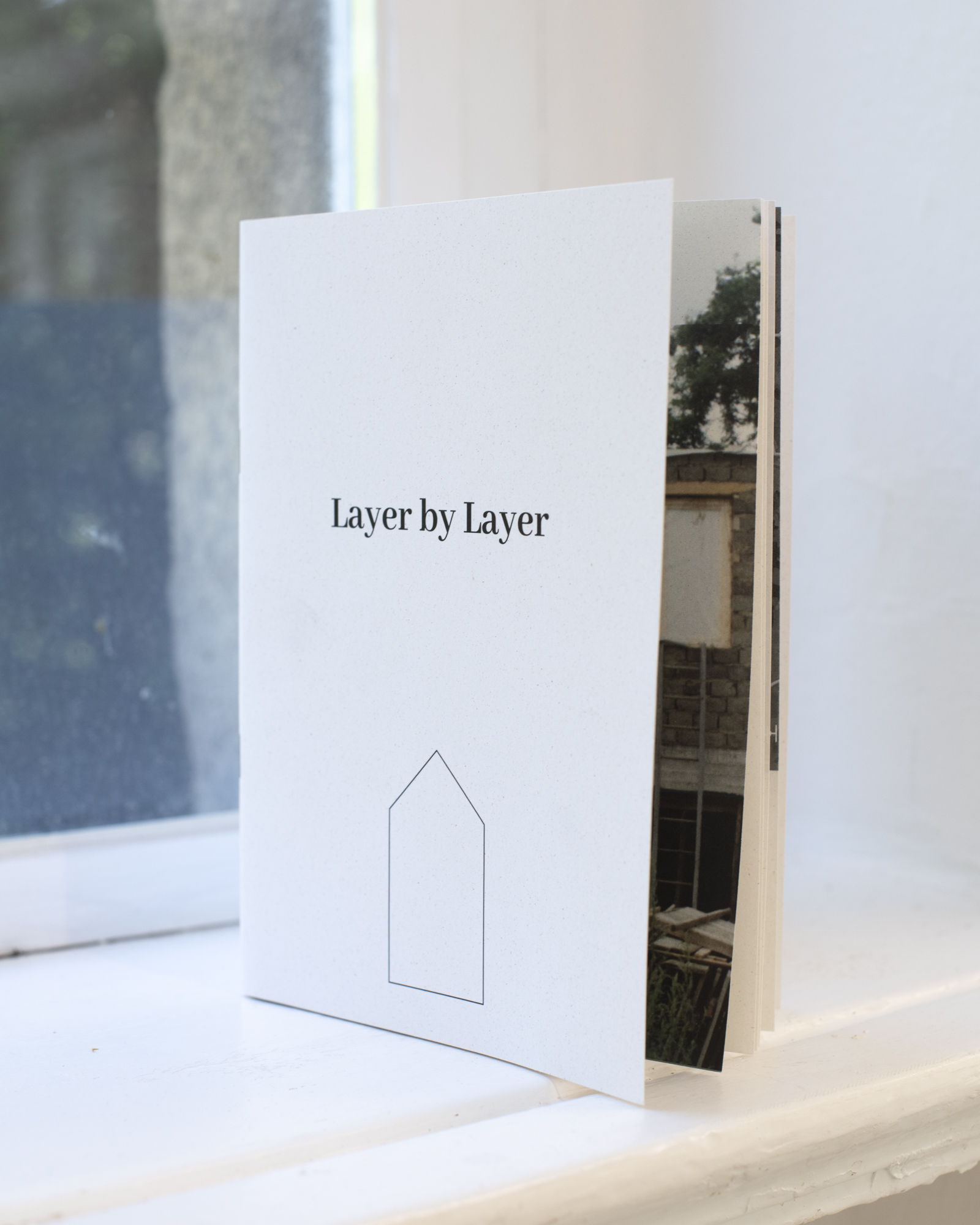
Layer by Layer
2025
wood, enamel, soil, polymer clay
variable size
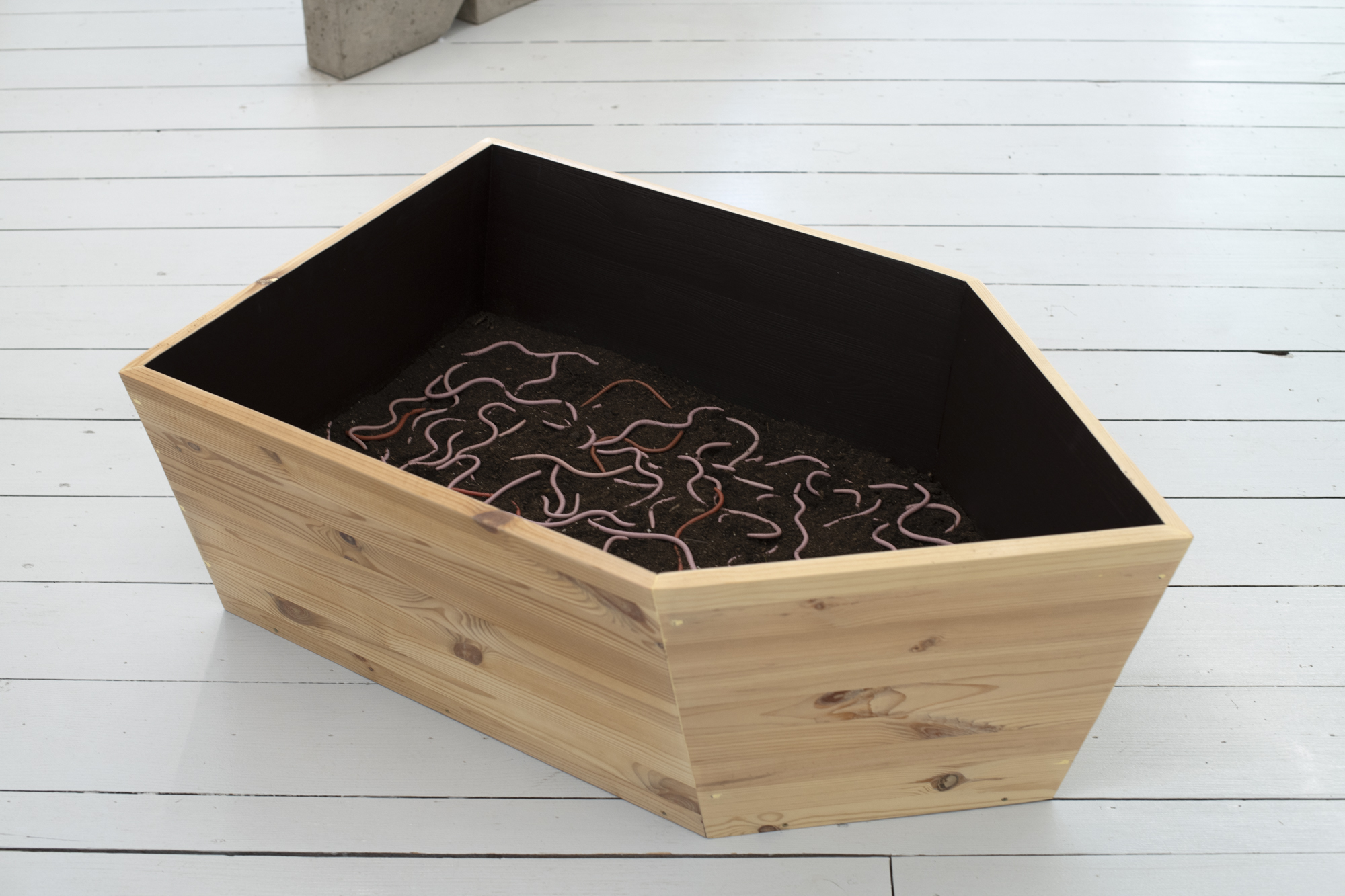
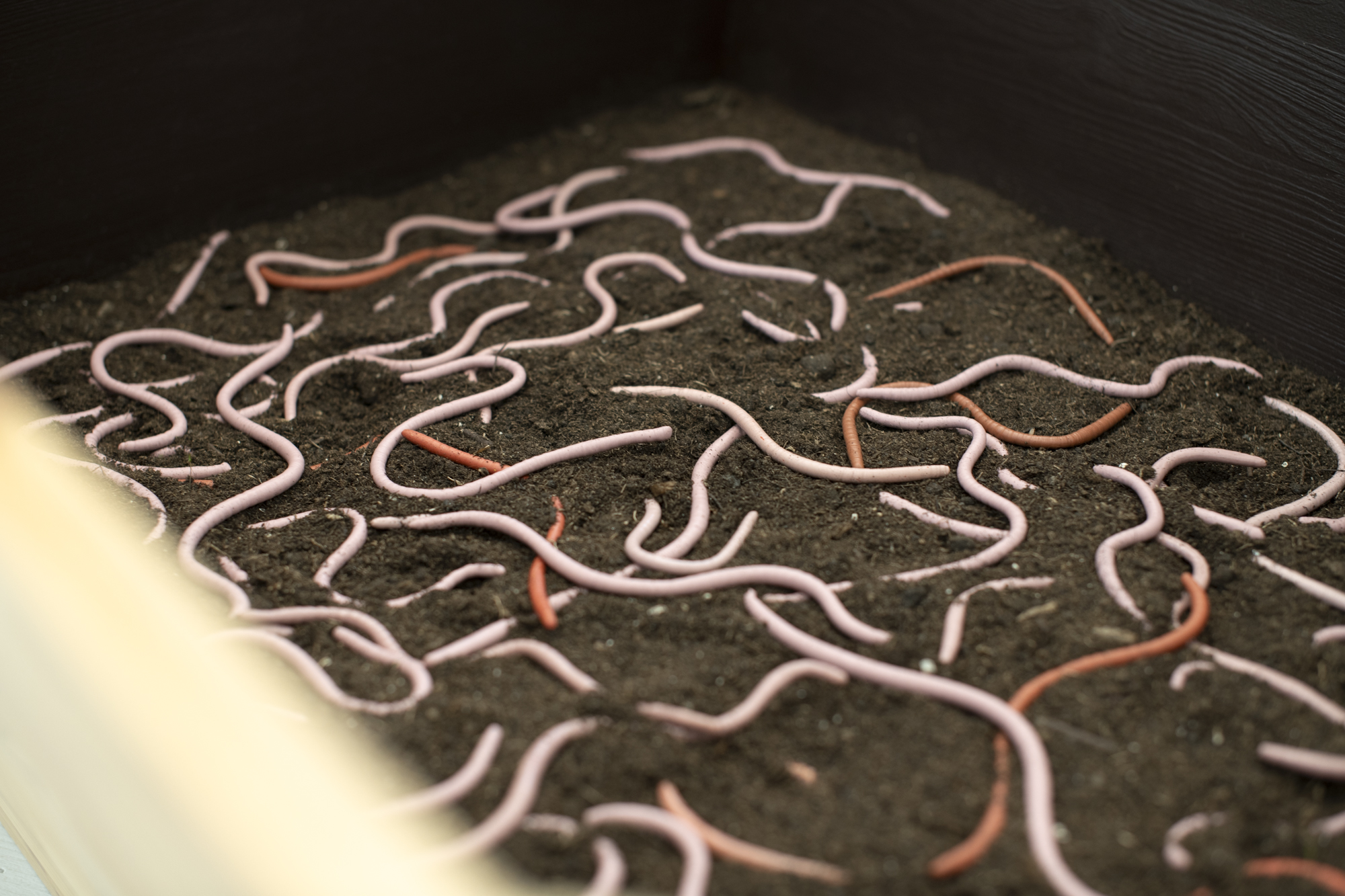
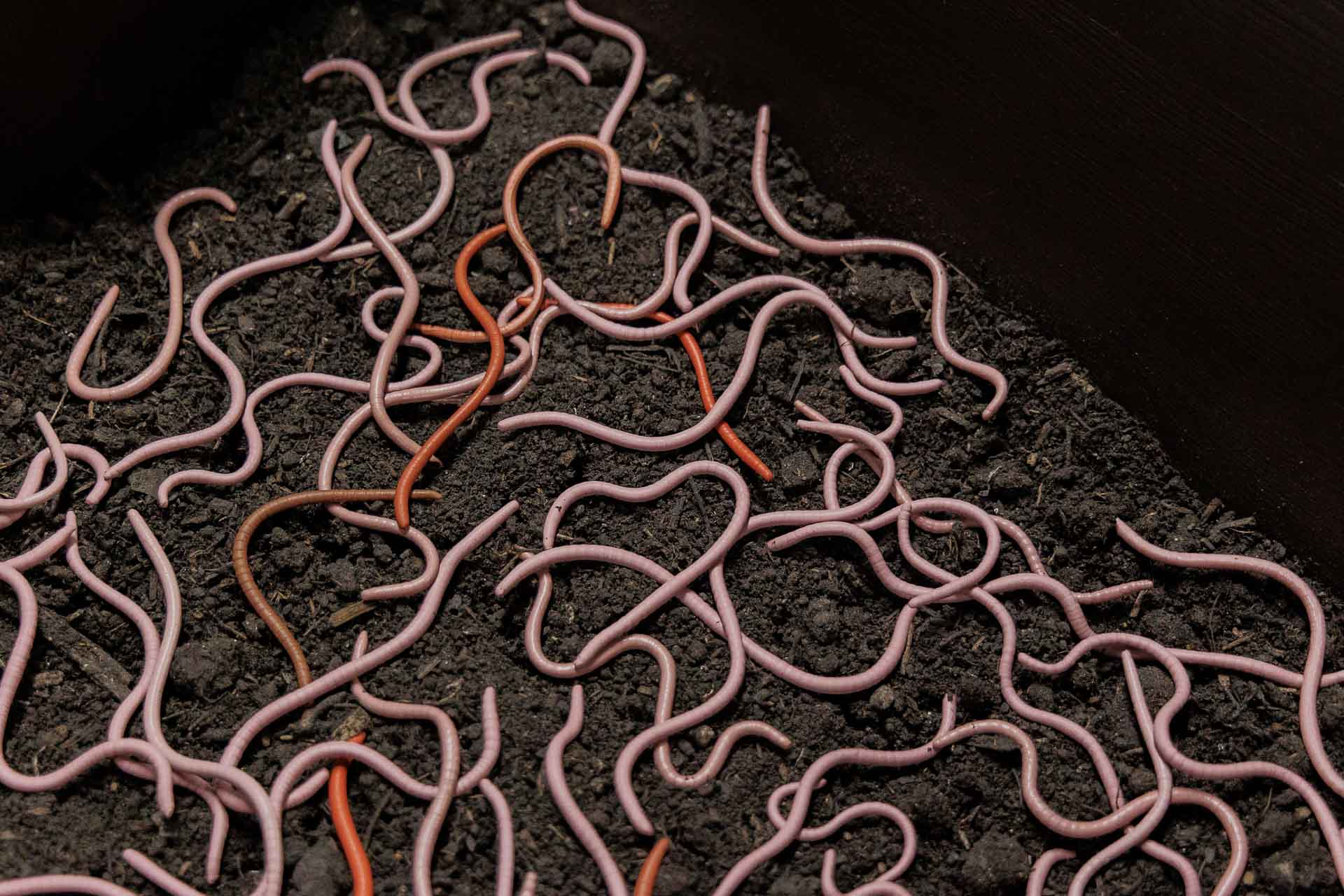
After the political transition, one of the most emblematic pyramid schemes of the turbulent transitional period in Hungary was the so-called bio-worm business. The idea was based on the discovery that manure worms are capable of transforming organic waste into nutrient-rich compost that can be highly beneficial for agriculture. Tens of thousands of people—typically those who had fallen into financial difficulty in connection with the systemic changes of the early 1990s—began breeding manure worms in the hope of a quickly profitable investment, often taking out loans that had become extremely easy to access due to the weak regulation of the emerging market economy. At a certain point, however, it became clear that demand could not justify such a level of supply, and that the real profit lay in the resale of the worms themselves. The collapse of the pyramid scheme resulted in significant financial losses for thousands of families.
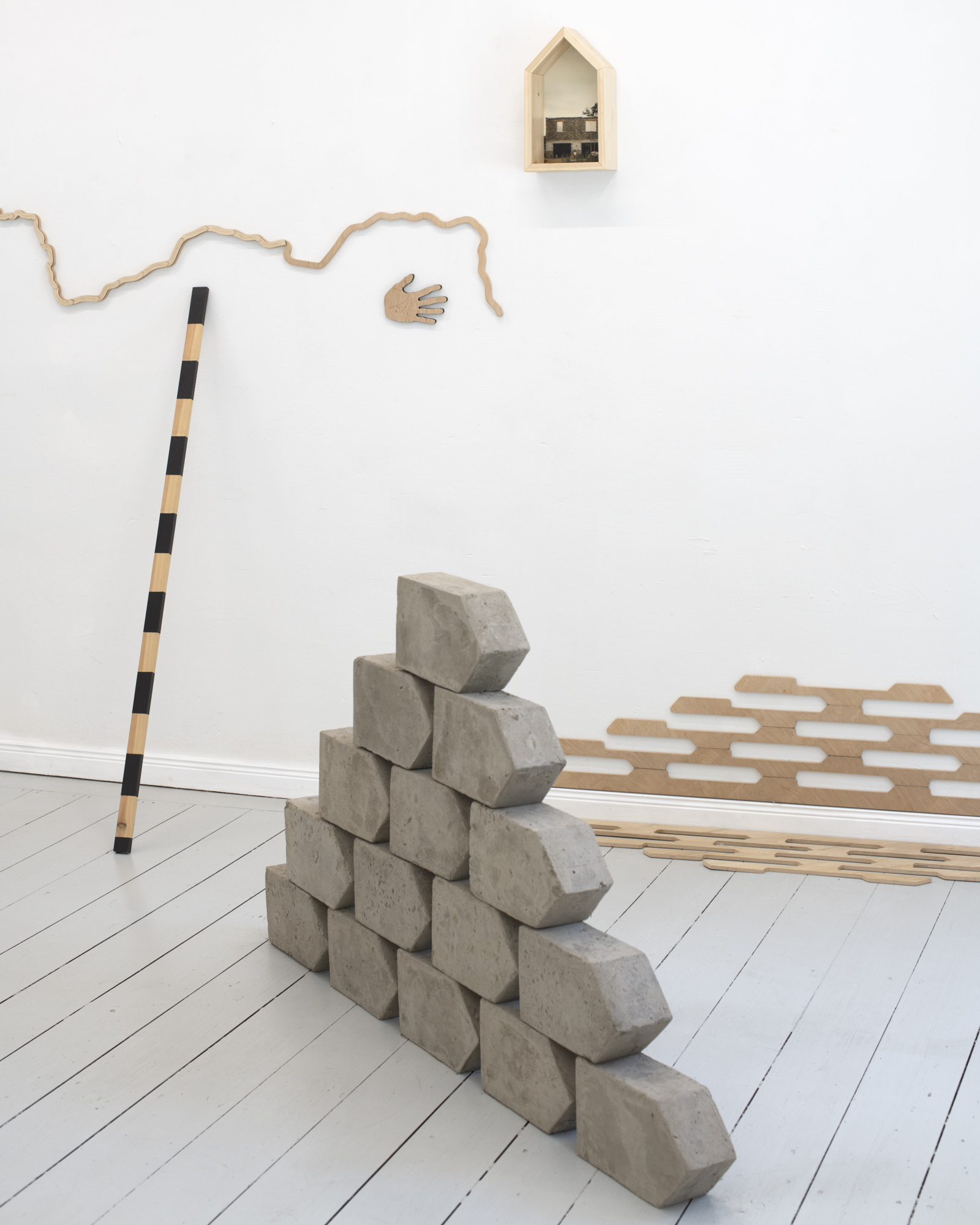
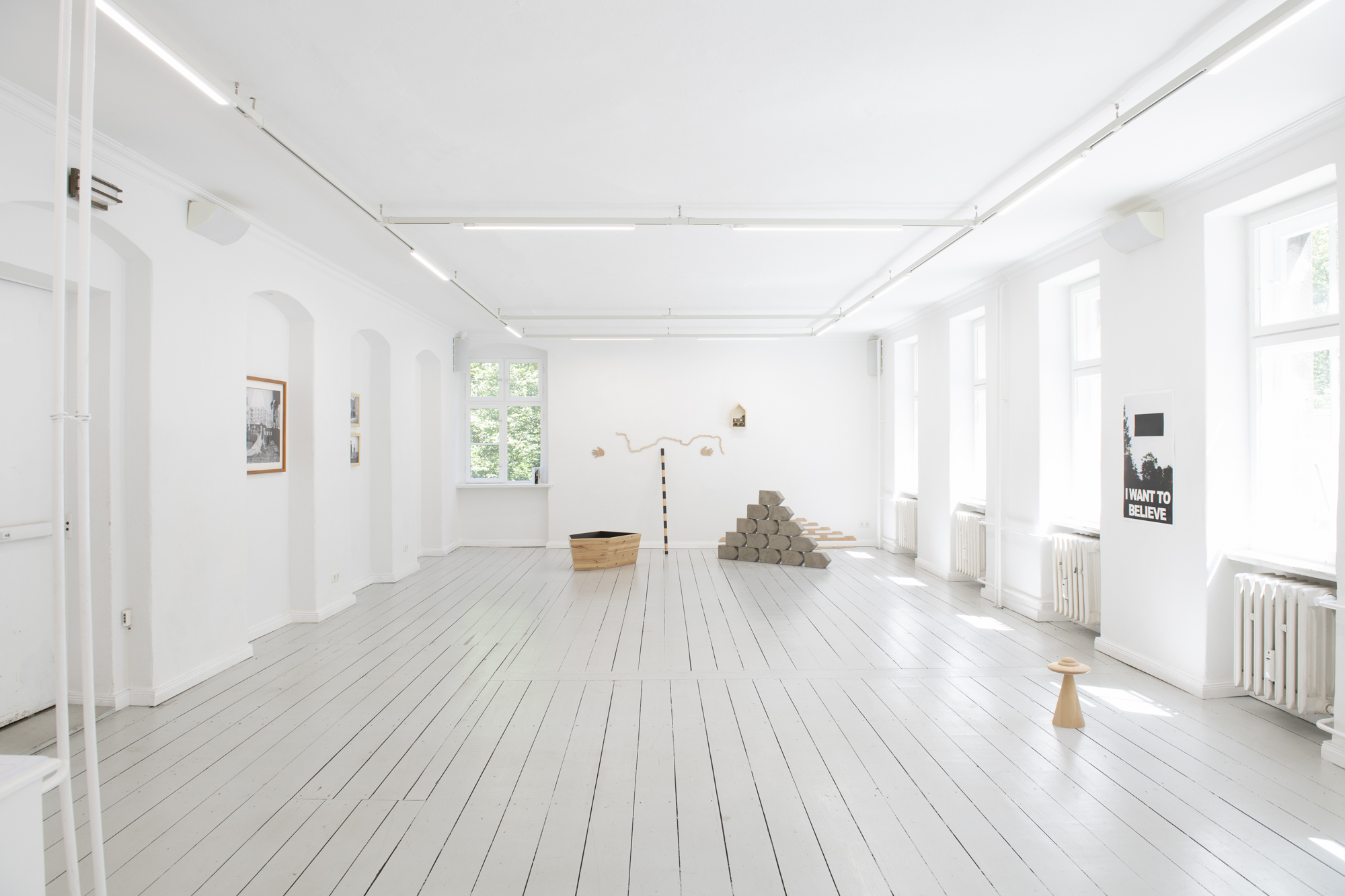
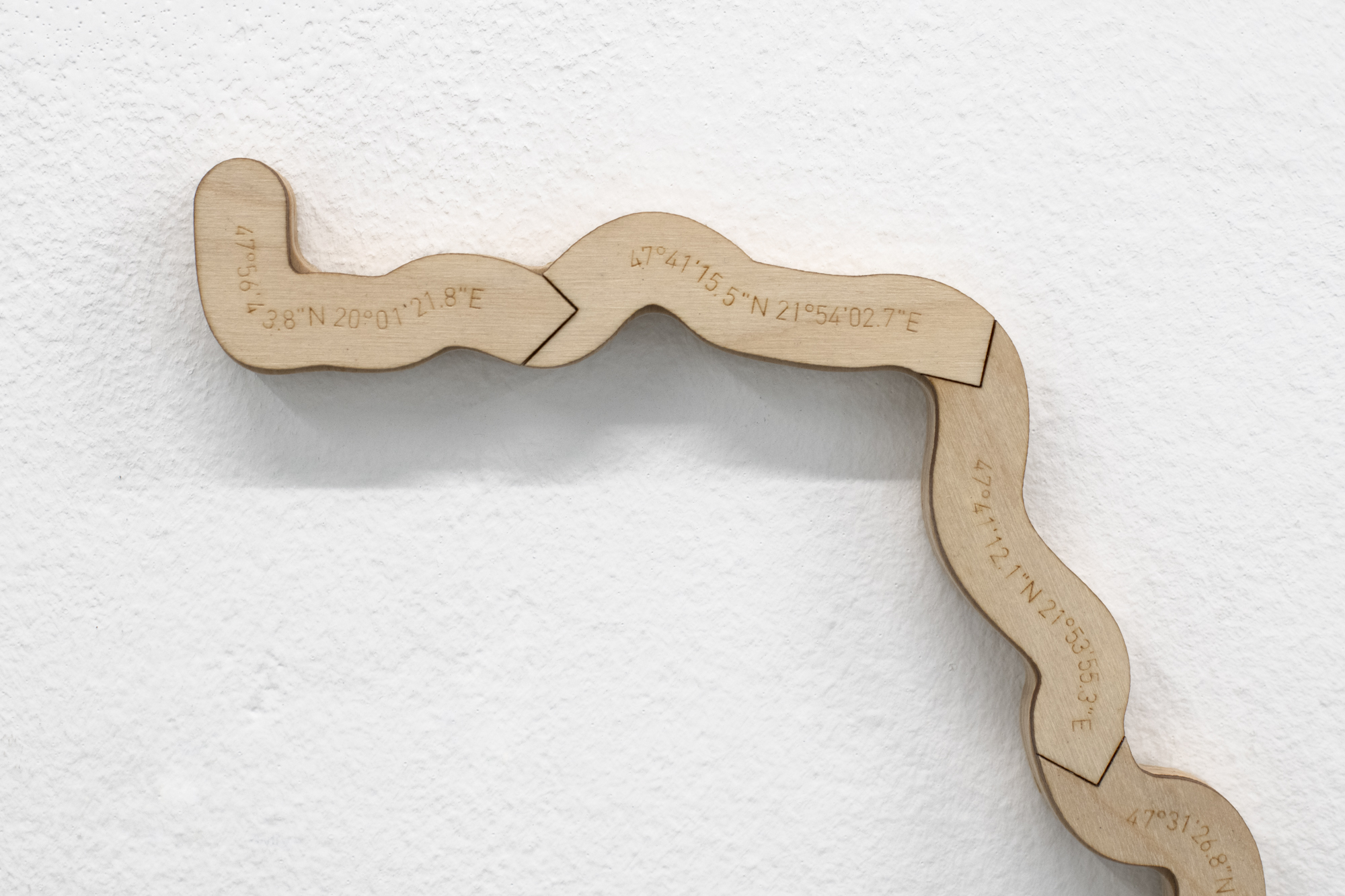
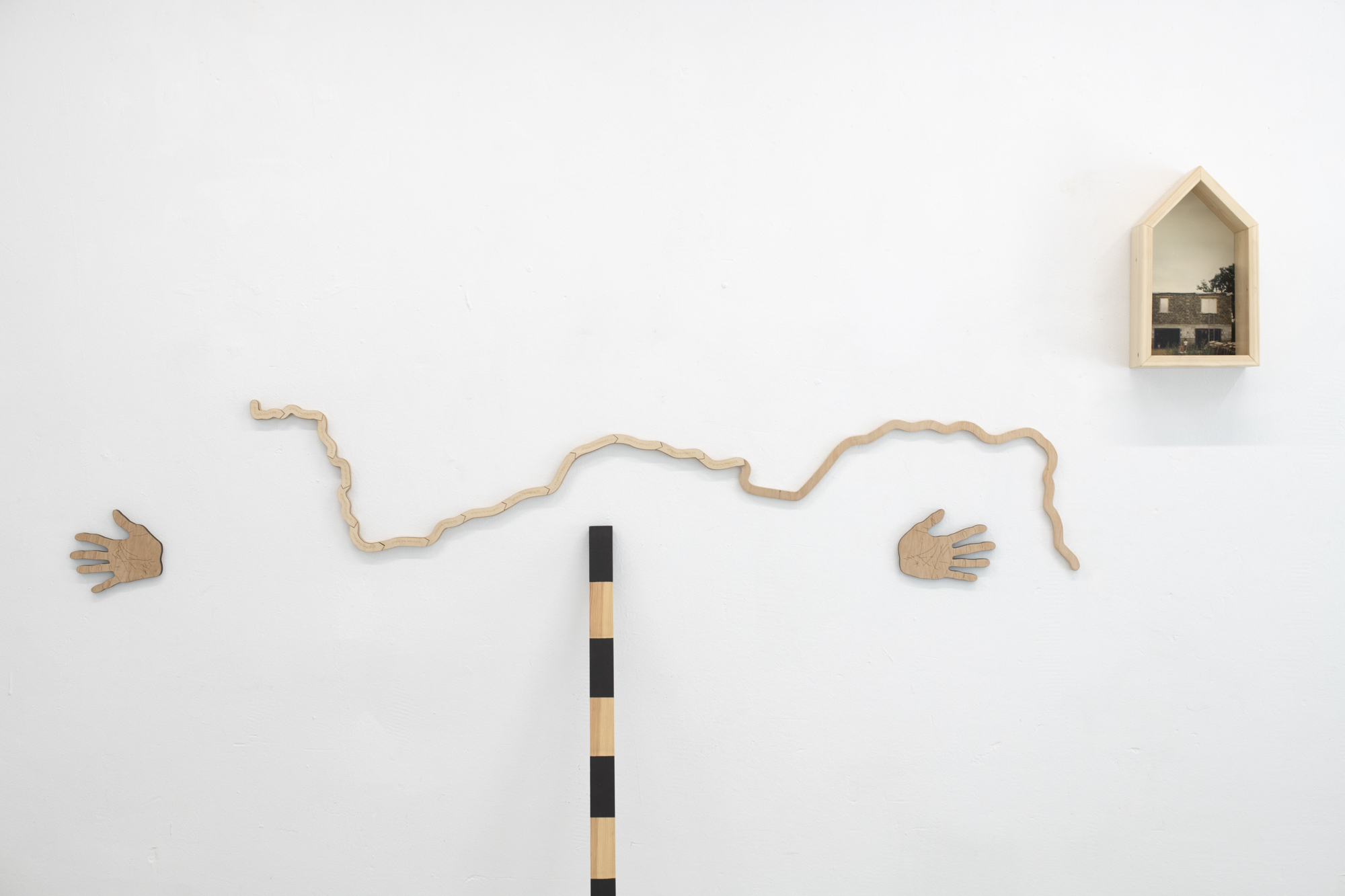
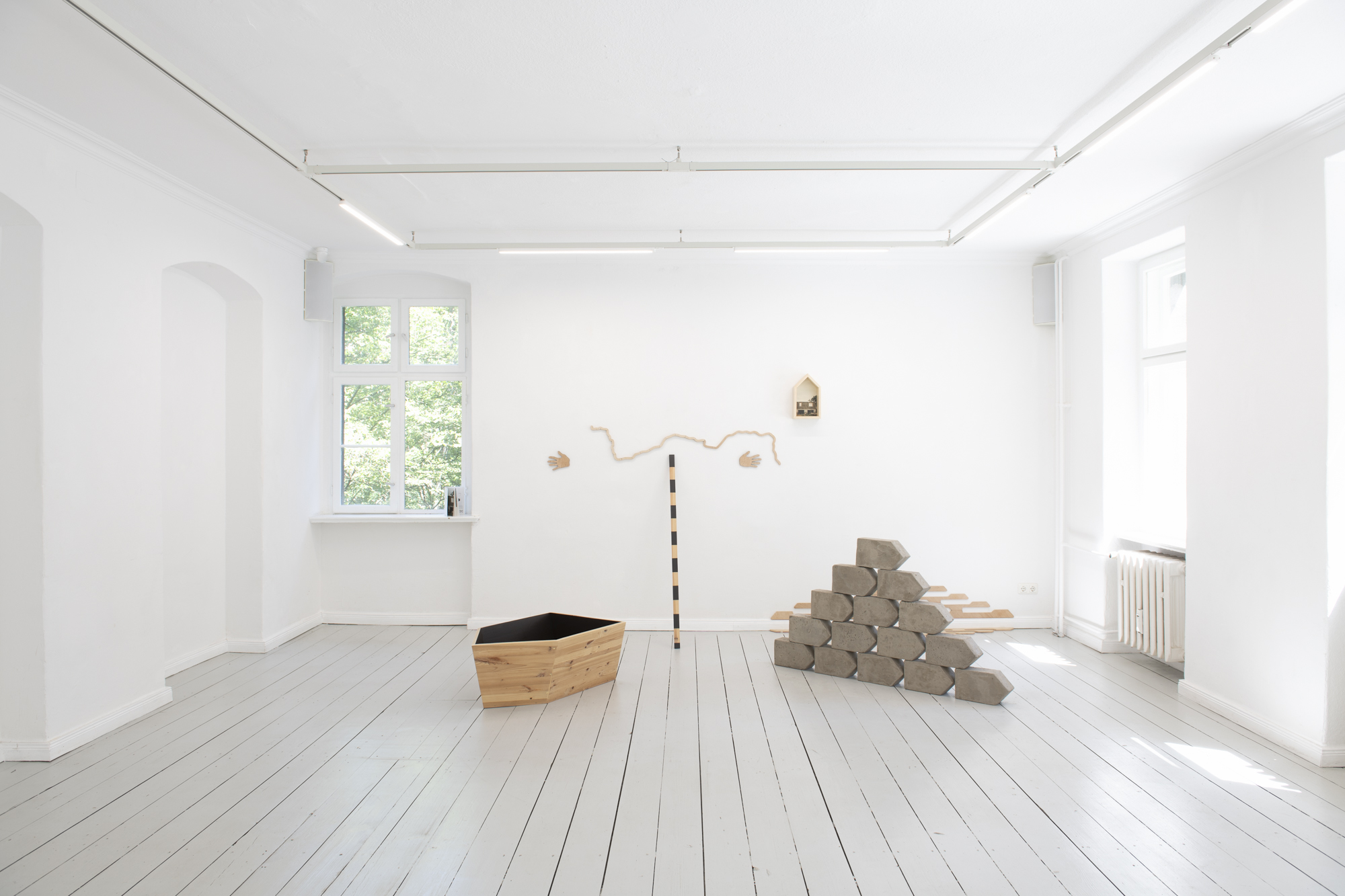
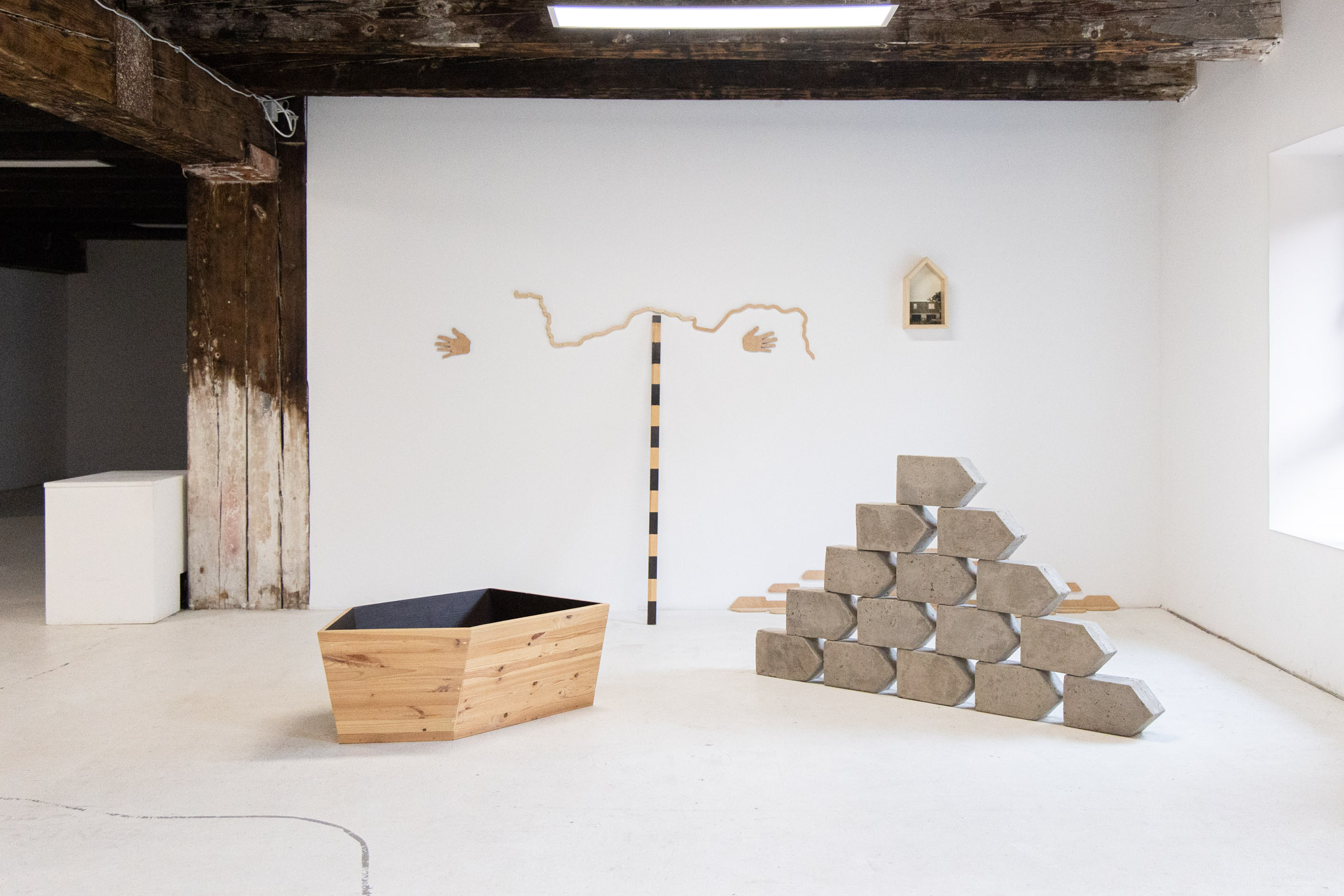
The work connects two family stories from the 1990s—the loss of our first house following the collapse of the bio-worm business, and the later construction of our adobe house, built collectively and financed through the Hungarian housing subsidy system (szocpol)—with the contemporary issue of the housing crisis through my own life trajectory. The installation bridges past and present events through the interconnection of various visual symbols and concepts. This arc also appears physically in the space, in the form of a miniature version of the route between the two houses—the one that was lost and the one that was built.
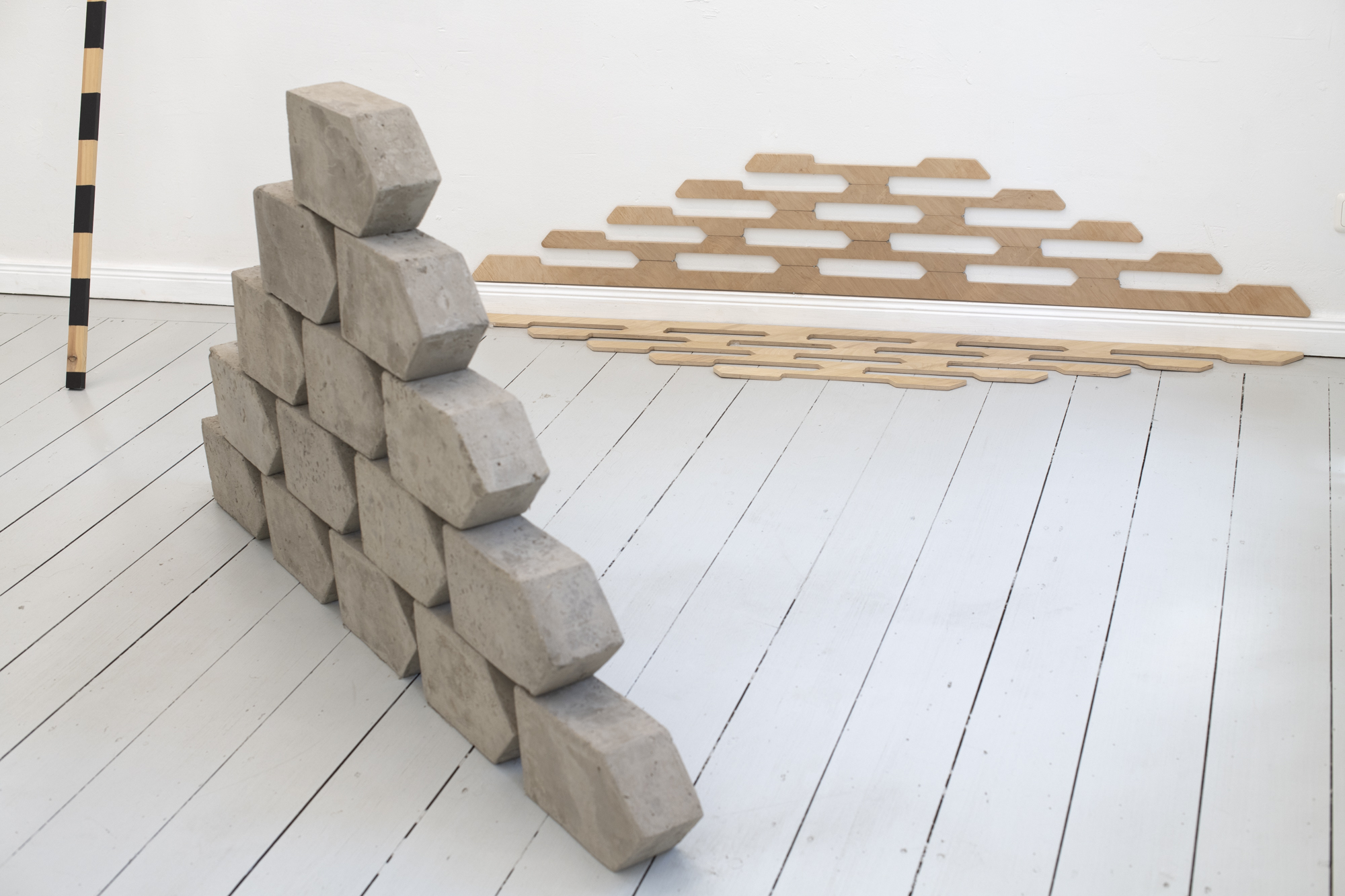
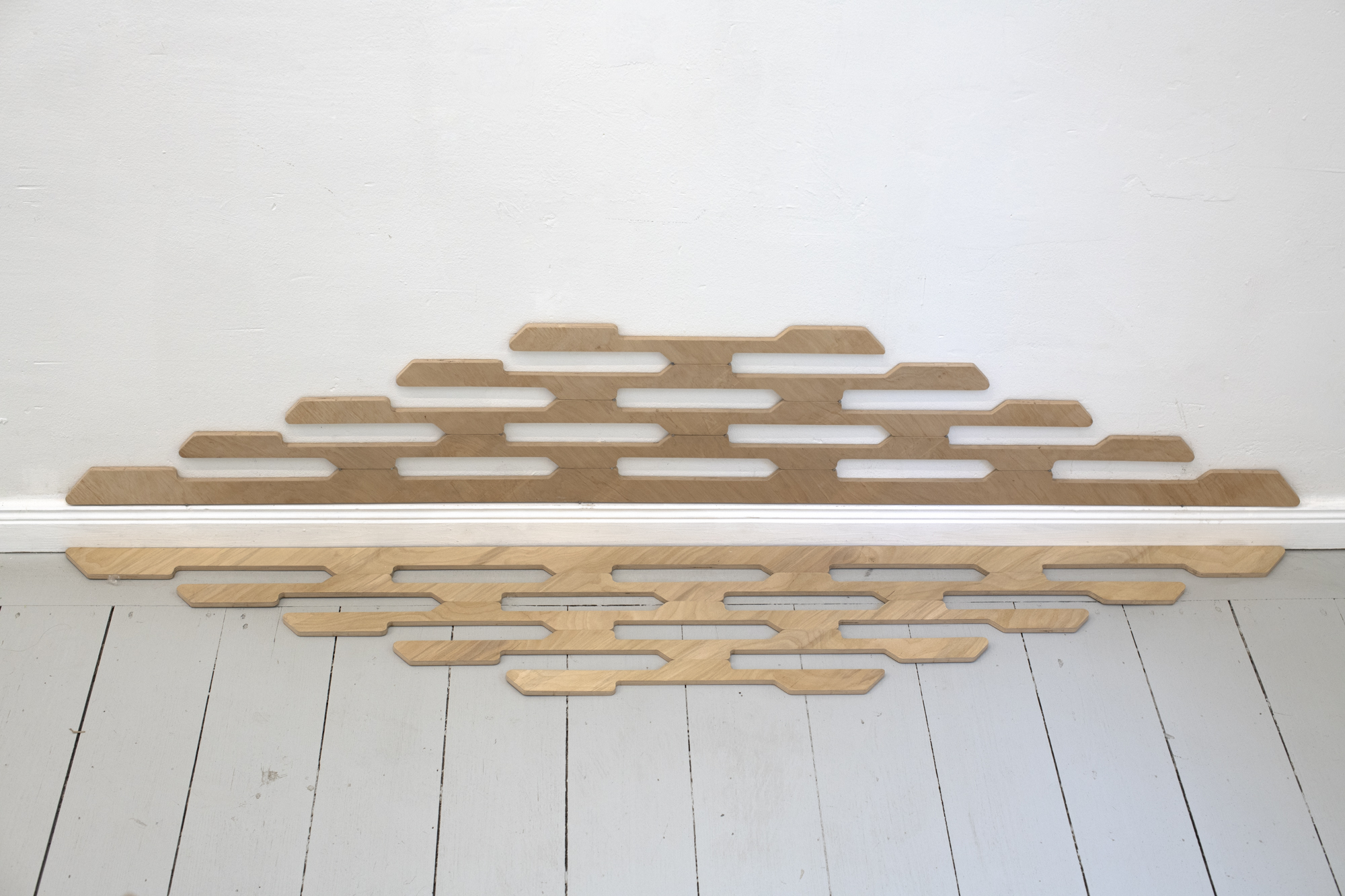
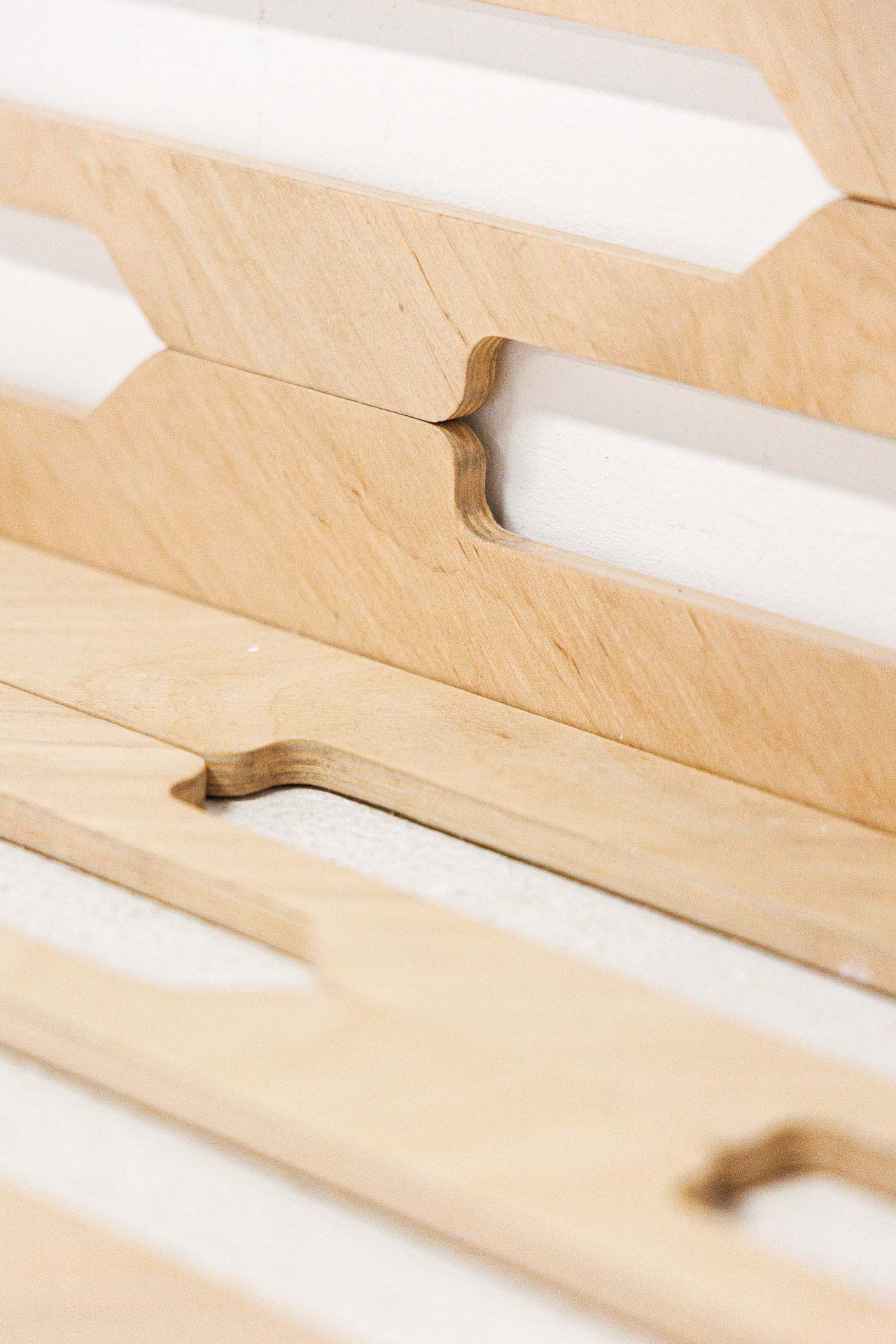
On the left side stands a worm-compost container whose form simultaneously evokes a cradle, a coffin, and a home, referring to a period of family trauma: the death of my grandfather, the loss of the house, and my own birth. On the right, in the foreground, fifteen adobe bricks—recycled from leftover building materials from our family house—are stacked in a pyramid-like arrangement. These house-shaped modules represent the fifteen homes where I have lived during the past thirty-four years, which also appear in the form of geographical coordinates along the path placed in the center.
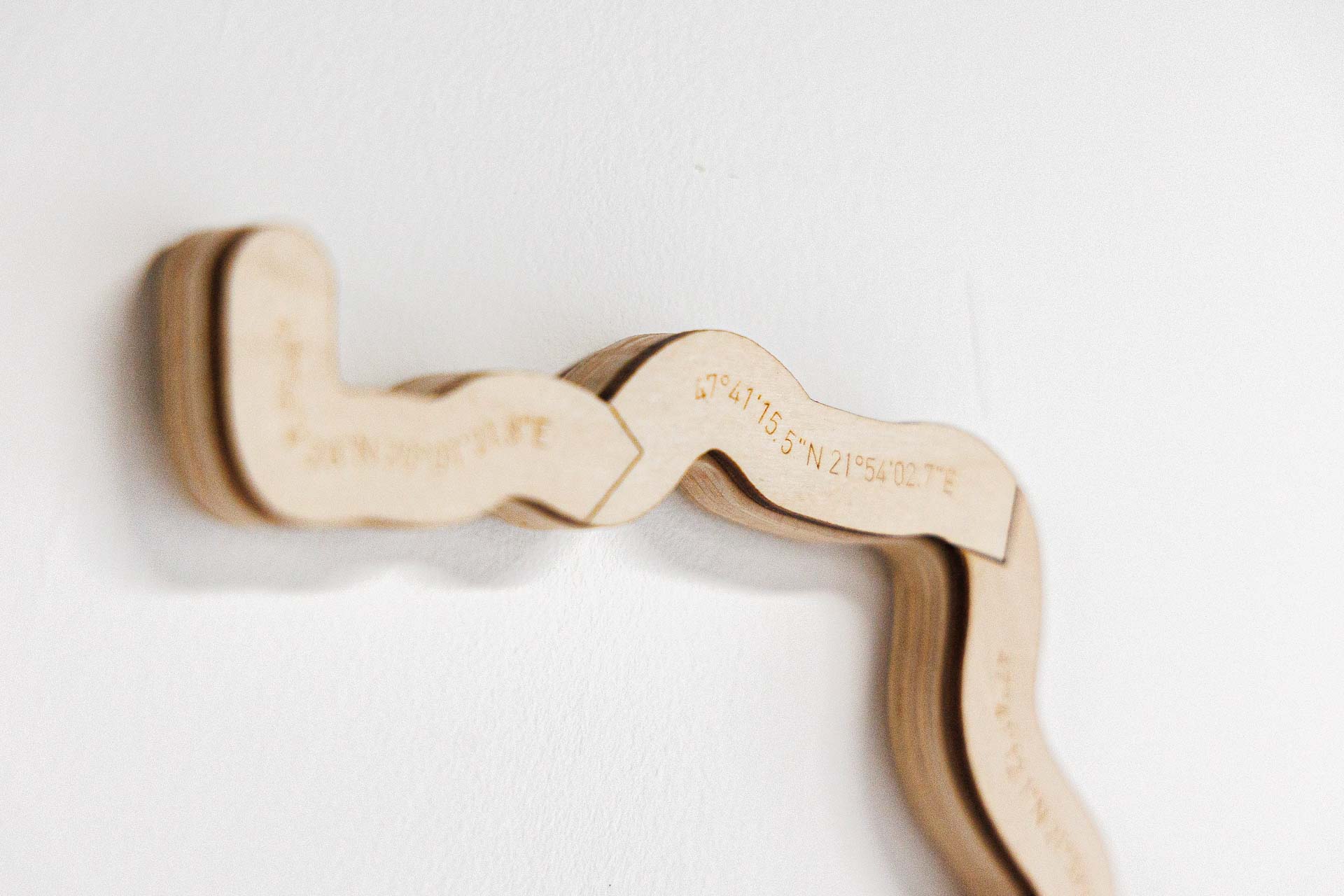
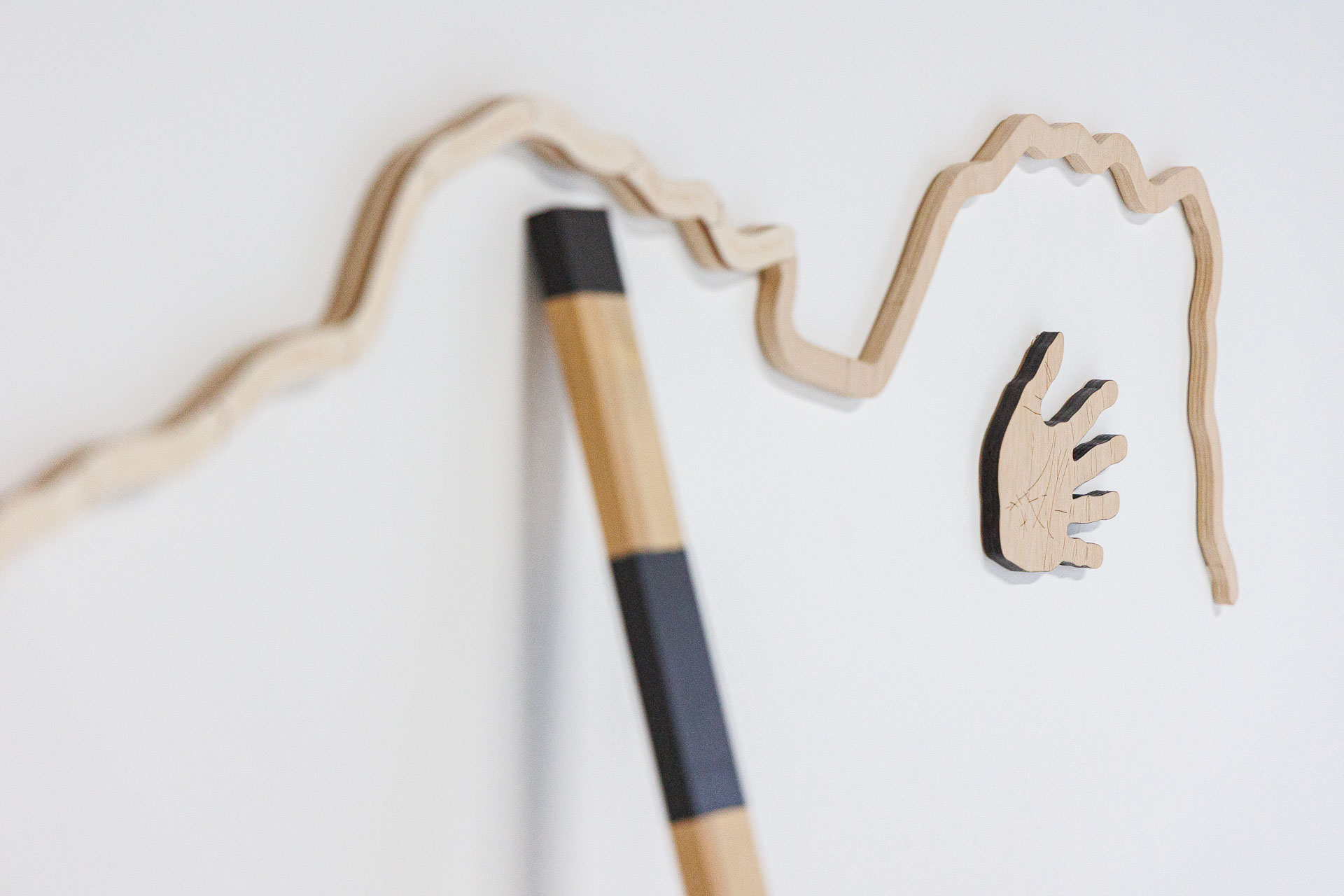
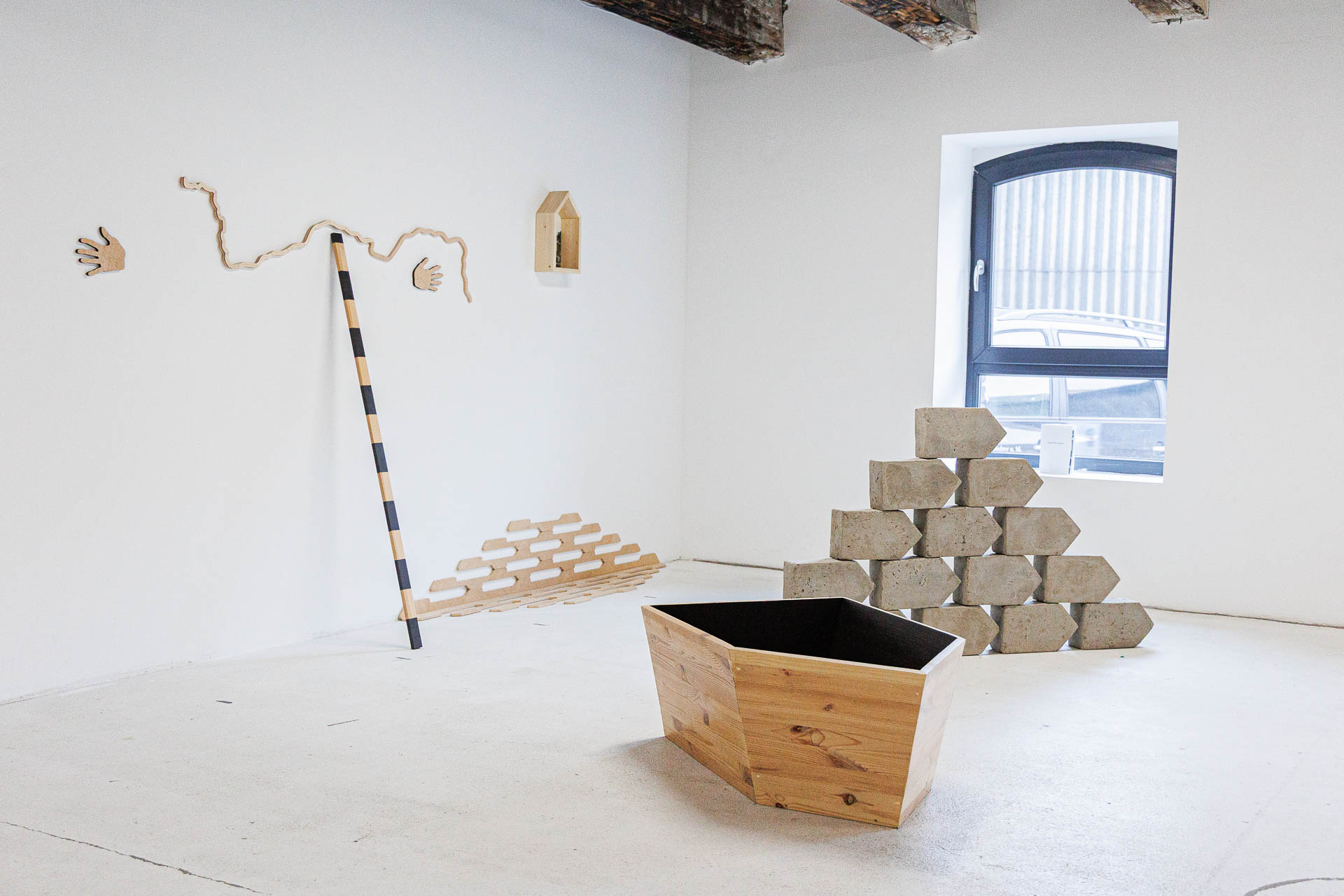
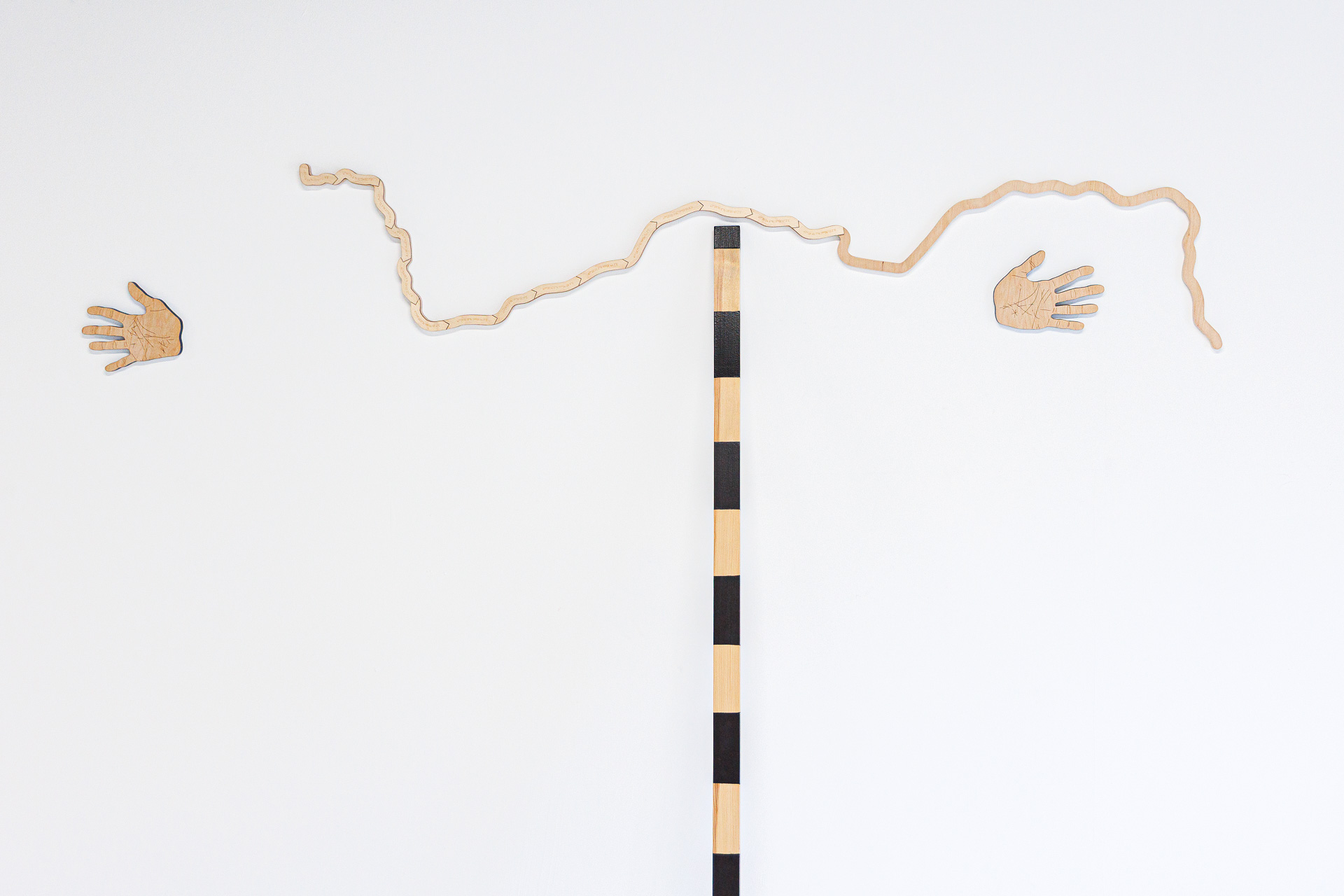
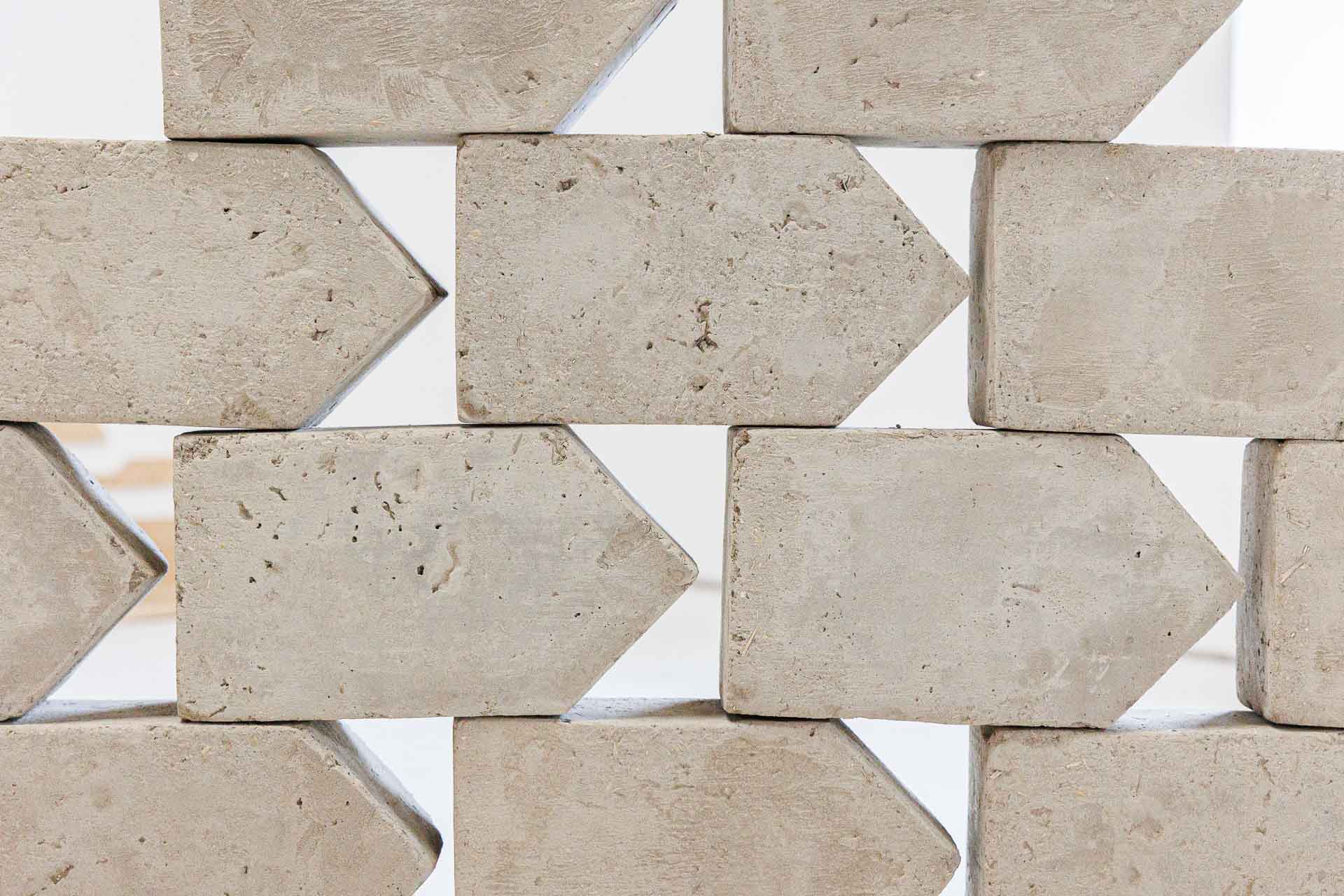
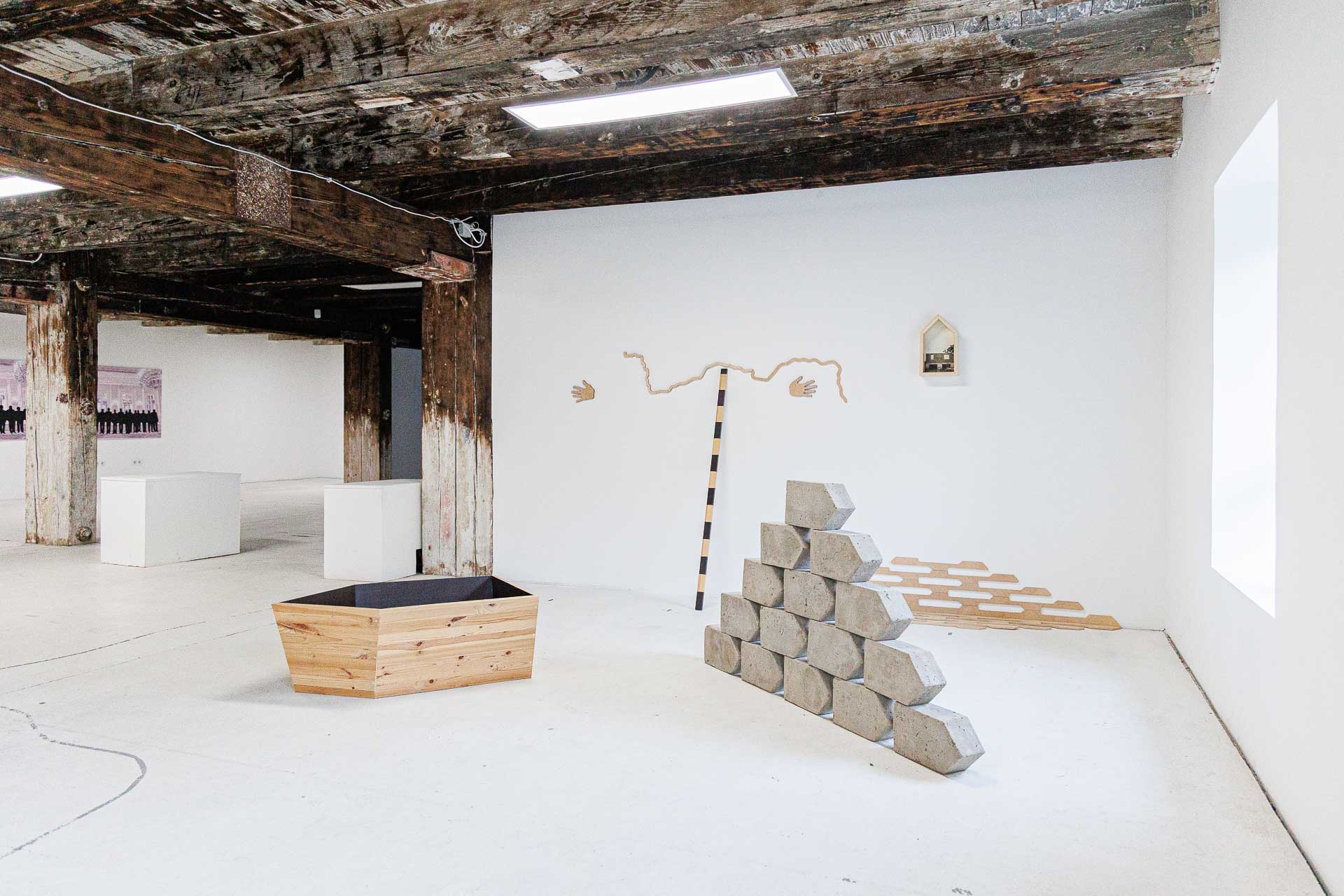
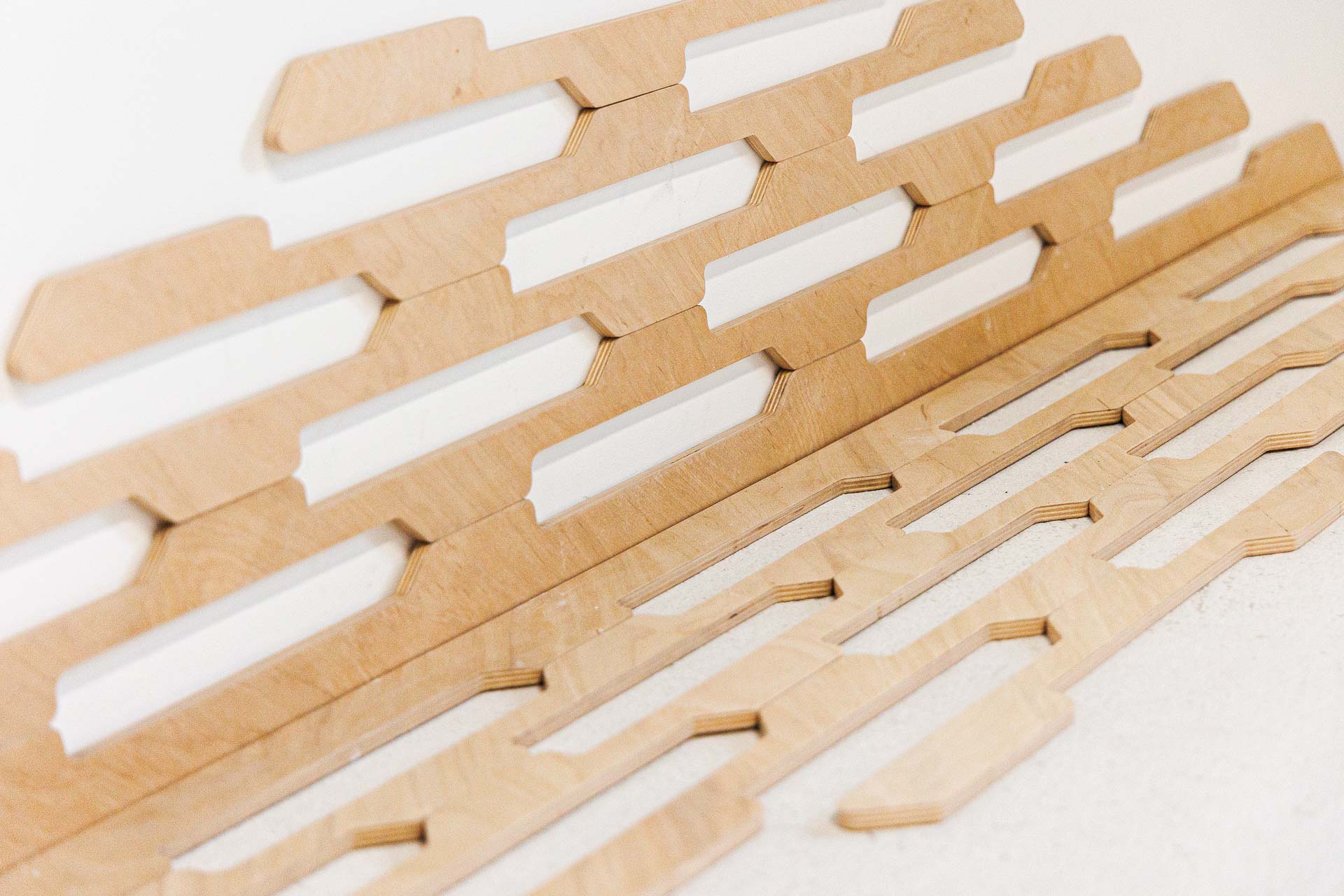
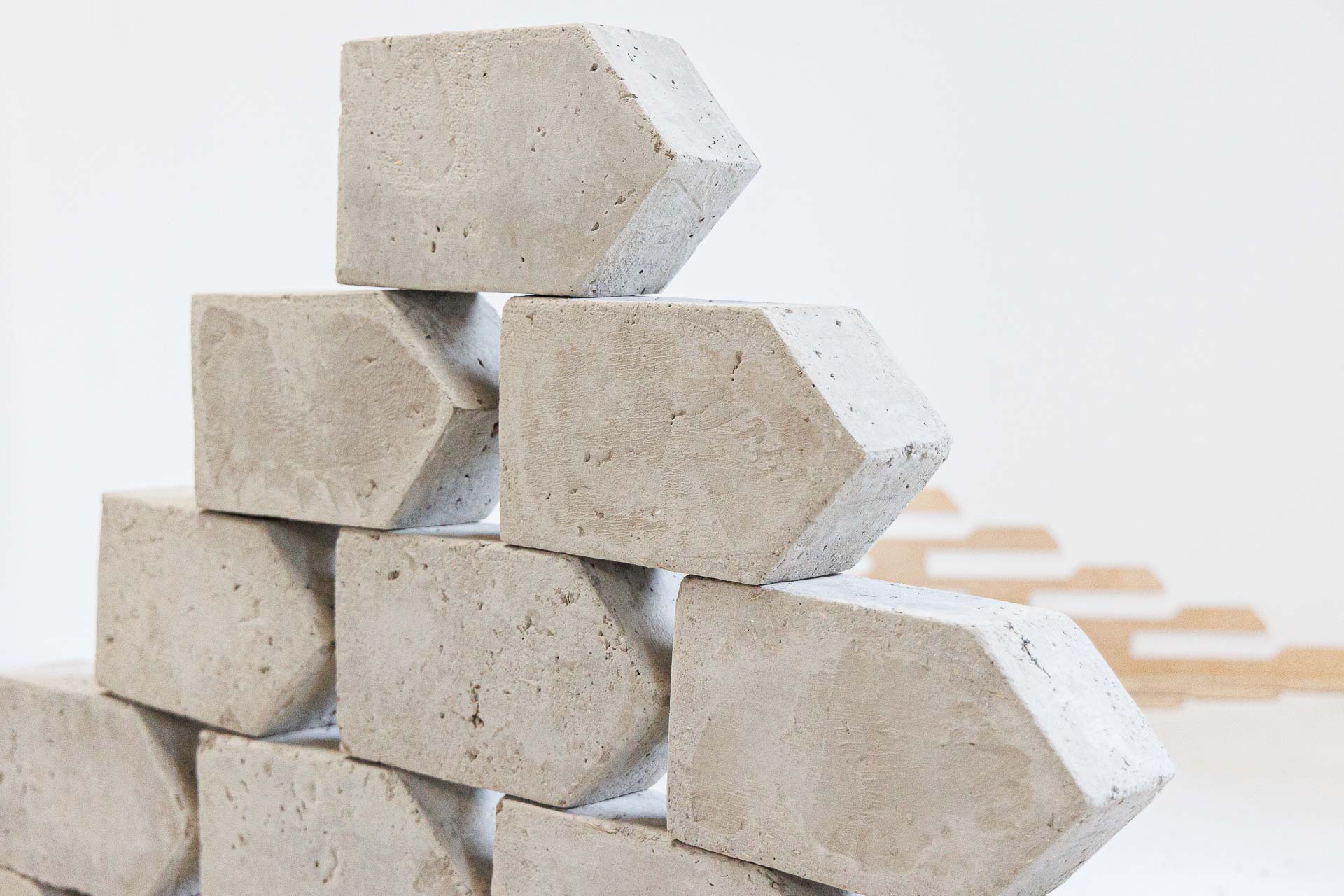
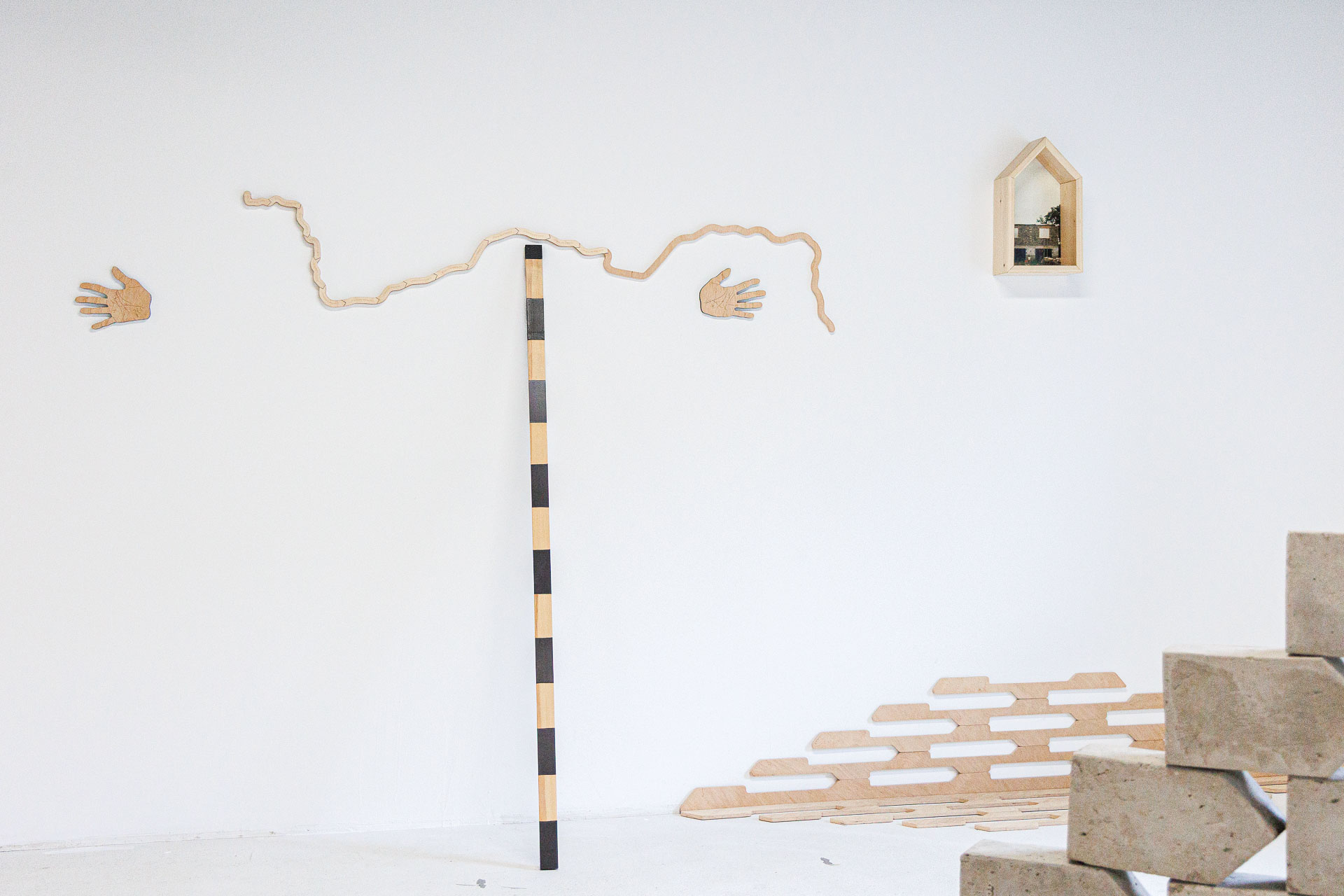
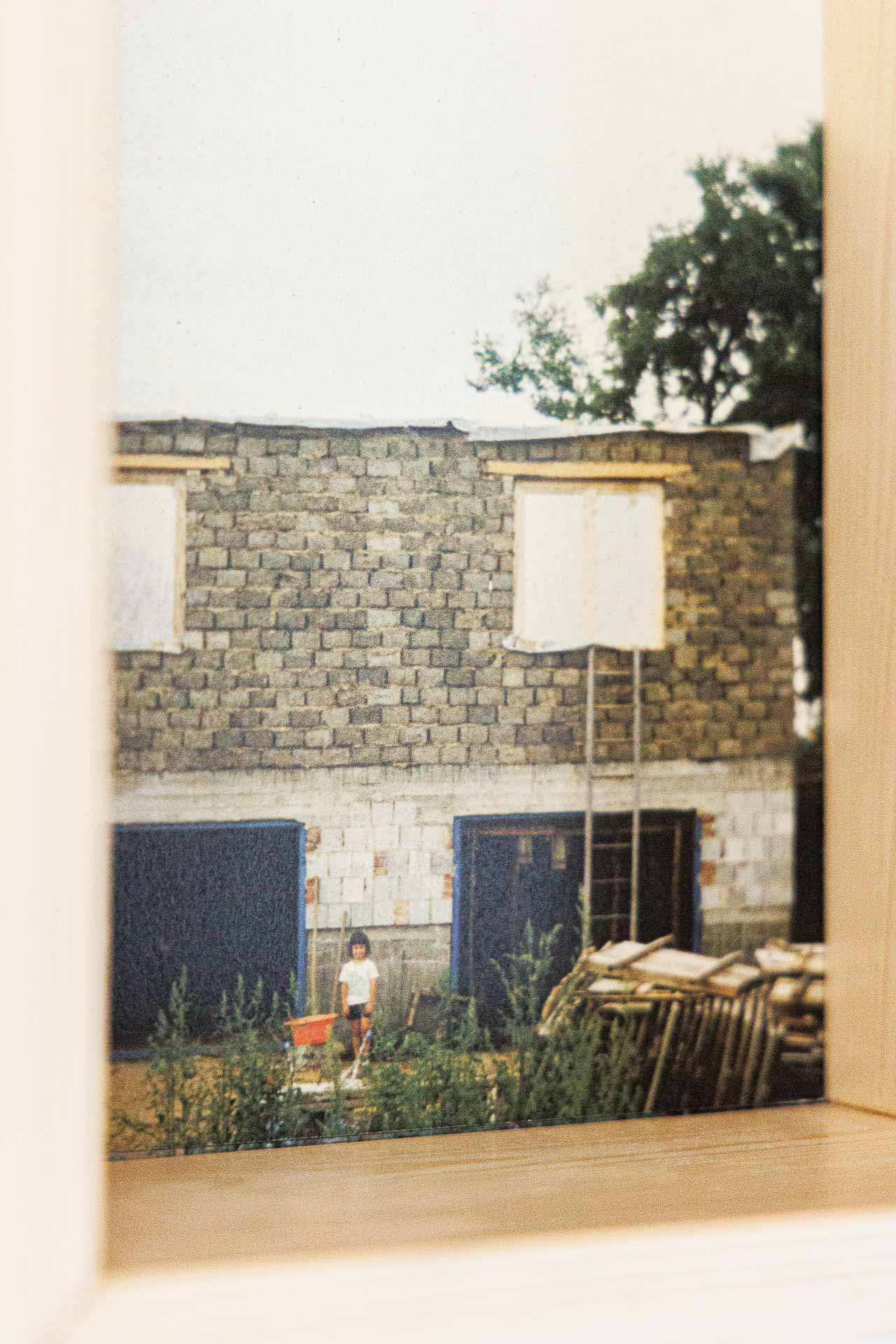
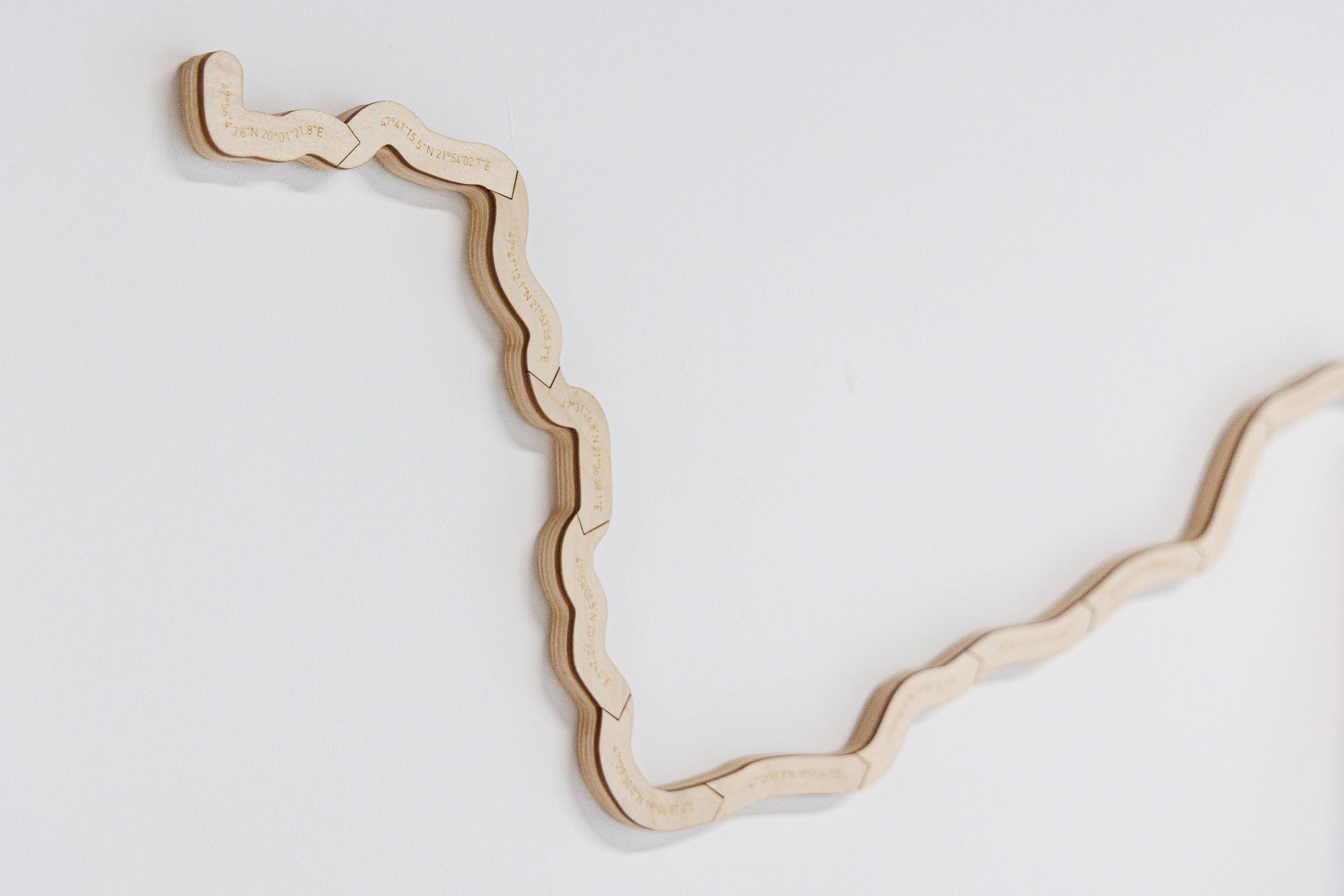
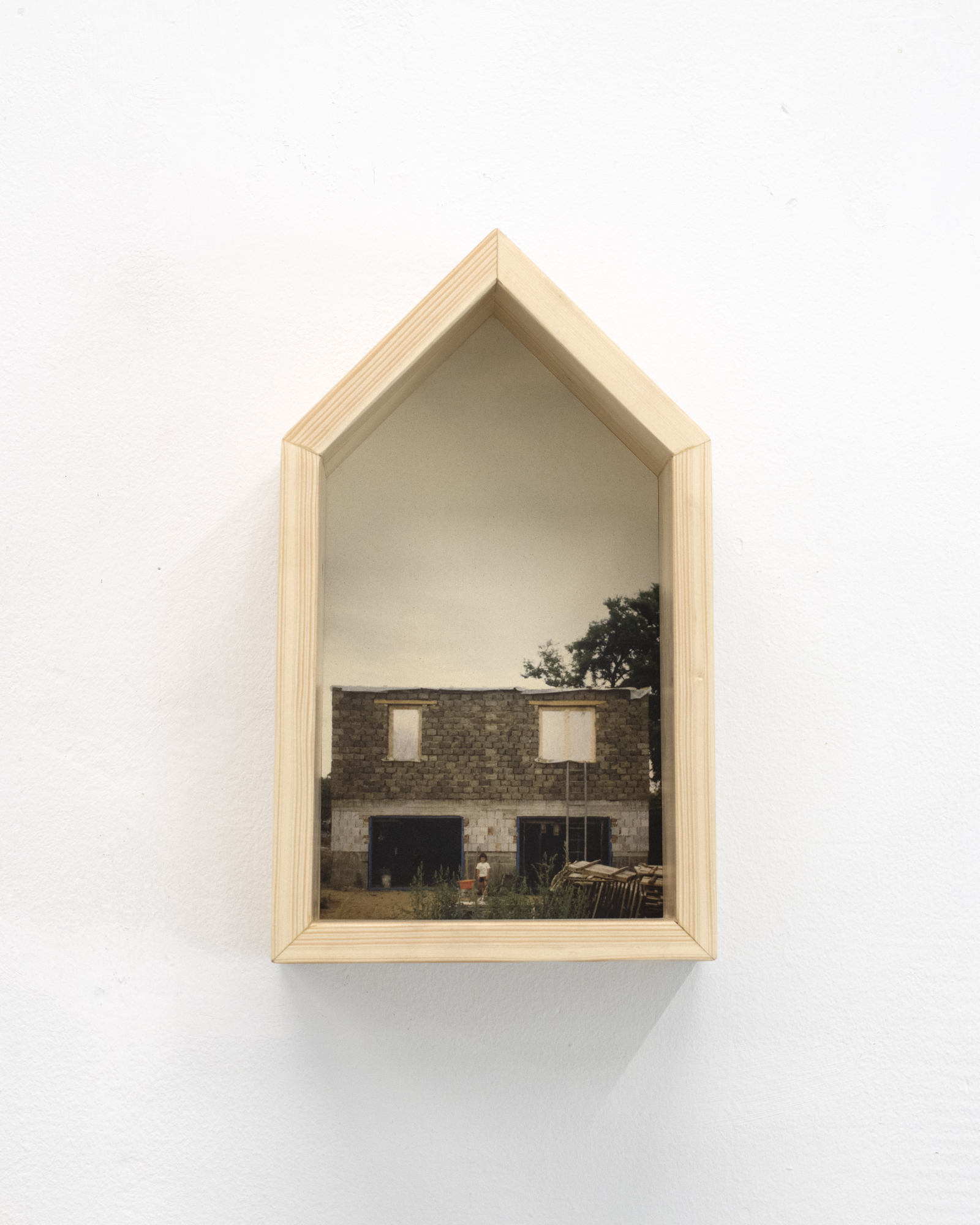
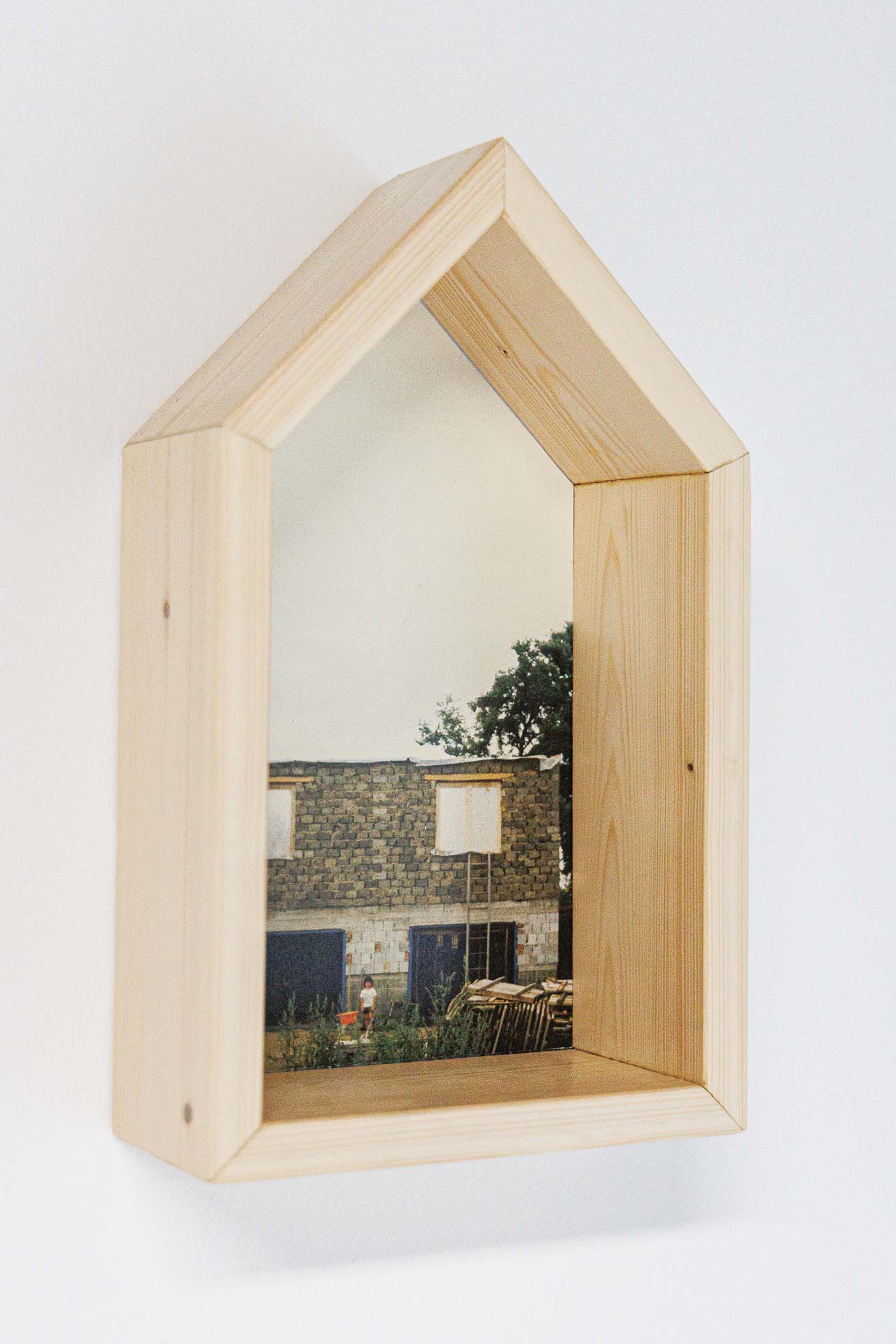
The winding path leads from loss toward construction, accompanied throughout by the neoliberal promise embedded in the belief in meritocracy—that hard work will ultimately bear fruit—even if the length of the distance, the fragmented nature of the route, and the instability of the bricks subtly reveal the fragility of this promise. Yet the focal point of the installation shifts the interpretation toward a more affirmative reading. A seed-mould fixed to the wall, together with a family photograph from 1995 placed behind it—showing me as a small child standing in front of our house under construction—emphasizes the home that was built collectively through communal effort. In this way the memory image highlights the possibility of renewal at the intersection of personal history and collective experience.
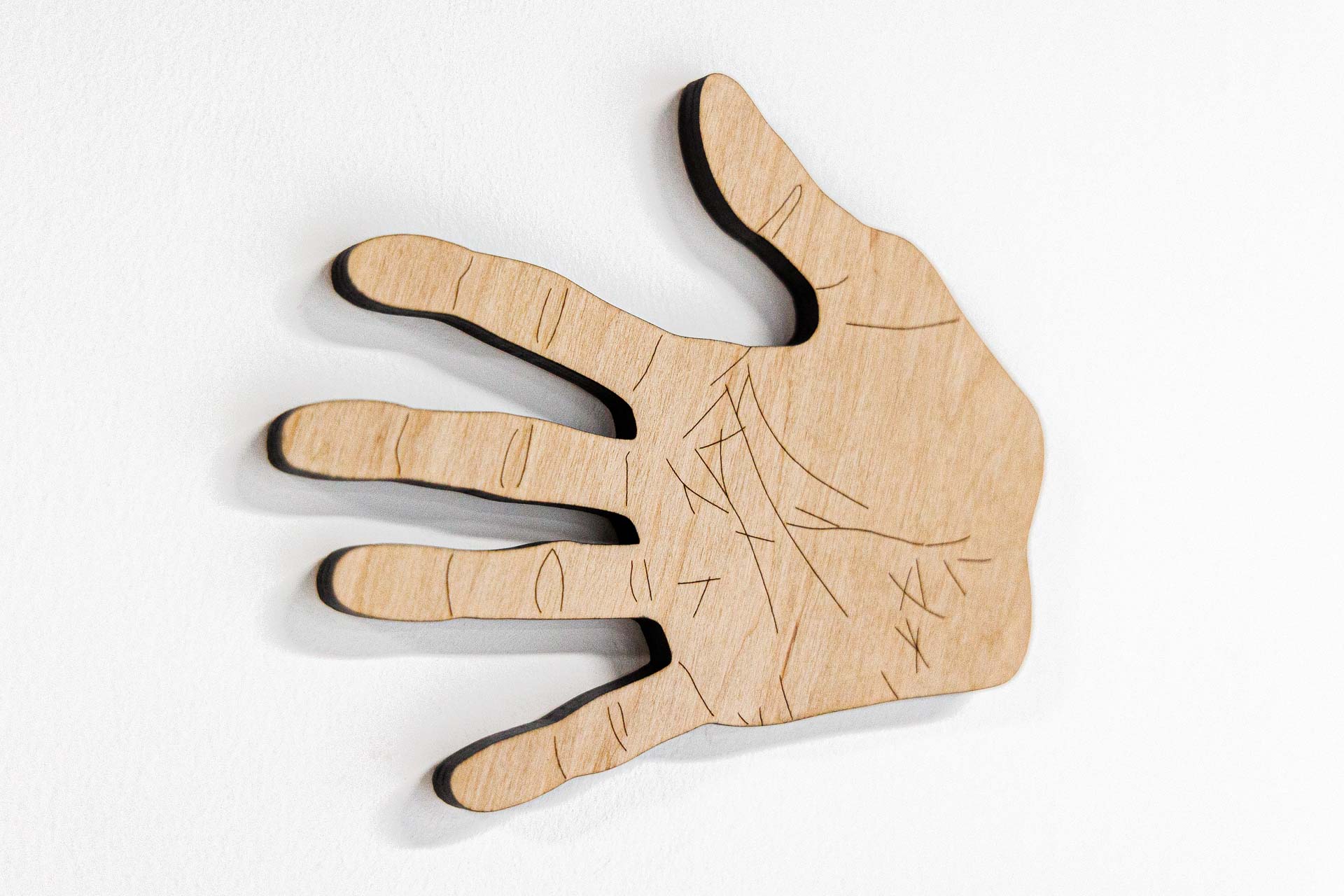
The linear path is interrupted by a reflective zone where space opens for confronting the legacy of the past and questioning internalized structures. A measuring rod leaning against the wall recalls the visual form of old school meter sticks, yet its length differs from theirs: it measures 143 centimeters—exactly the span between my two arms when extended, and the same distance that separates the starting and ending points of the path mounted on the wall. In this way the two measurements symbolically correspond through a form of embodied experience, an internalized personal reference. This connection is further reinforced by hand forms cast from my own palms, on which the lines appear like fate lines, pairing visually with the winding life path that runs above them.