Snakes and Ladders
2025
plywood, acrylic, wood, steel, sand
ca. 450x350x250 cm
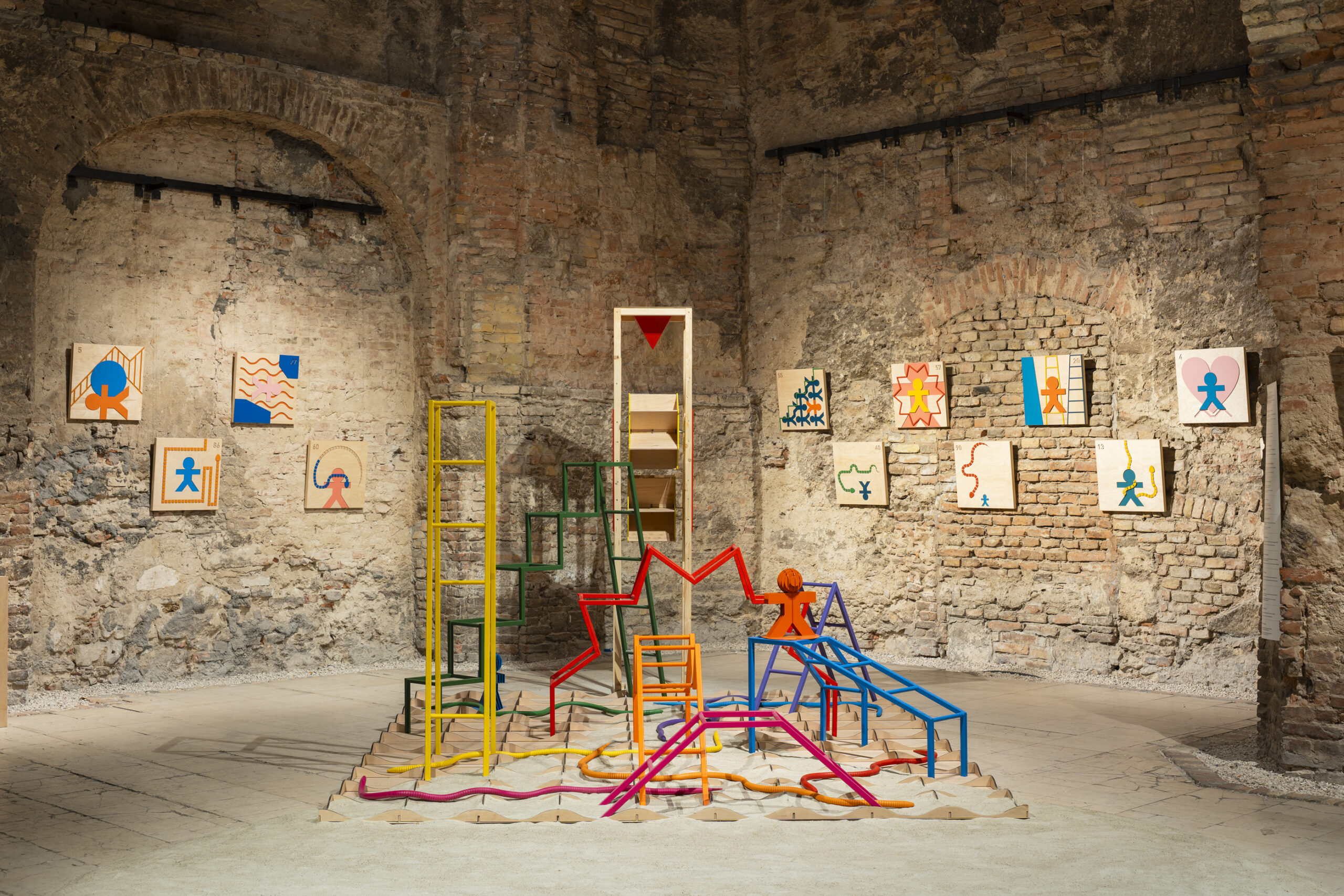
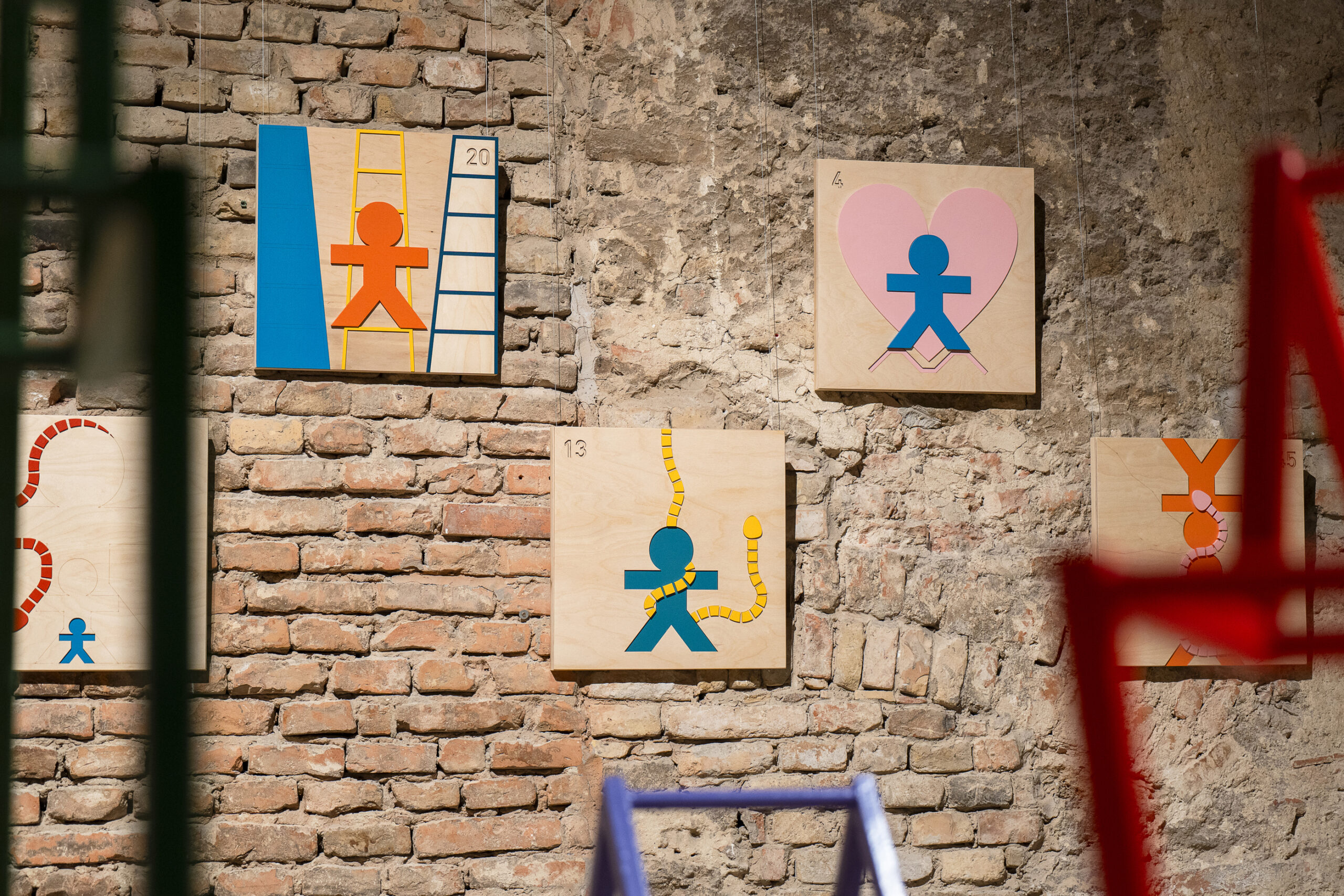
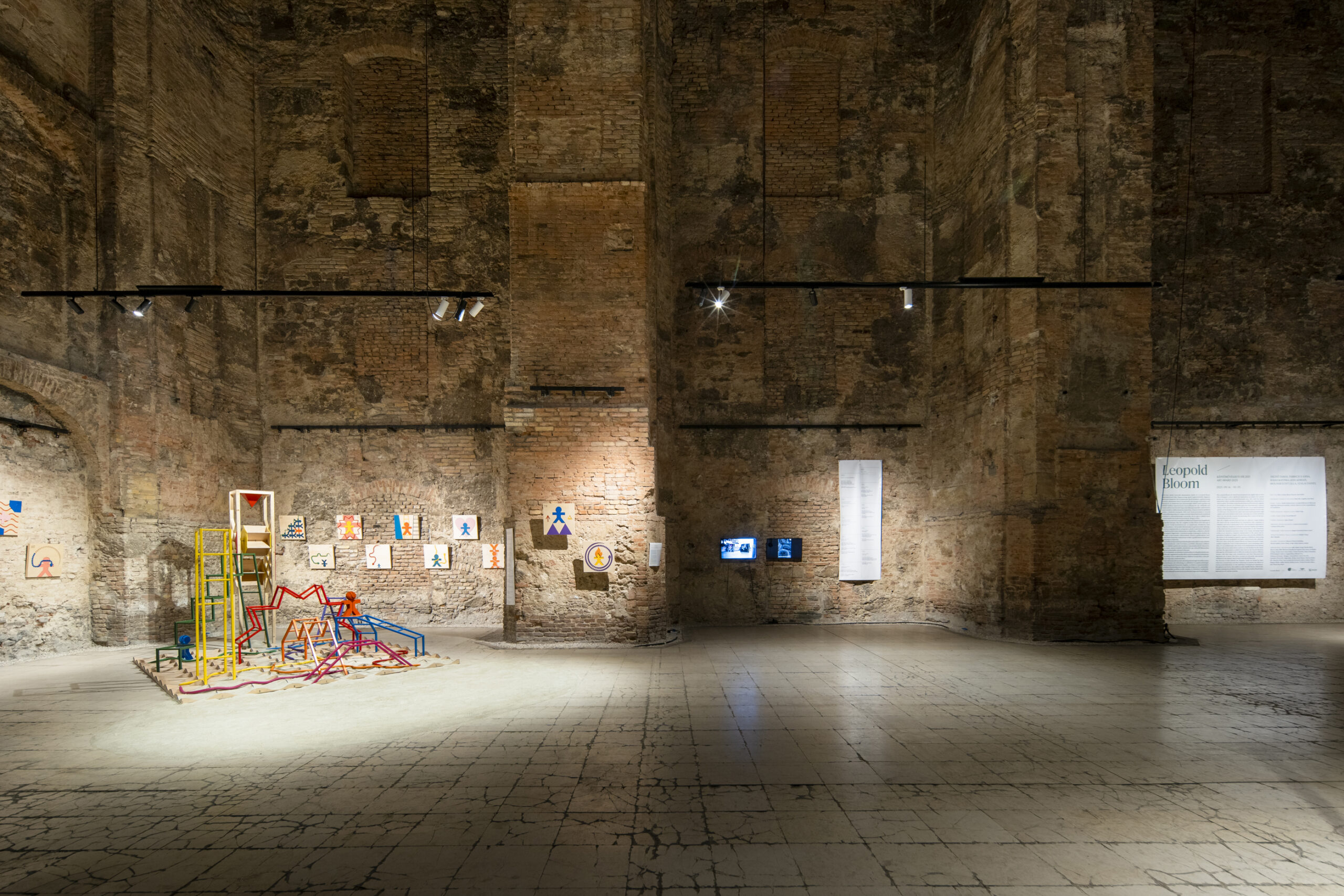
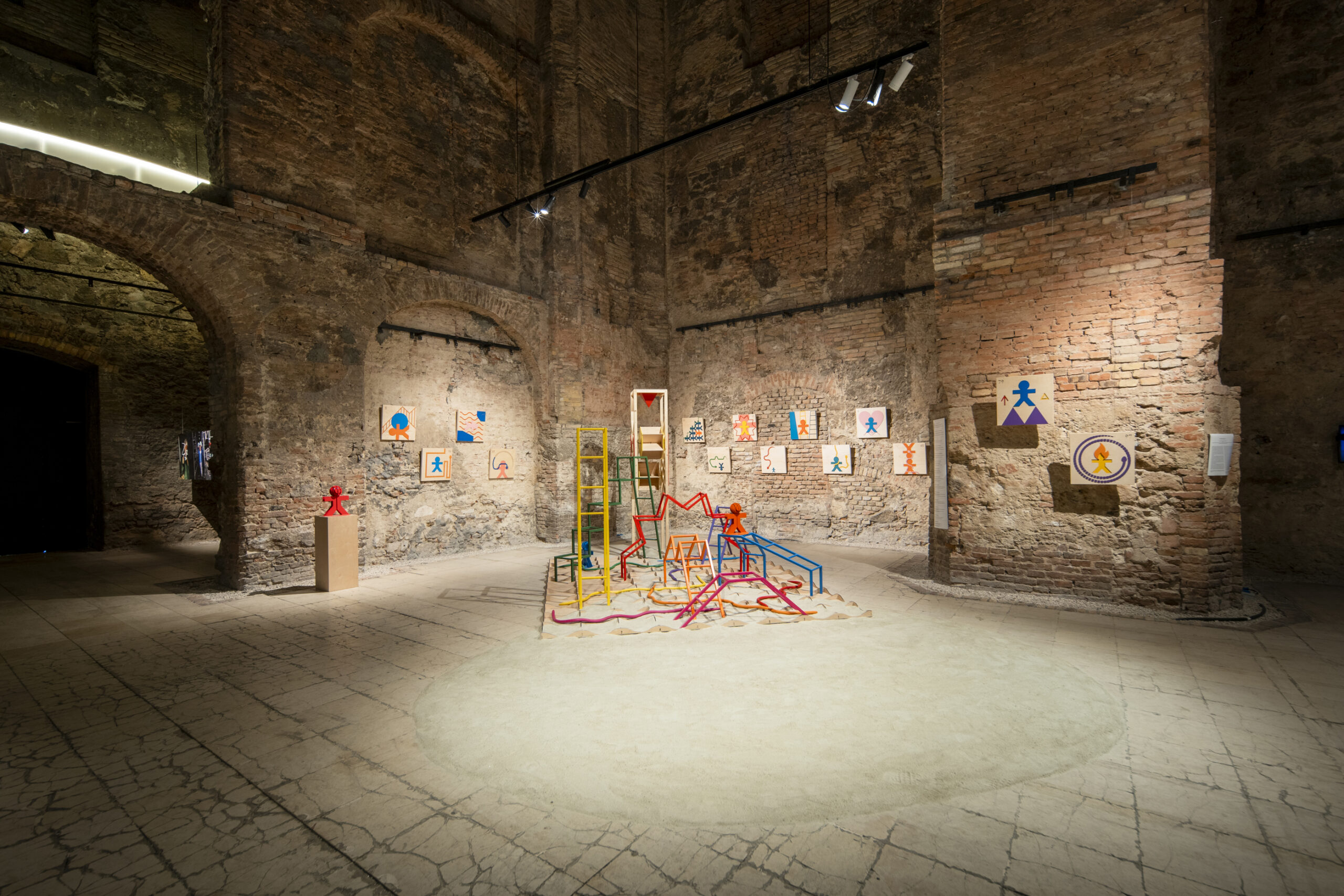
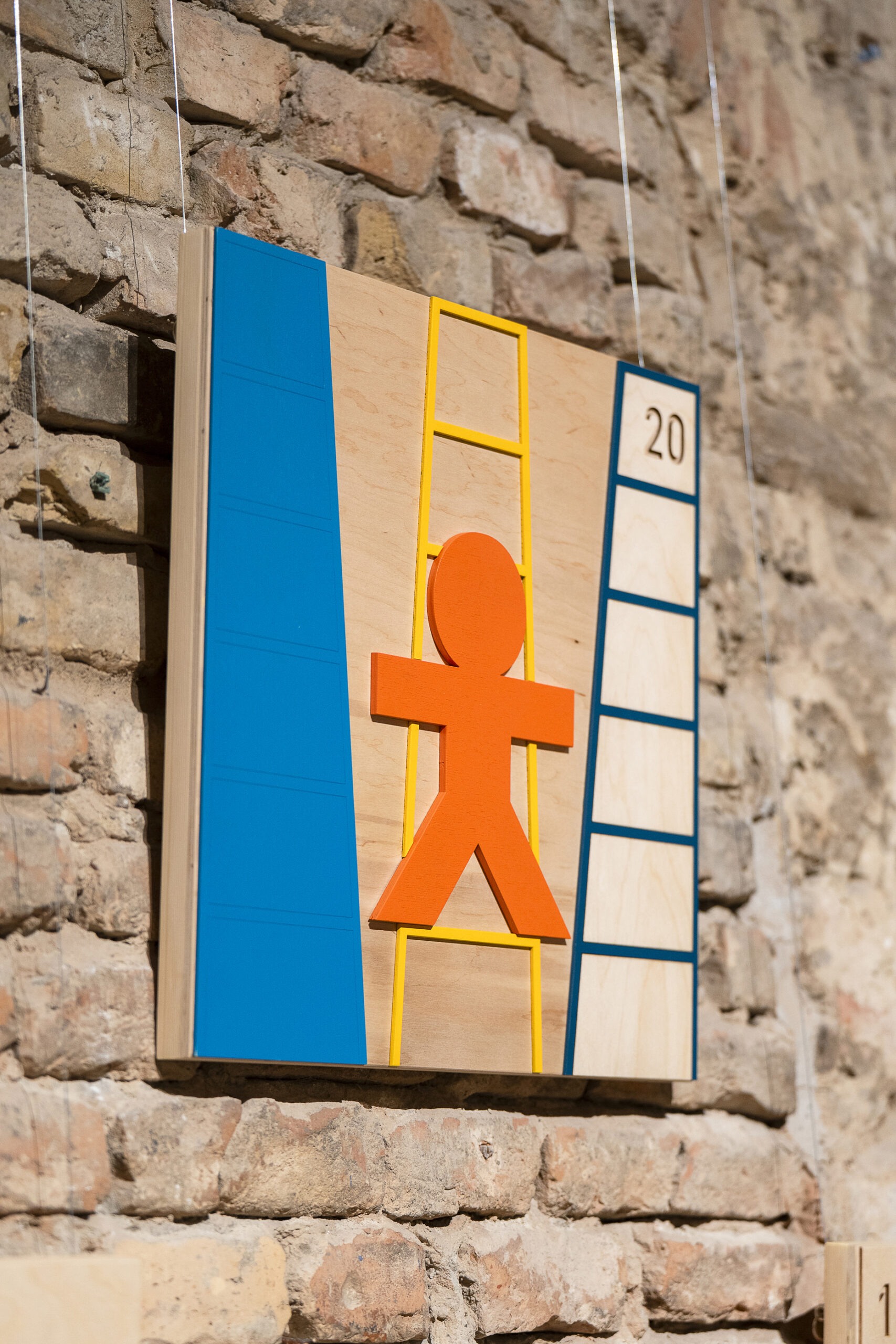
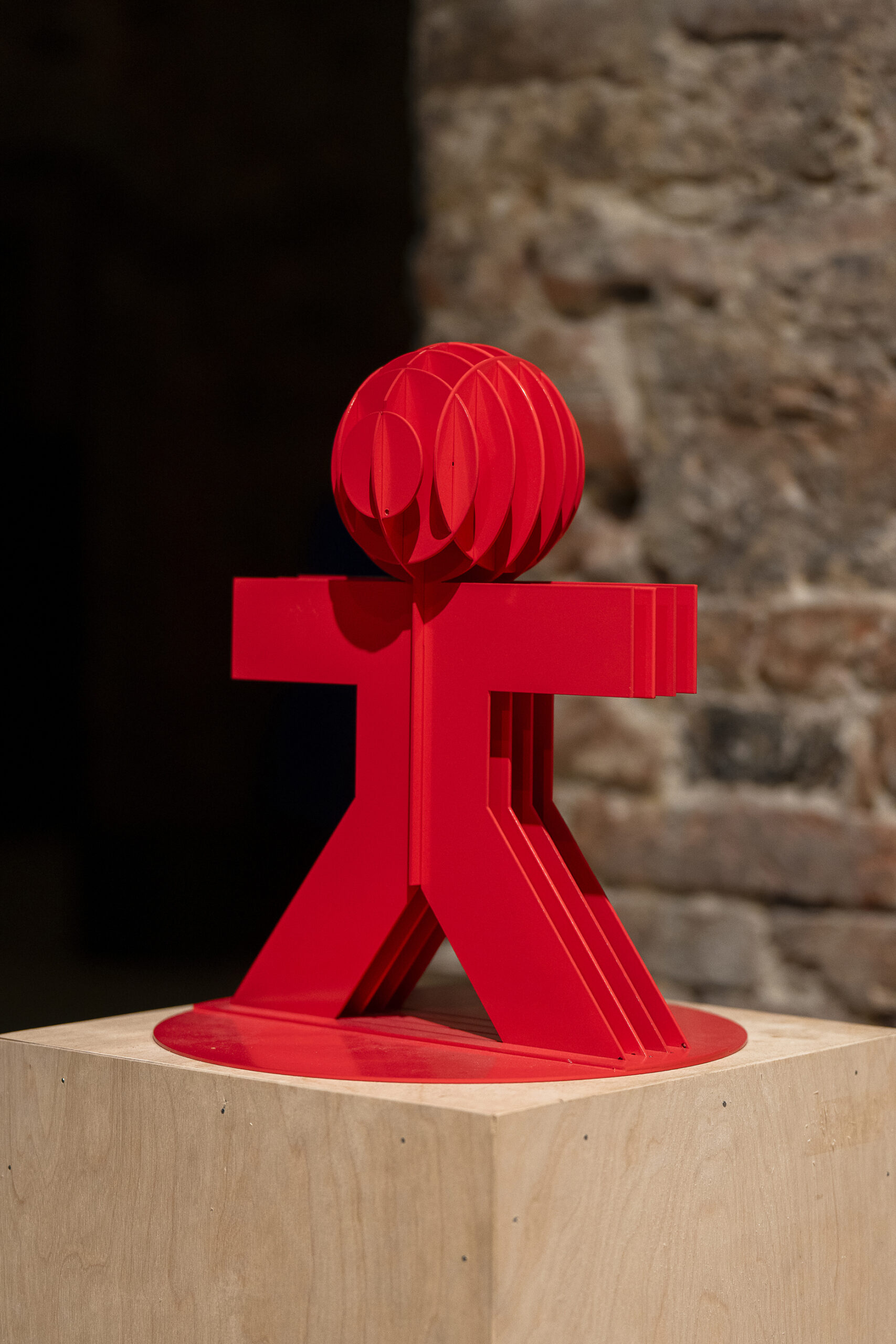
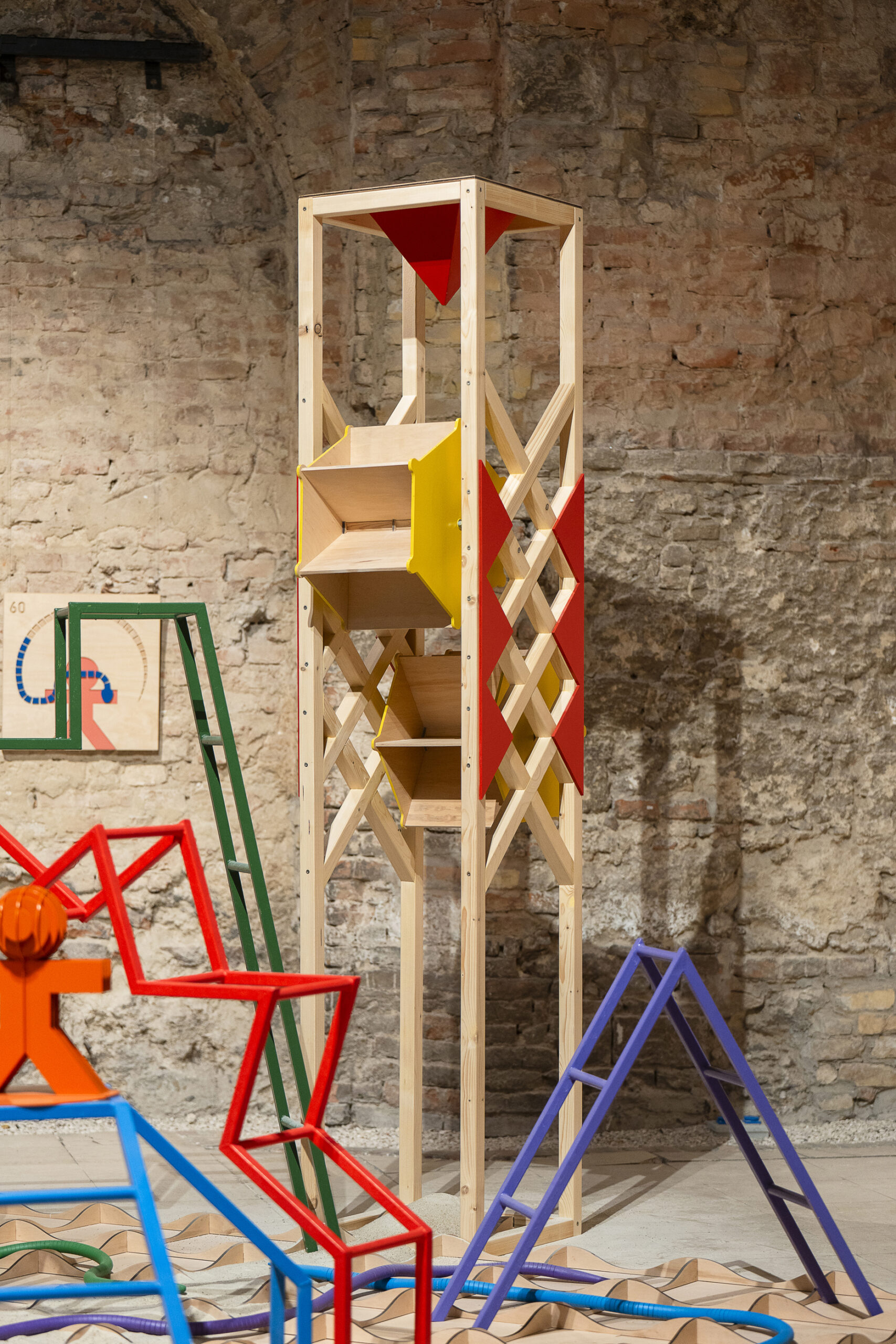
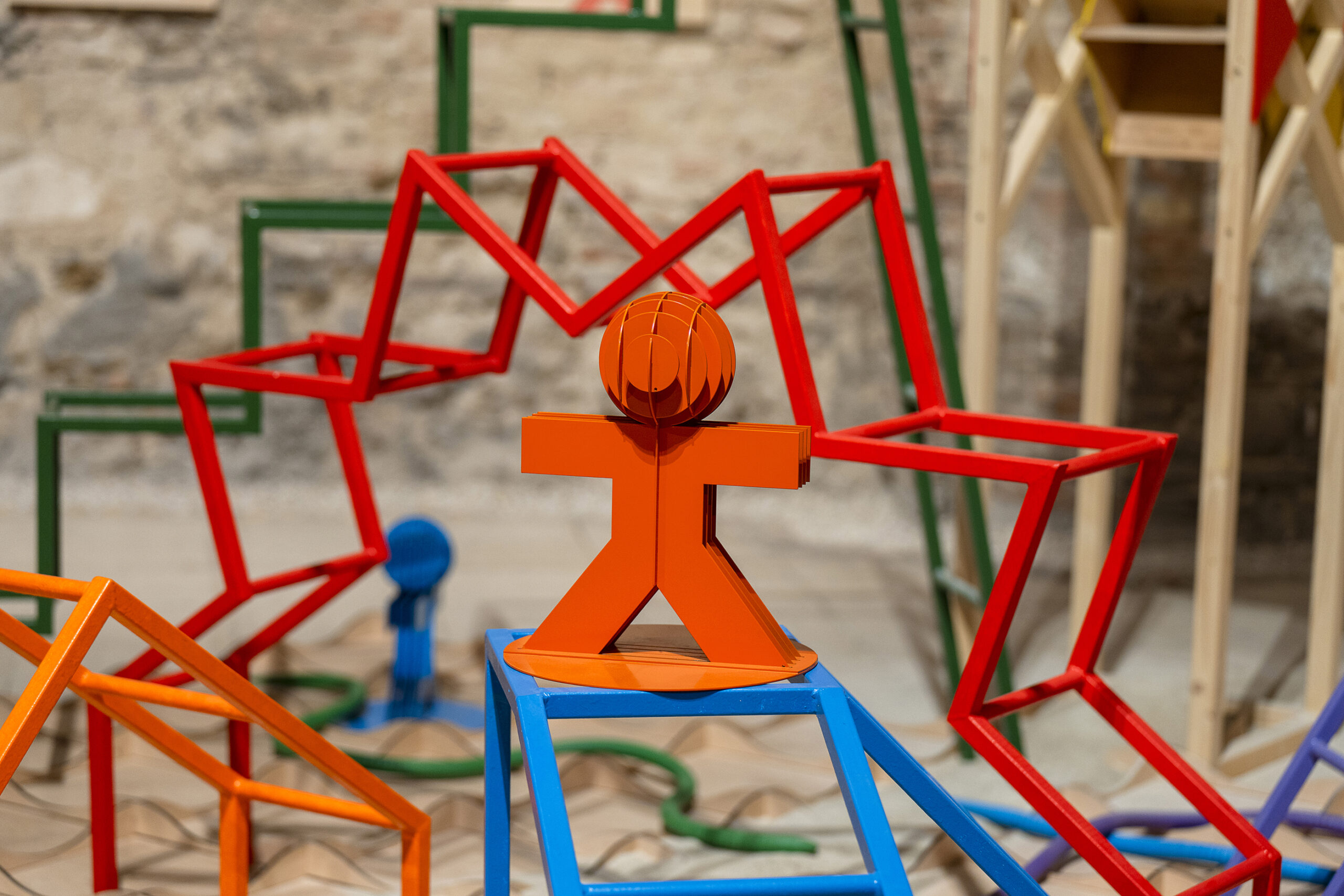
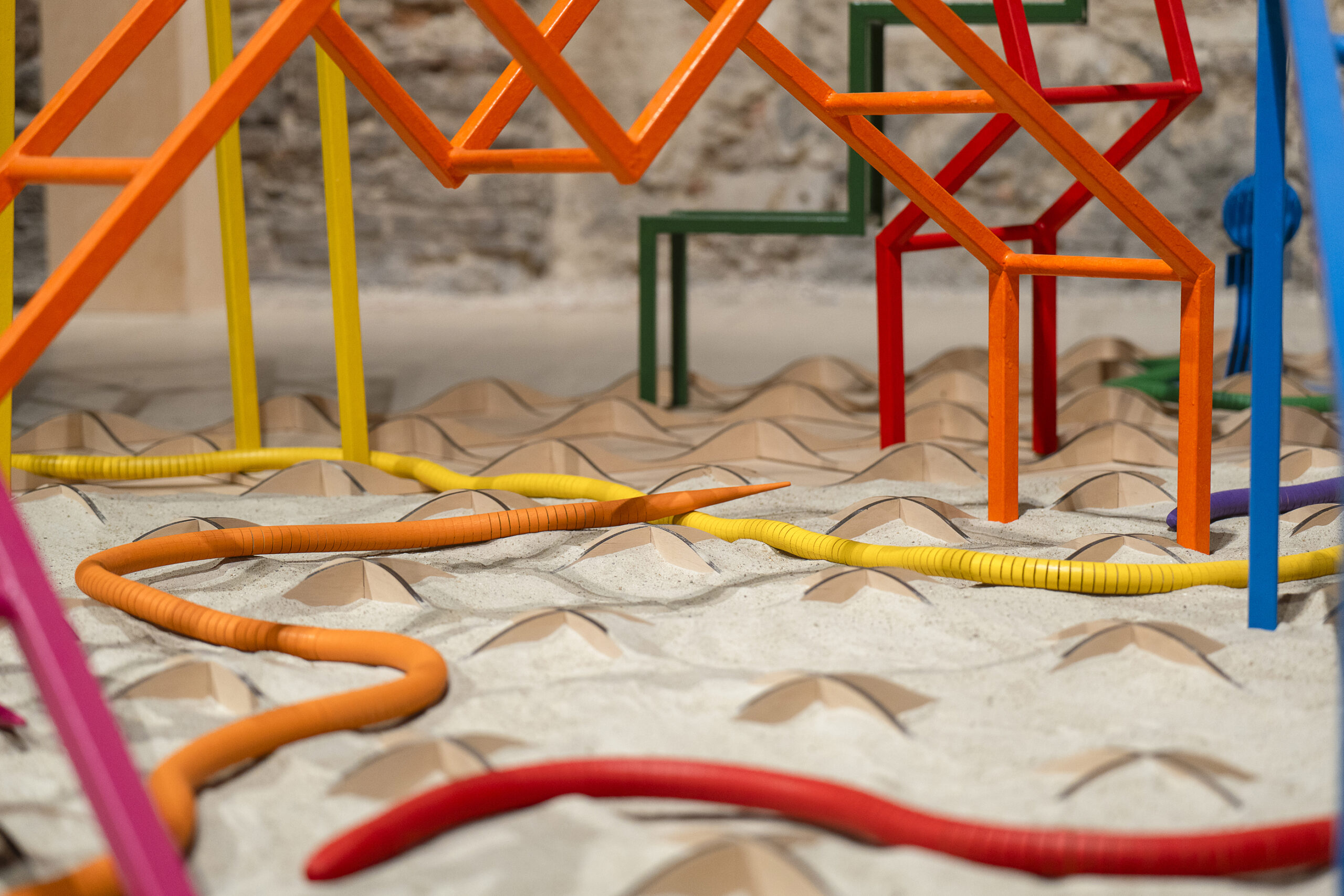
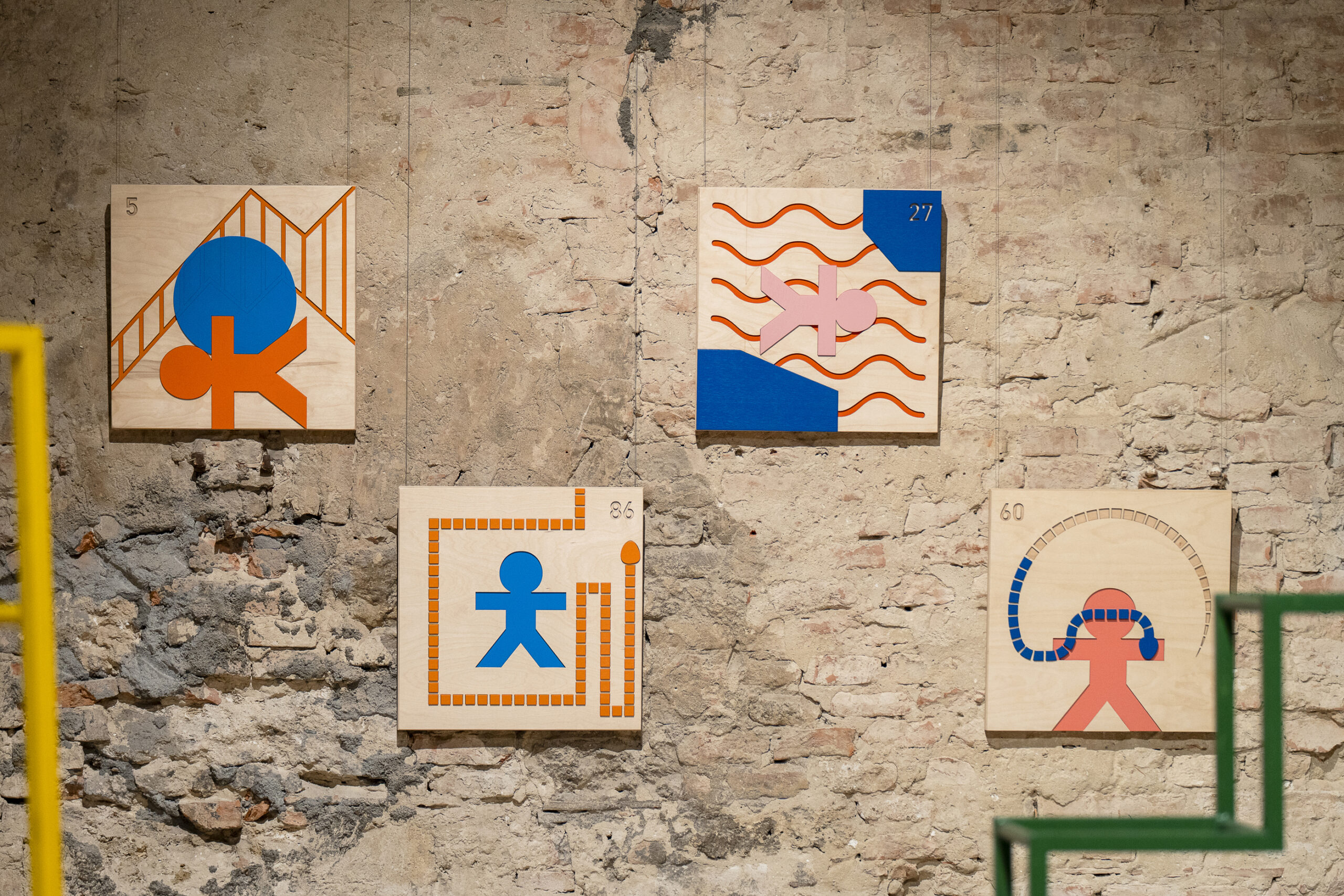
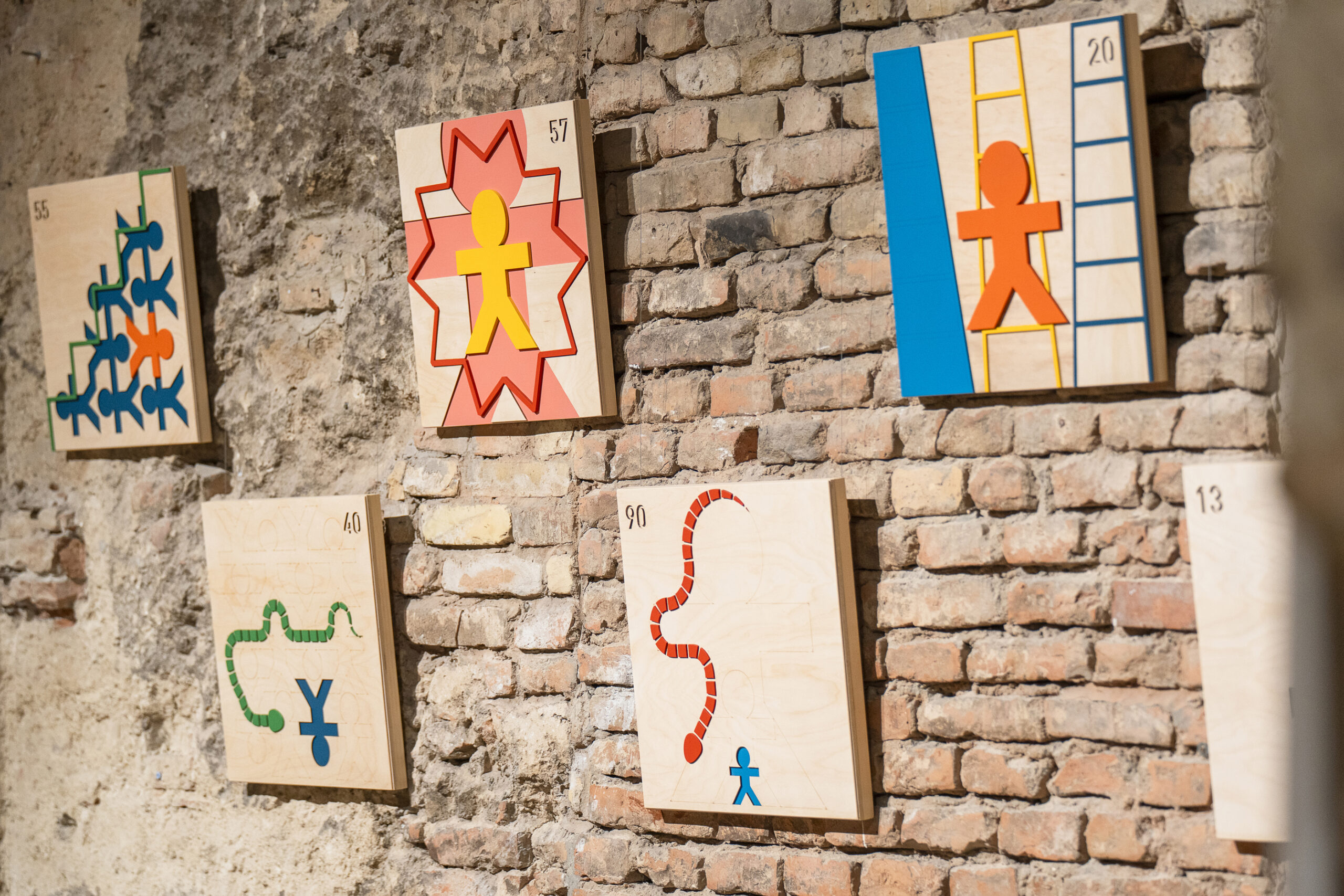
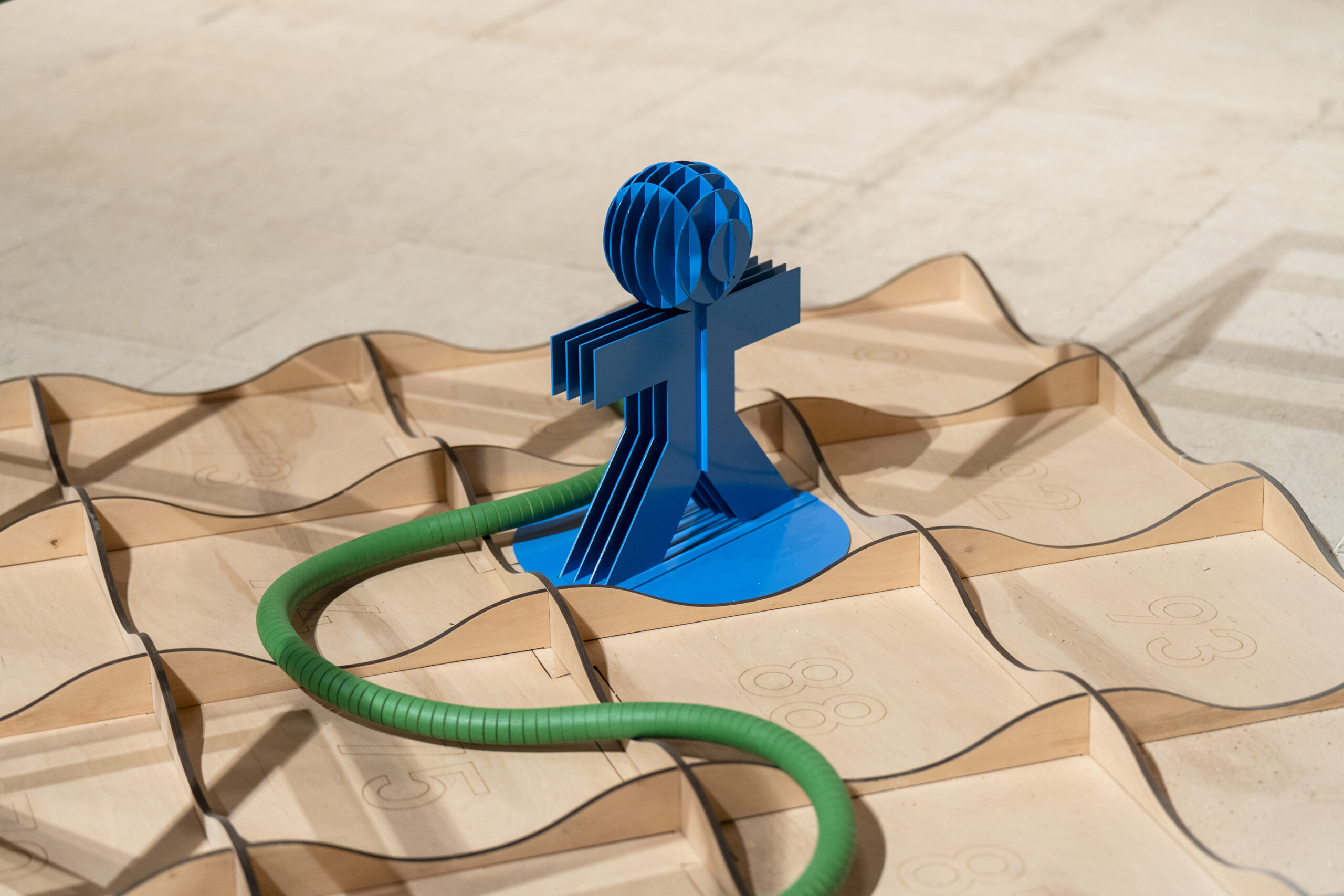

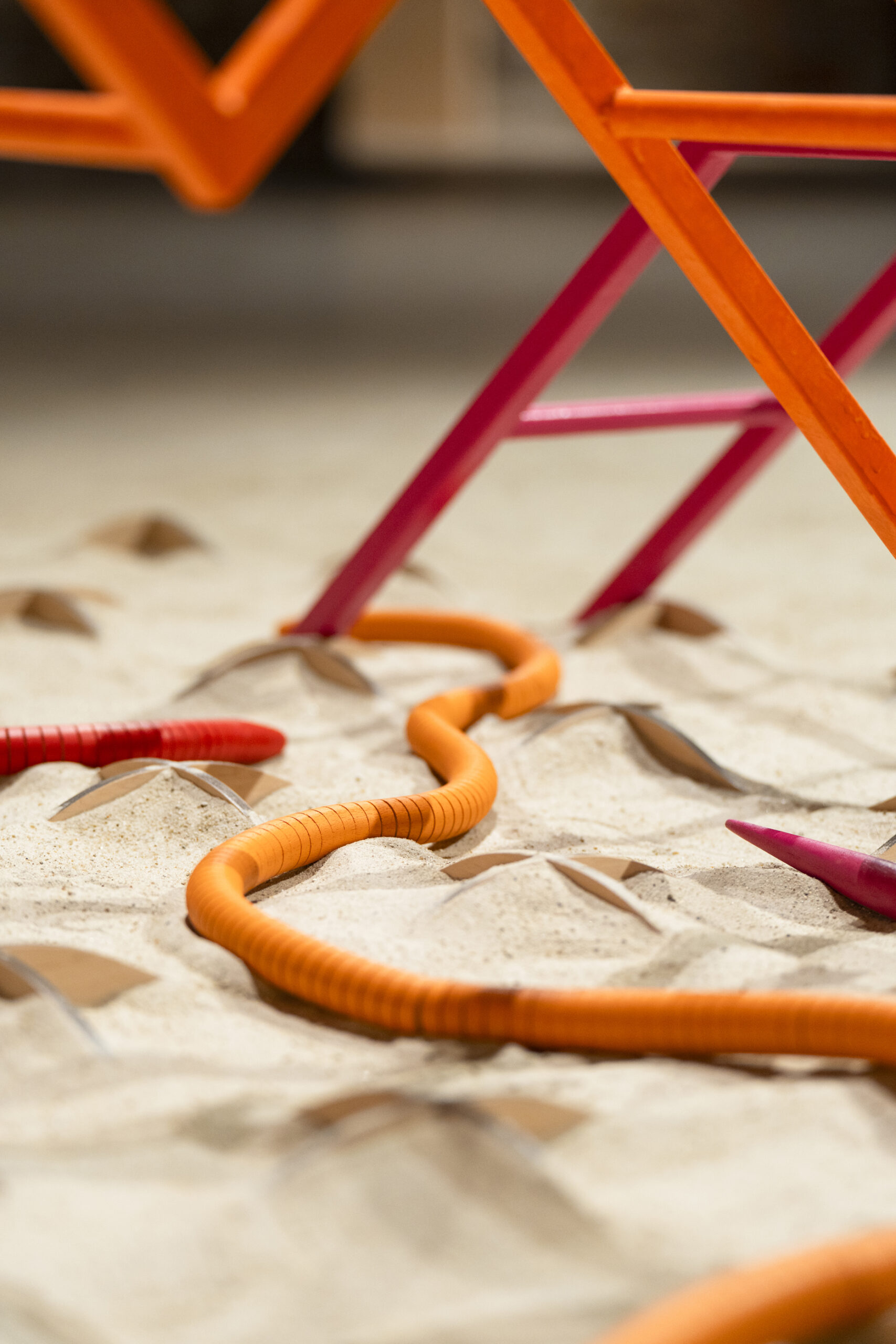
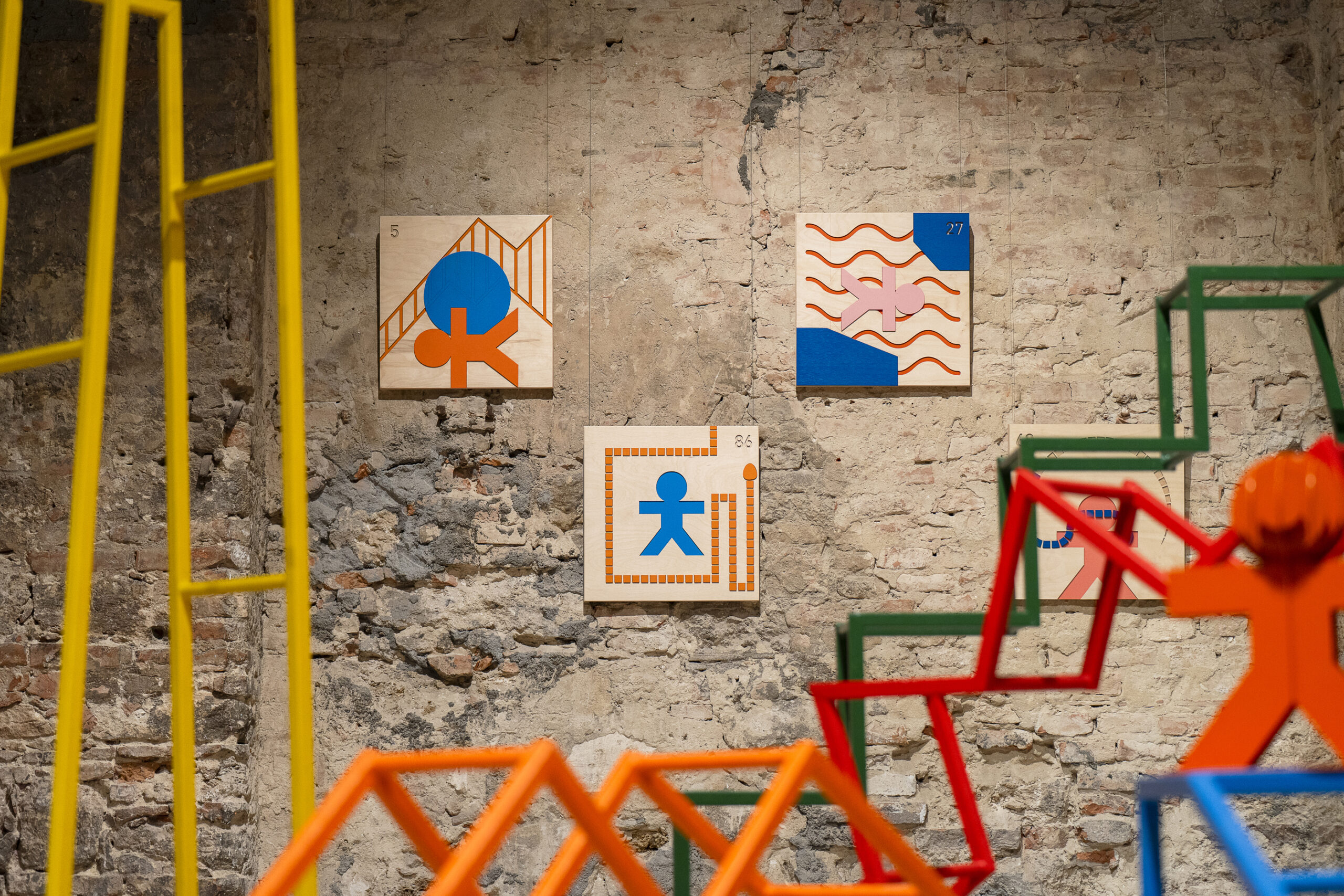
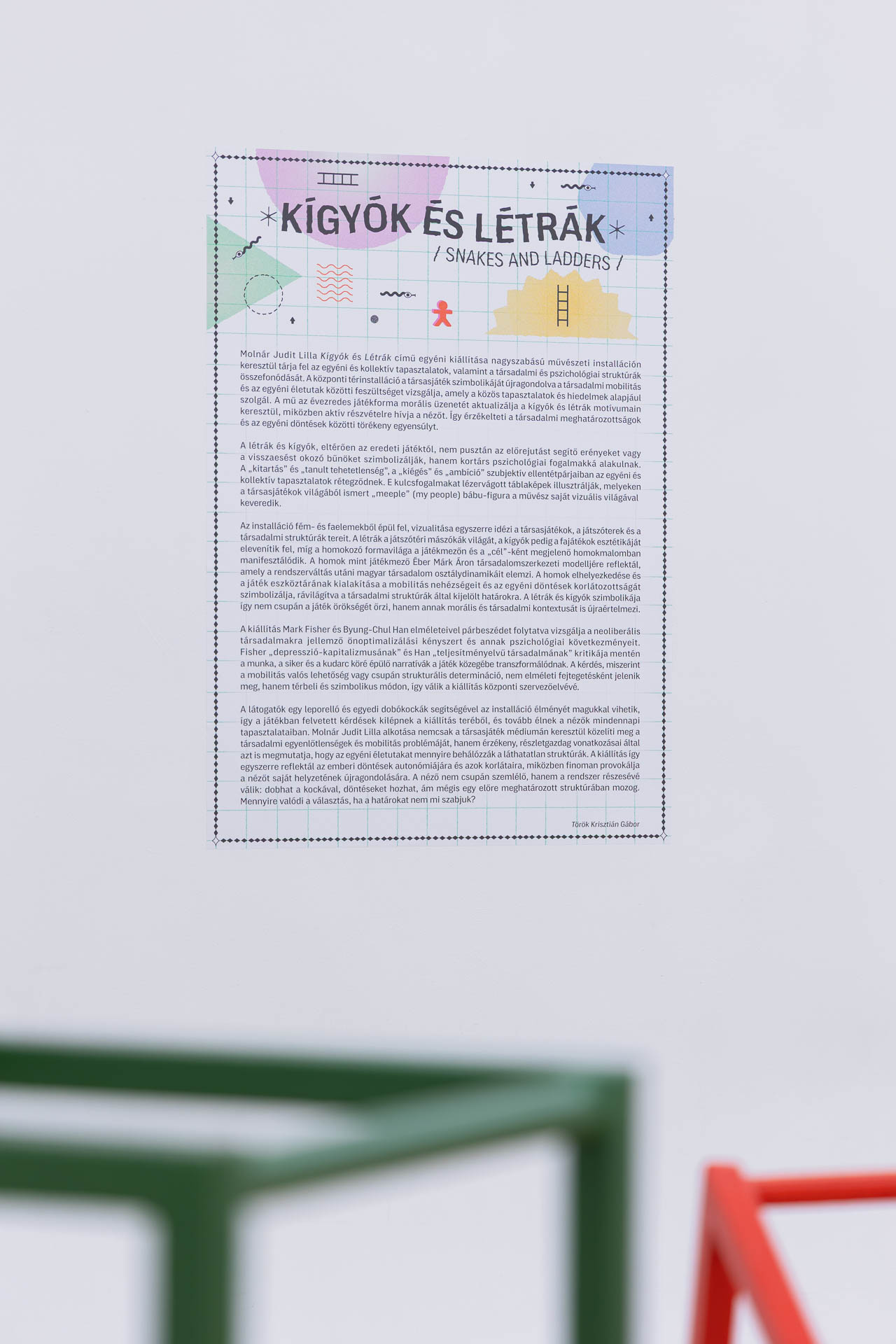
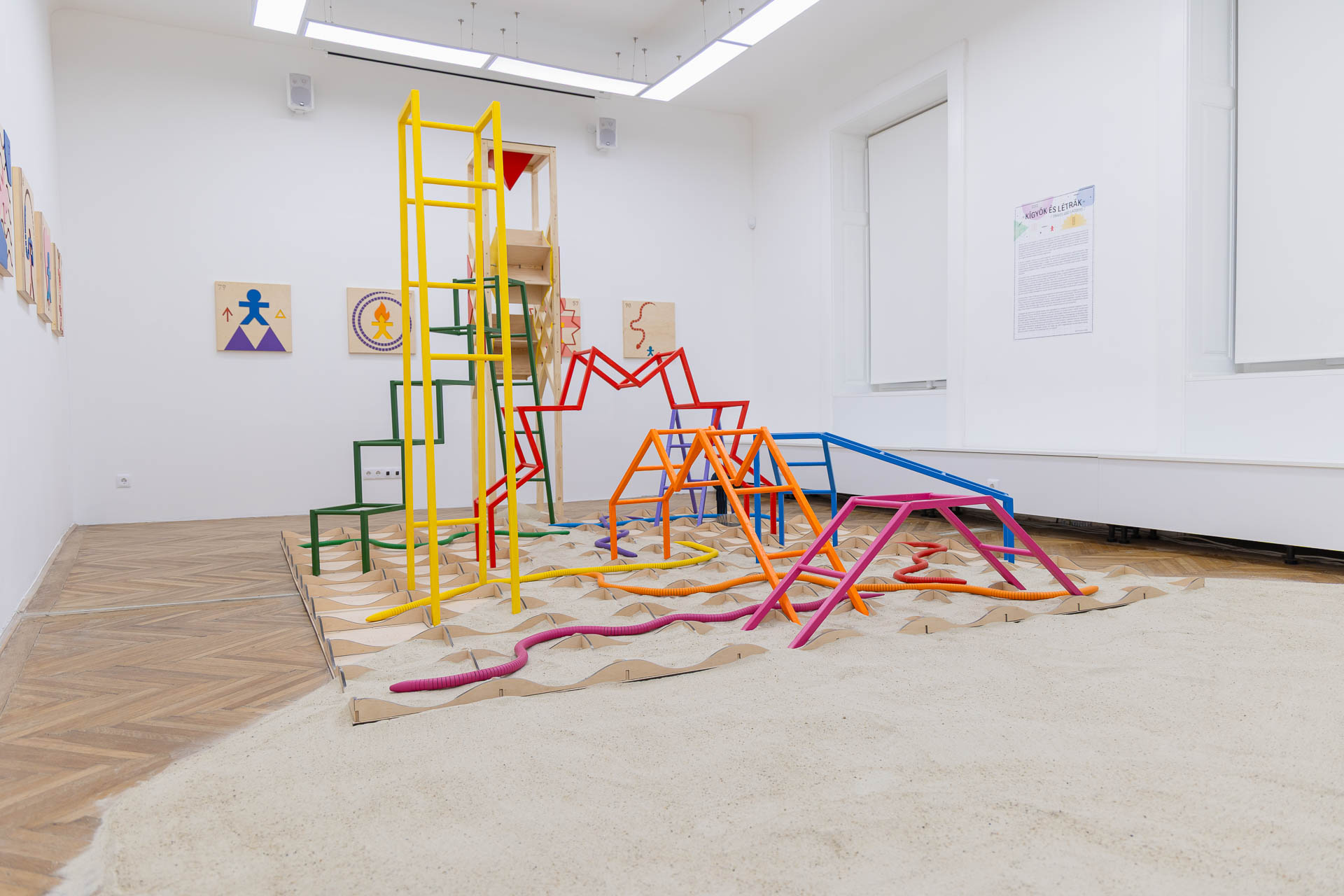
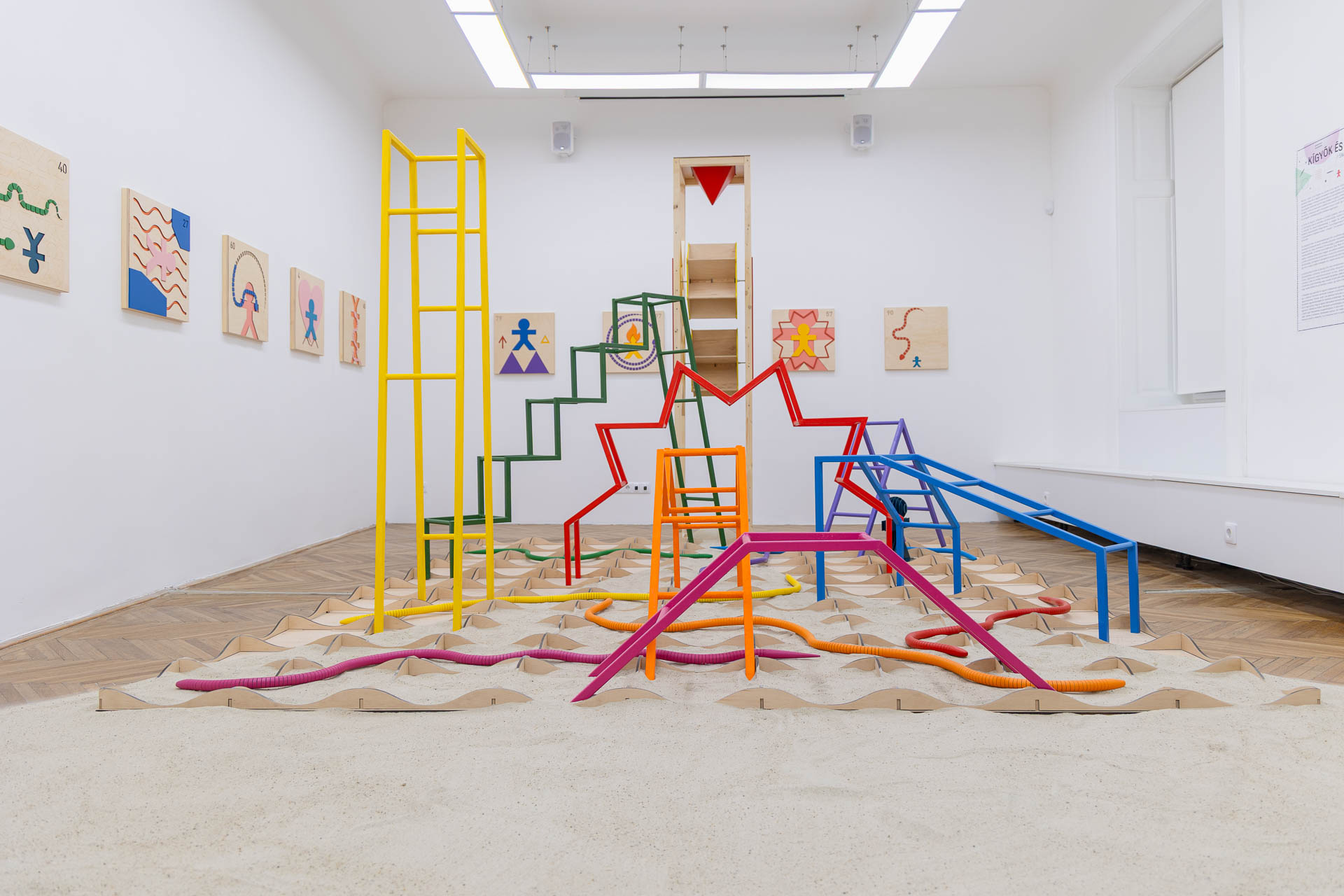
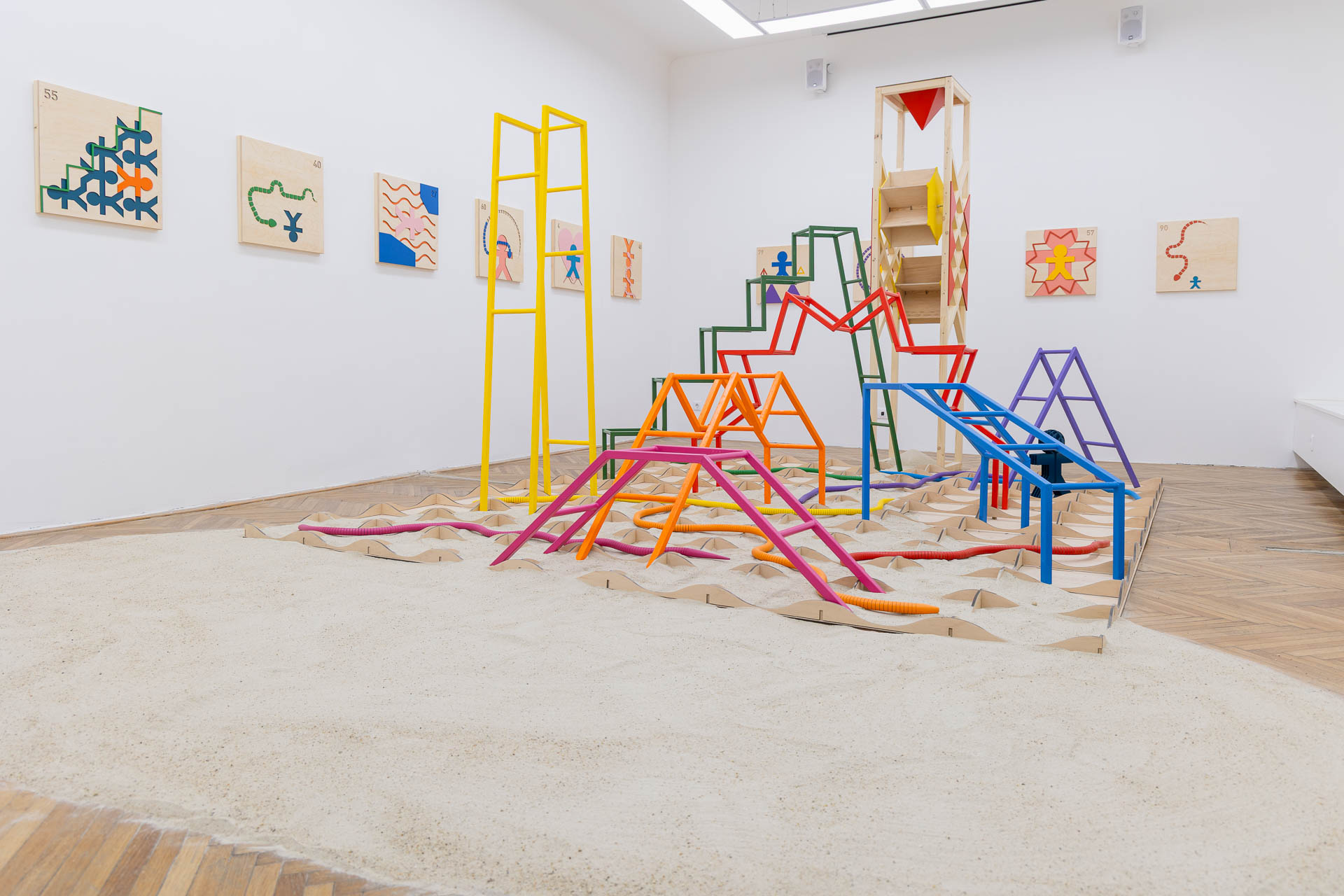
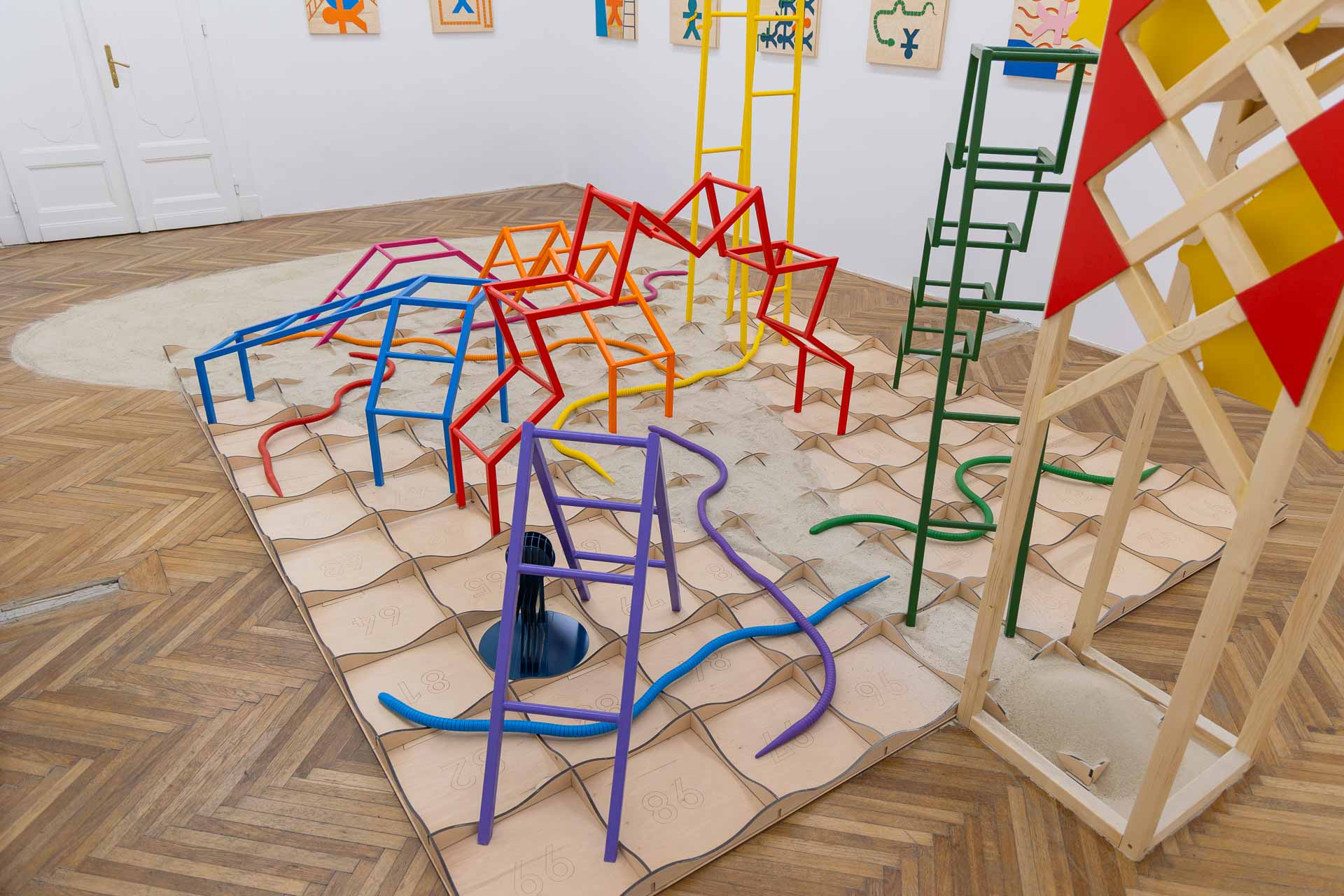
Judit Lilla Molnár’s solo exhibition, Snakes and Ladders, reveals the interconnections between individual and collective experiences, as well as social and psychological structures, through a monumental installation. Reinterpreting the symbolism of the board game, the central installation examines the friction between social mobility and personal life paths, which shape shared experiences and beliefs. Through the motifs of snakes and ladders, the work recontextualizes the moral message of this millennia-old game while inviting active participation. In doing so, it conveys the fragile balance between social determinants and individual choices.
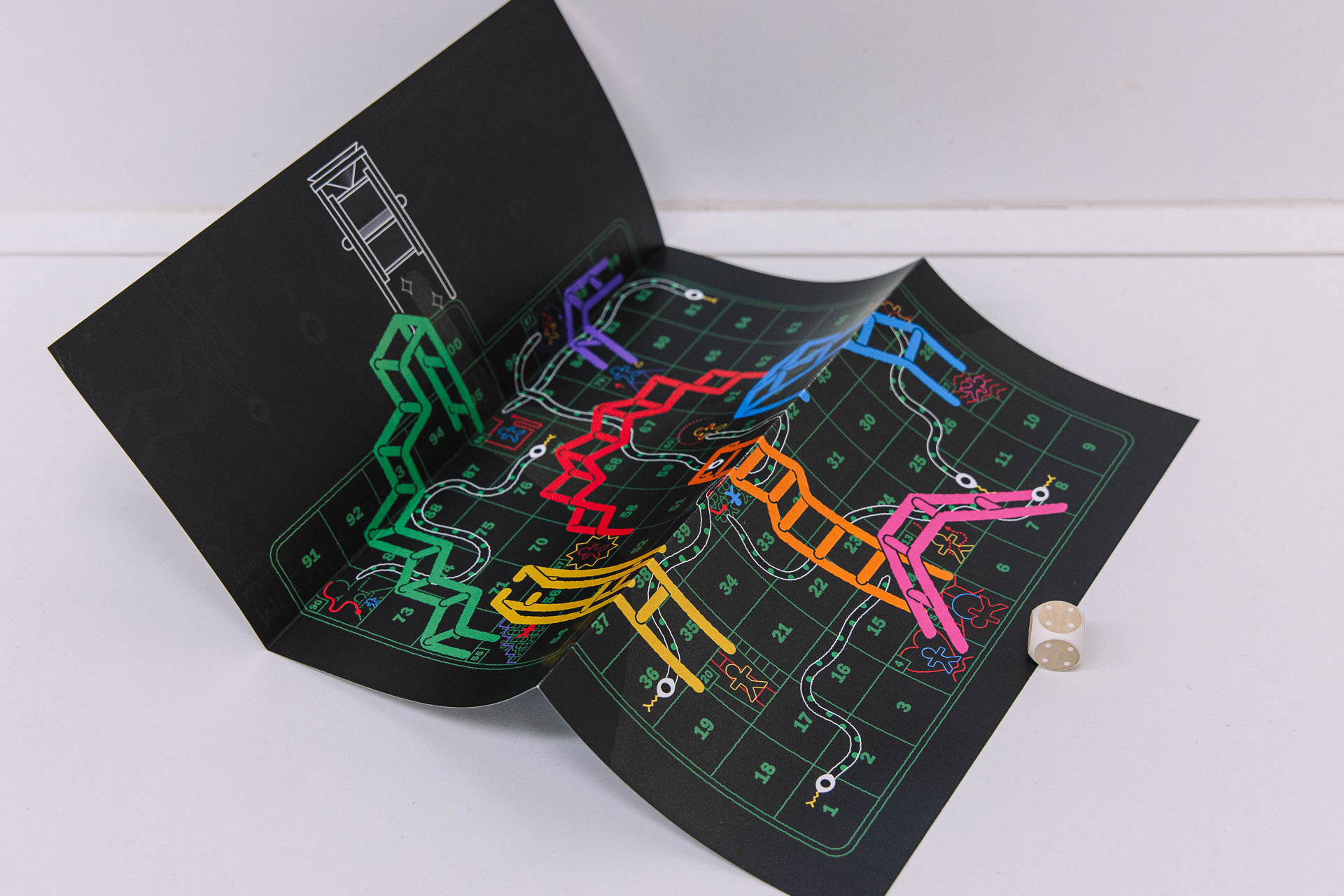
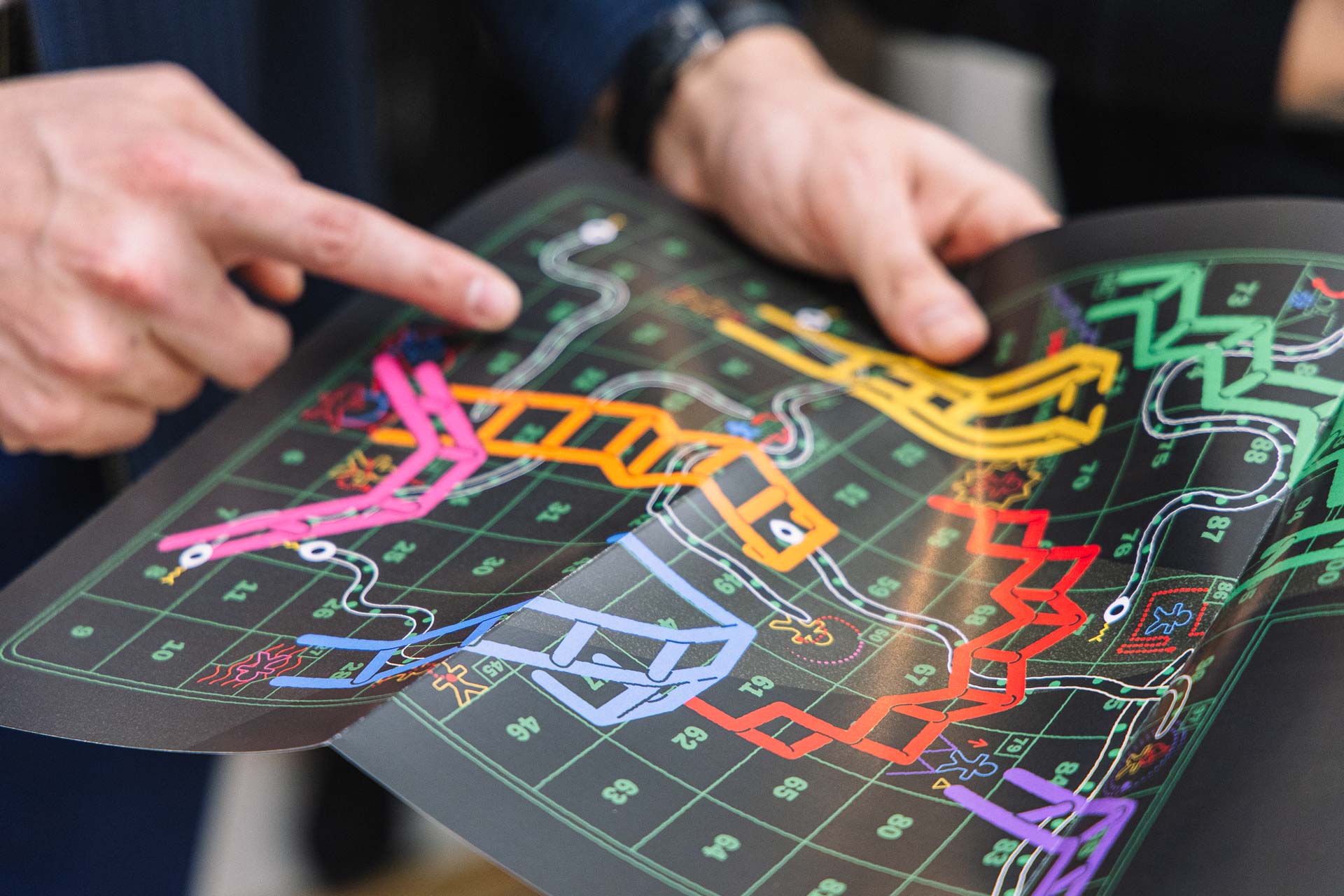
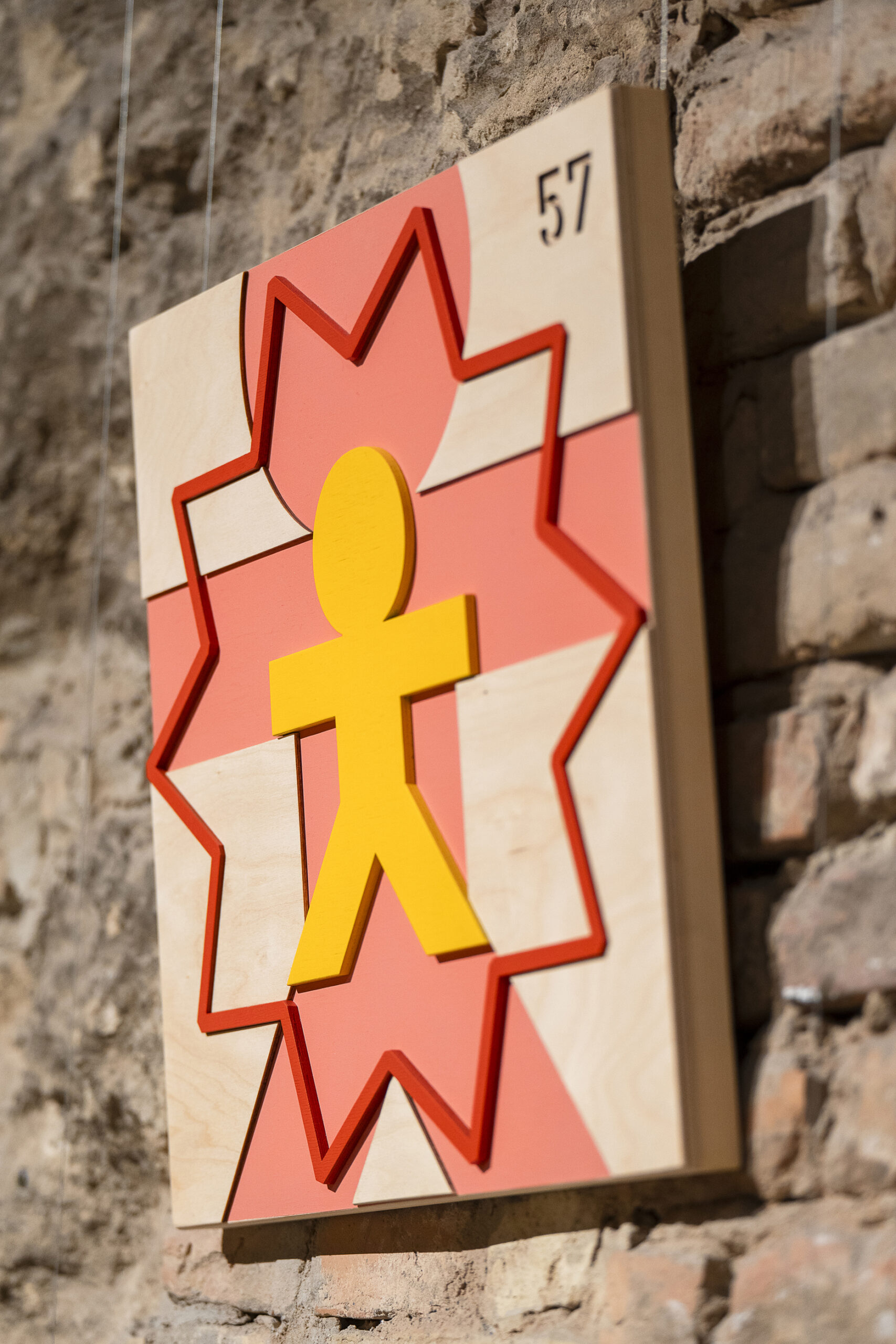
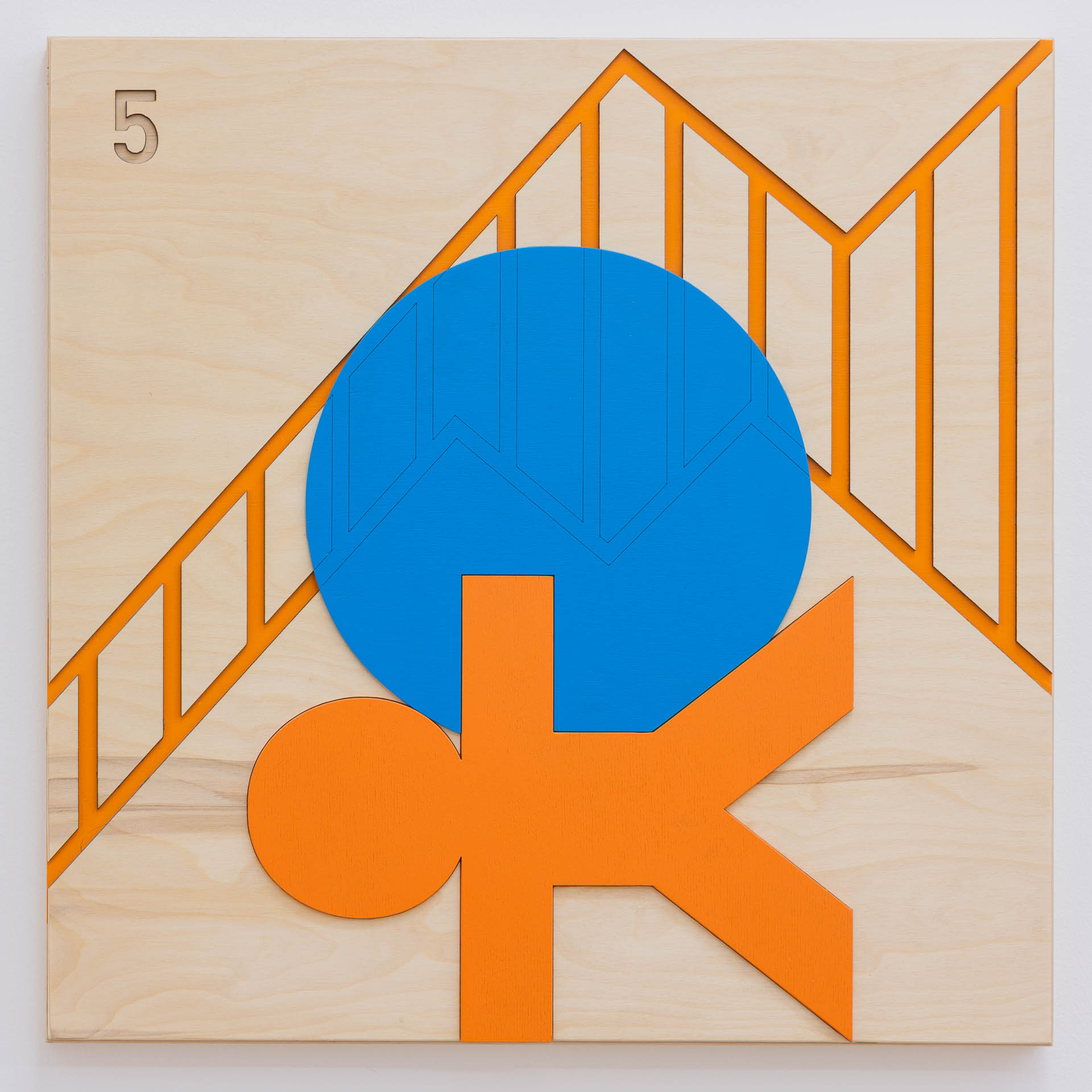
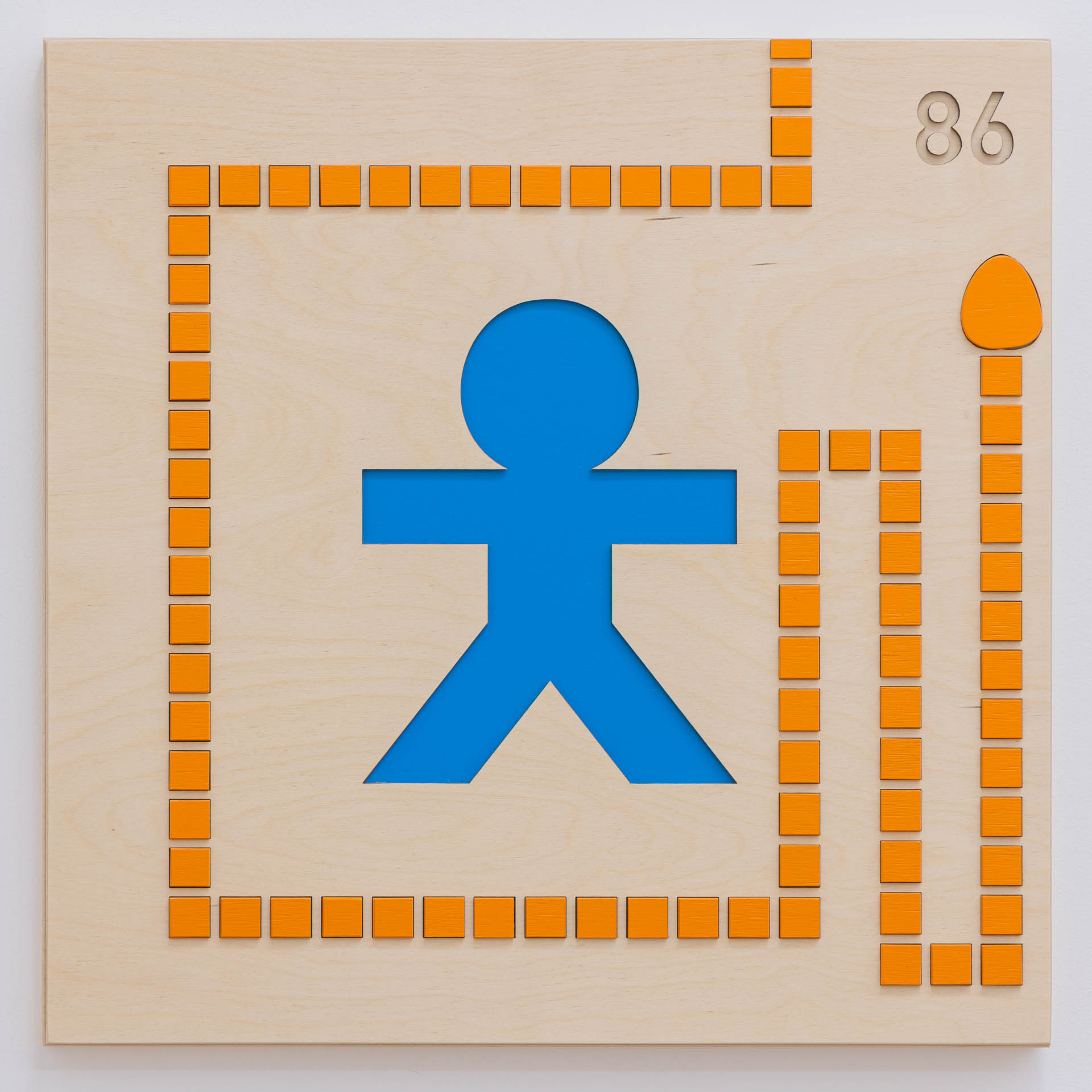
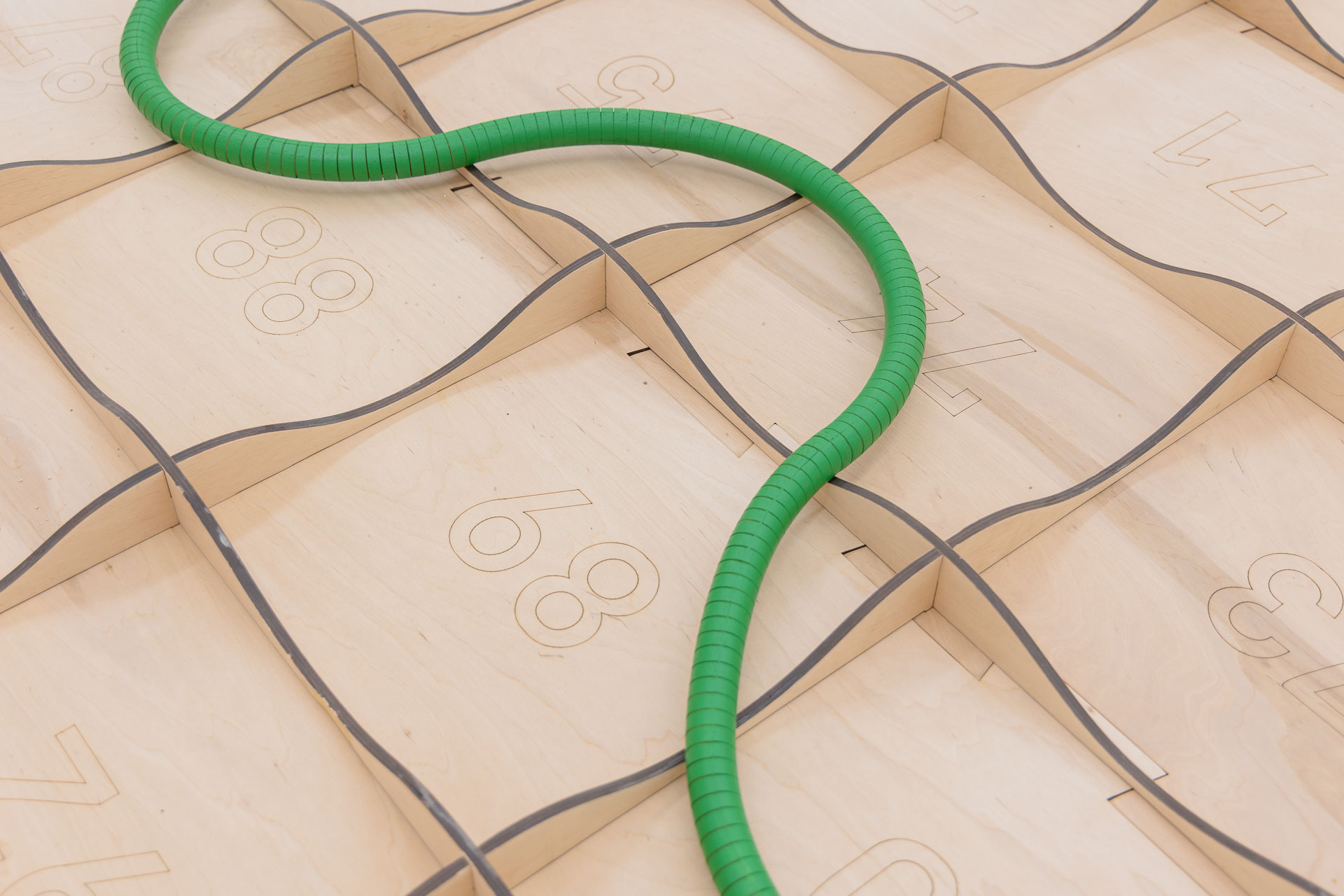
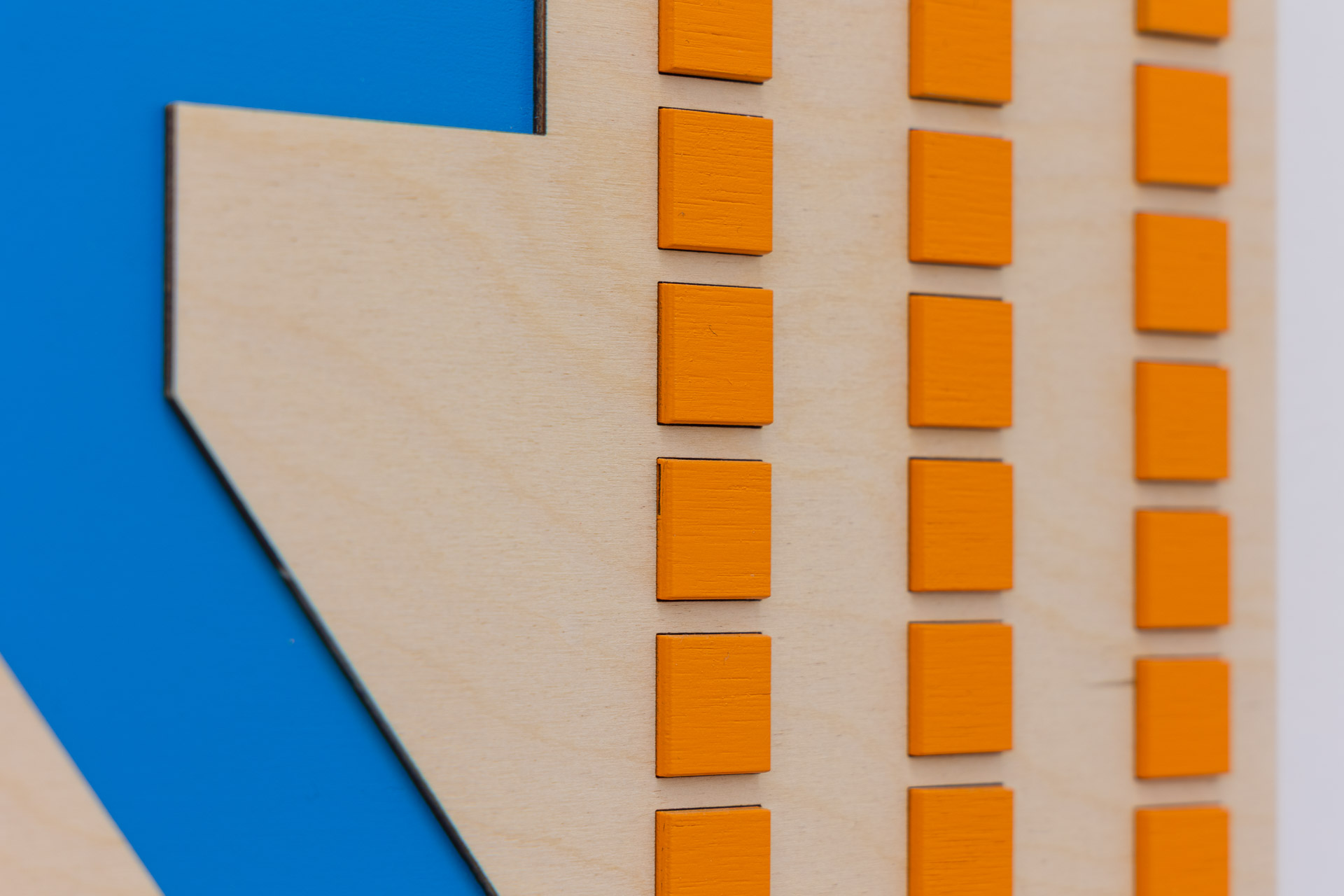
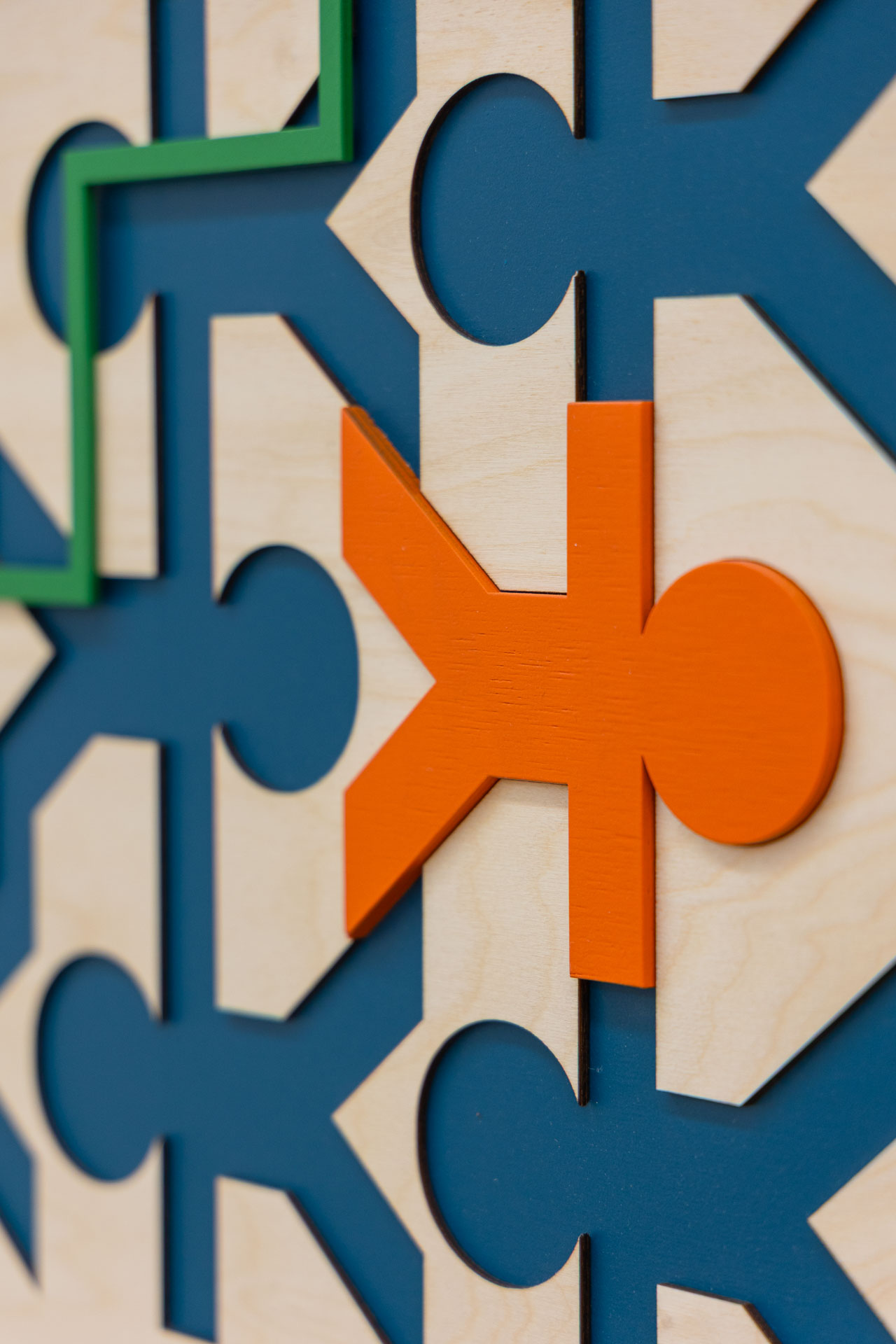
Snakes and ladders, in this interpretation, no longer simply symbolize virtues that help progress or vices that lead to downfall; instead, they can also be understood as contemporary psychological concepts. Individual and collective experiences manifest in opposing psychological states: the concepts of „perseverance” and „learned helplessness,” „burnout” and „ambition.” These concepts are illustrated through laser-cut images on panels, where the familiar meeple game piece from board games blends with the artist’s own visual world.
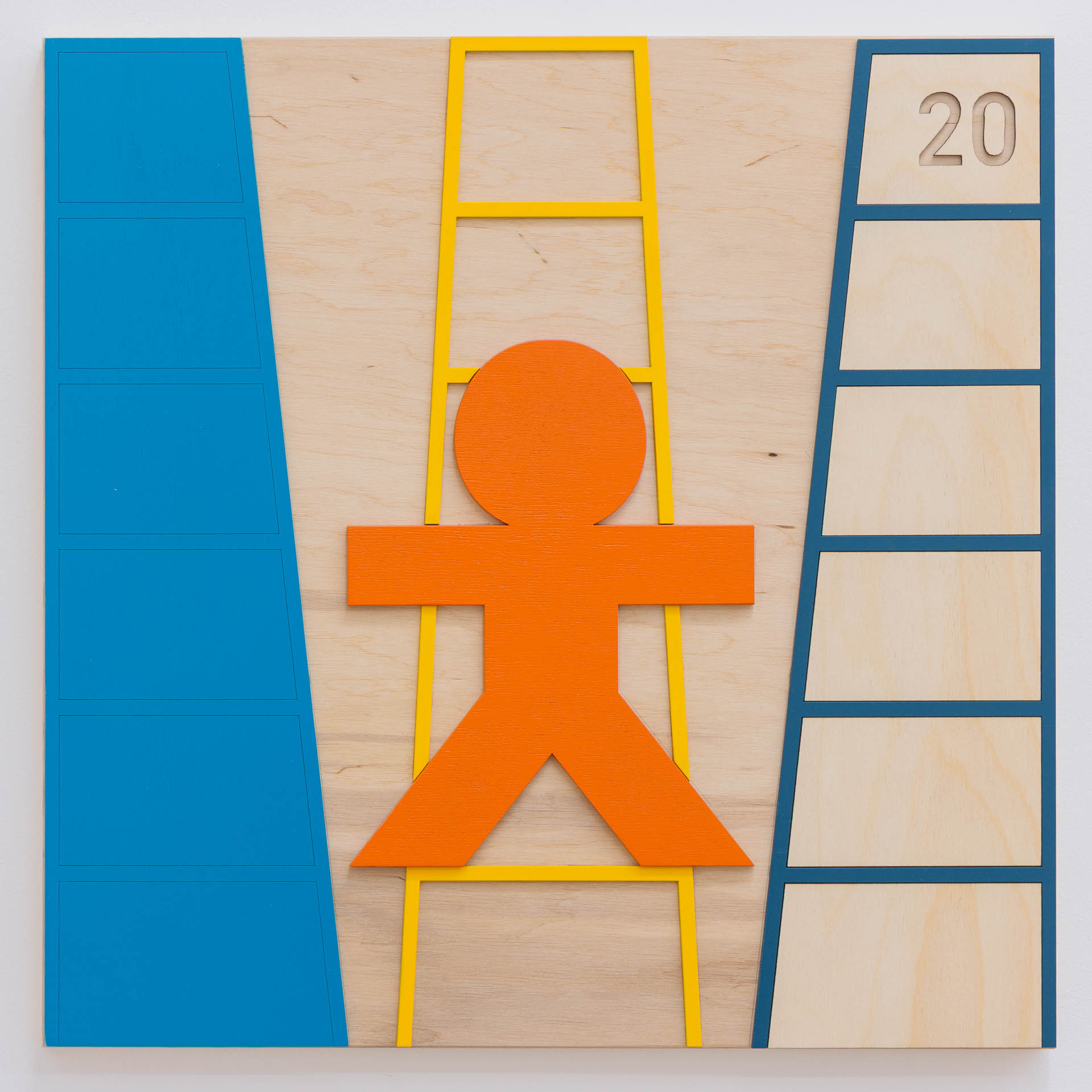
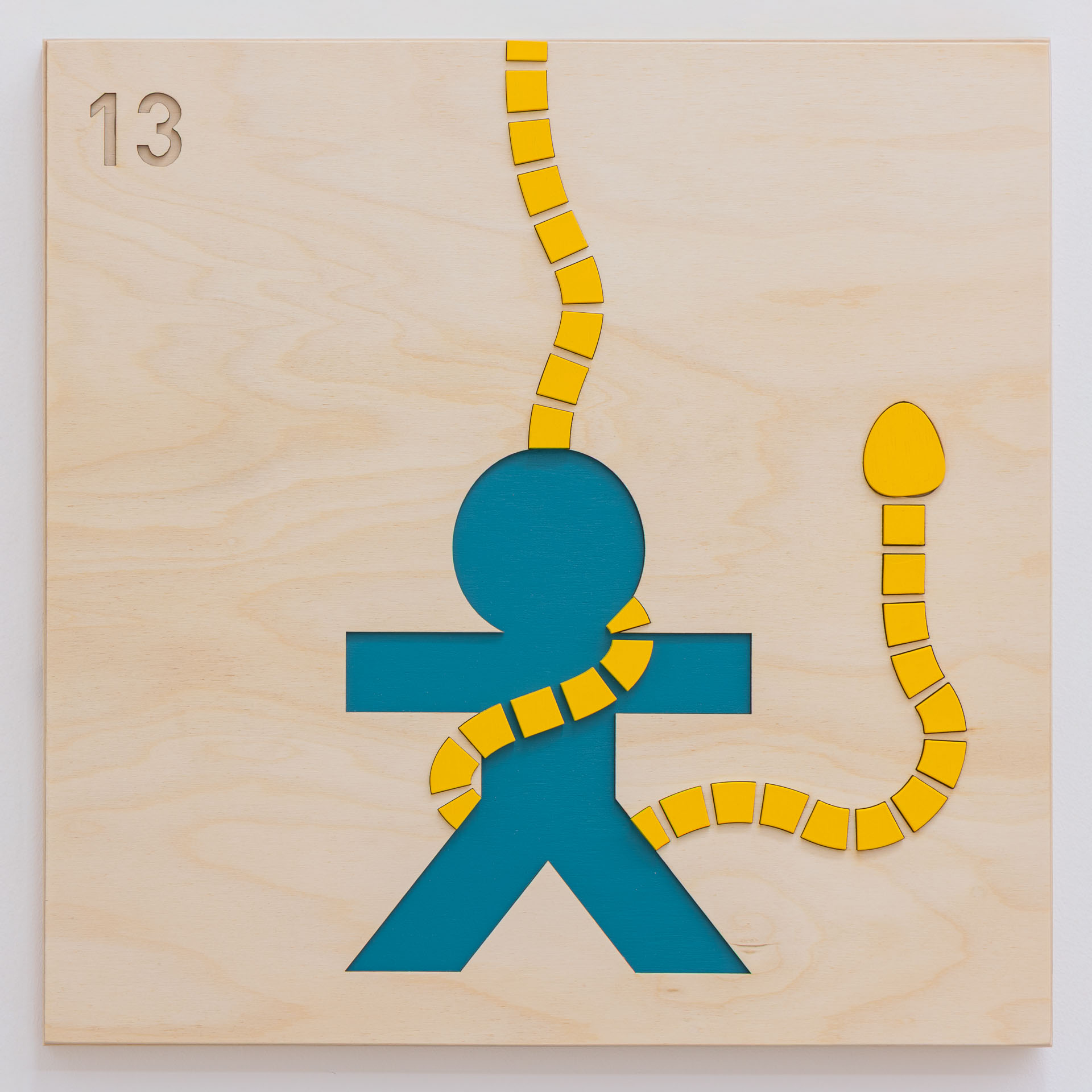
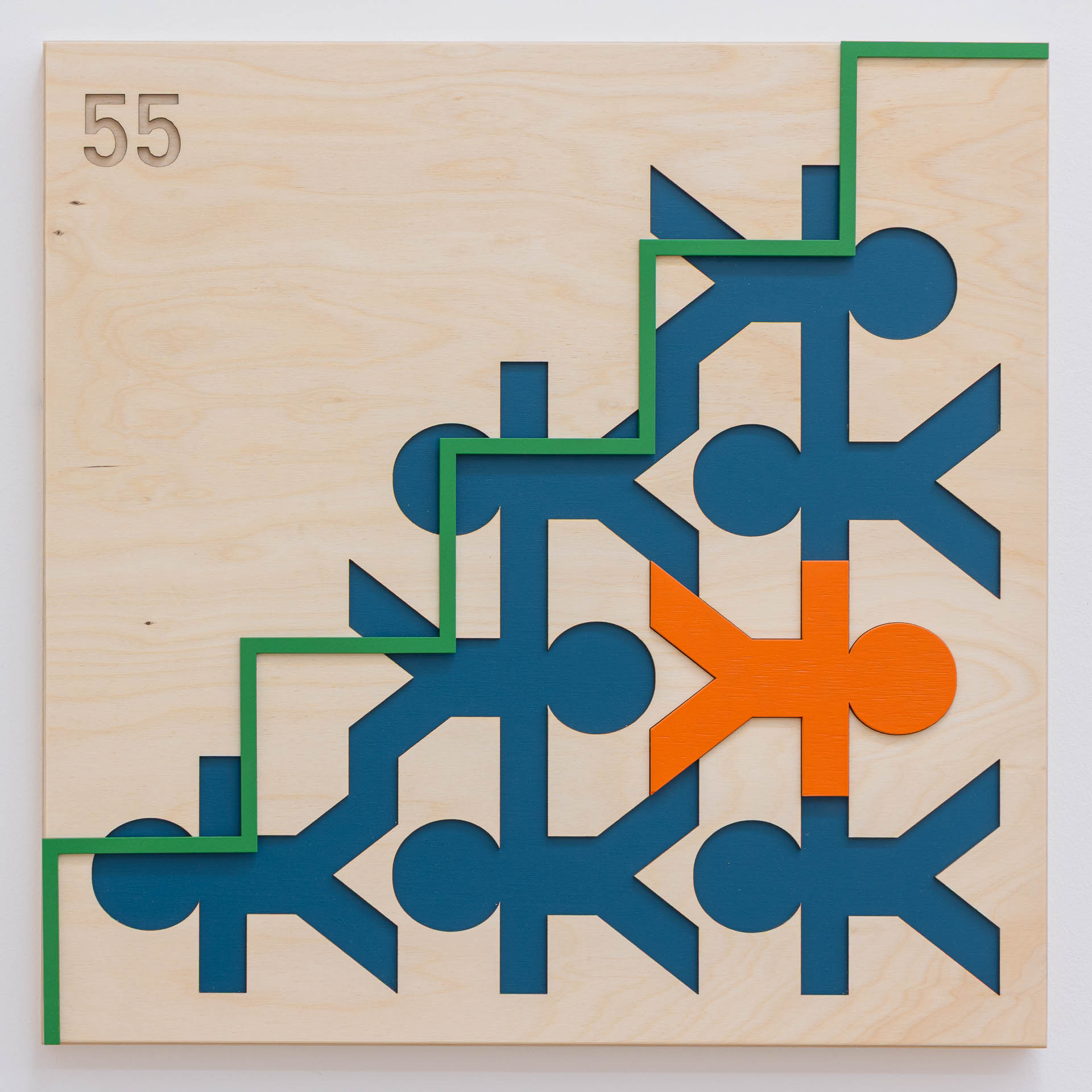
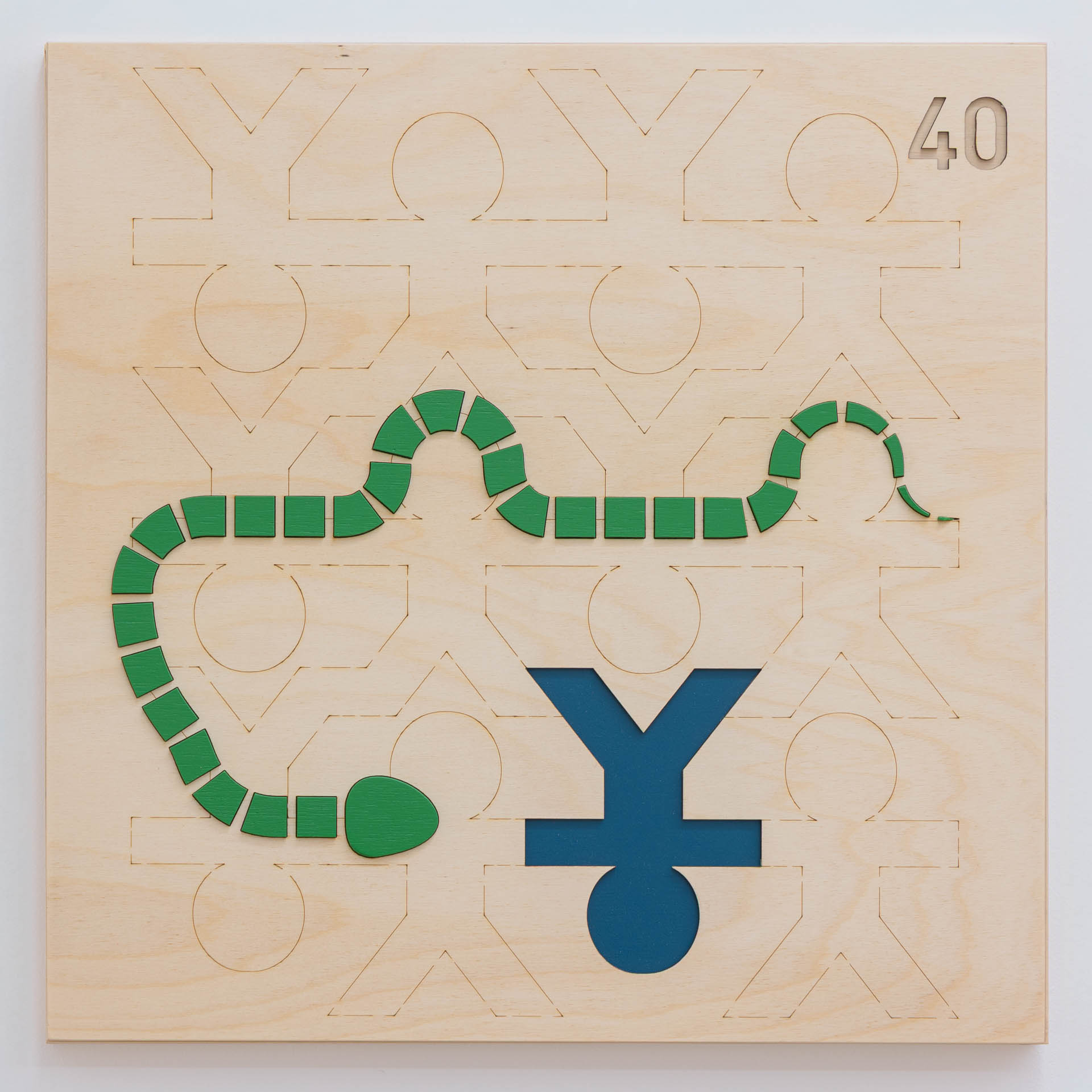
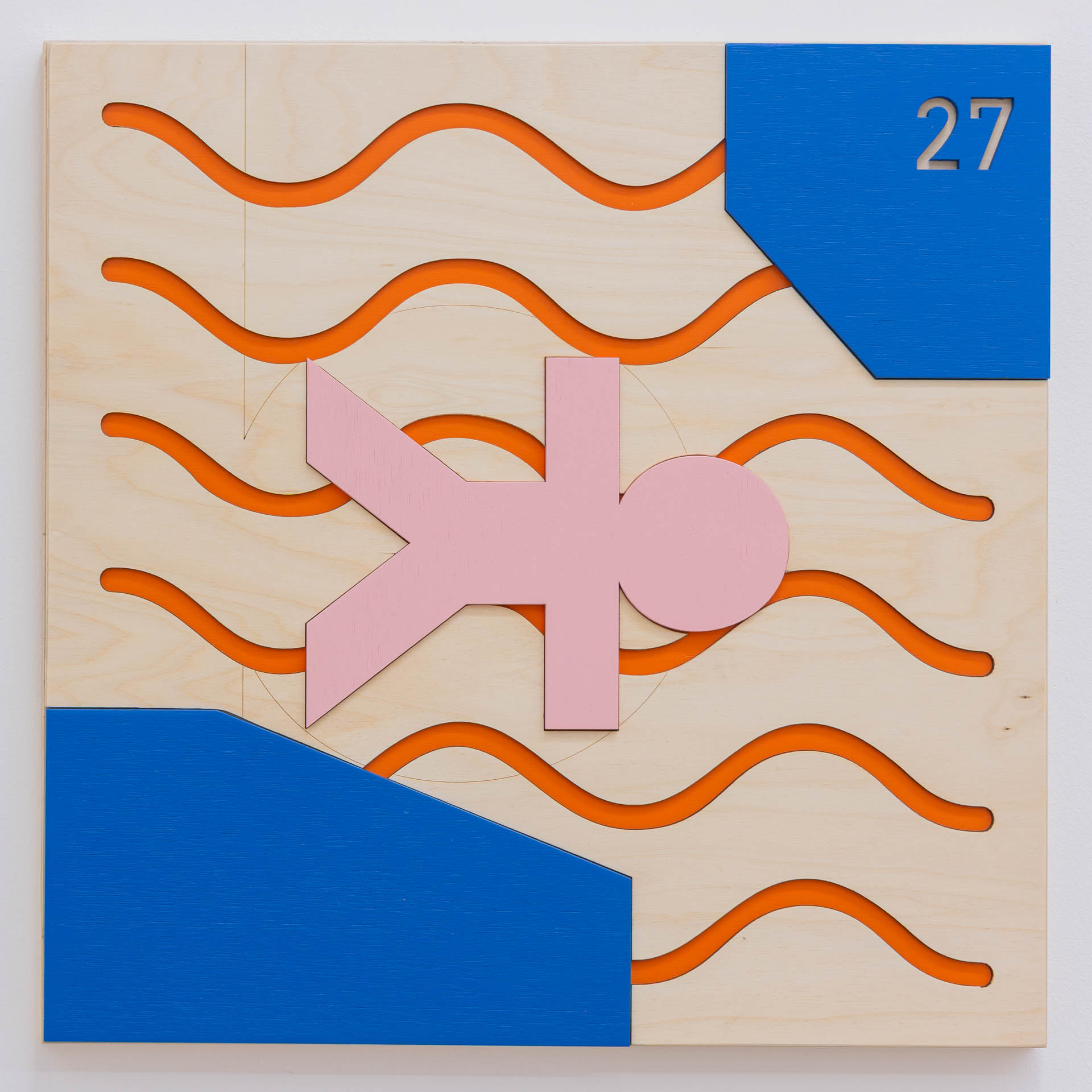
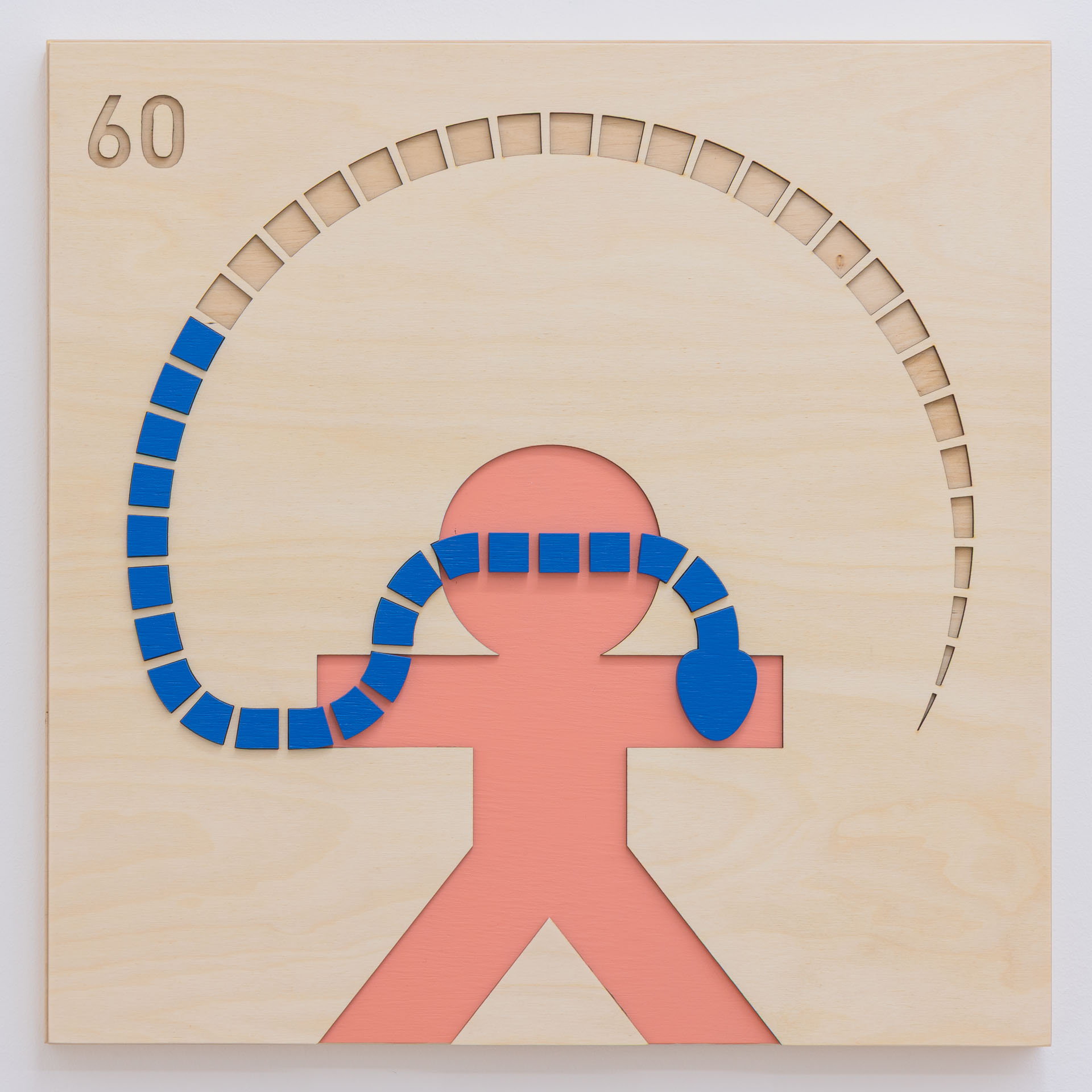
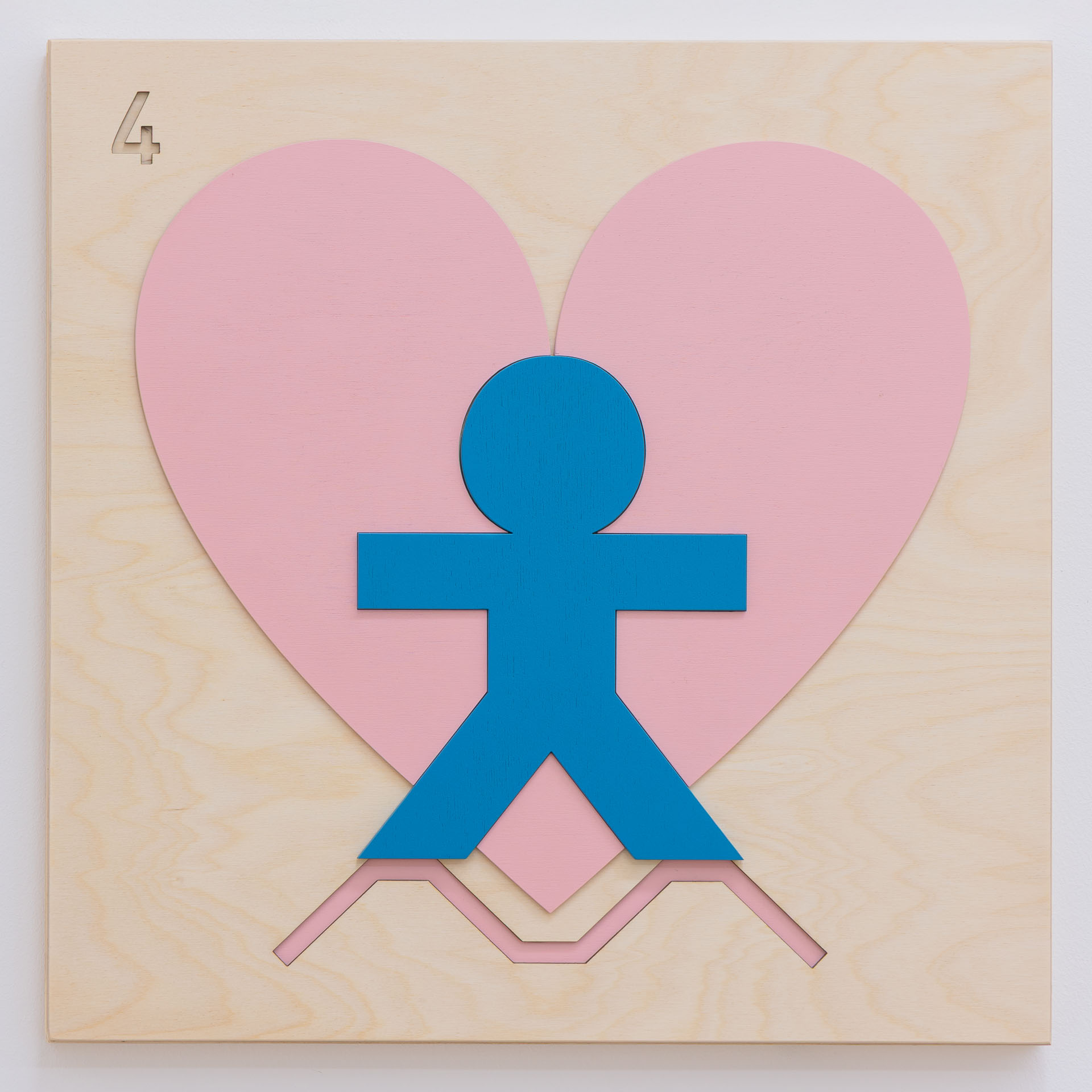
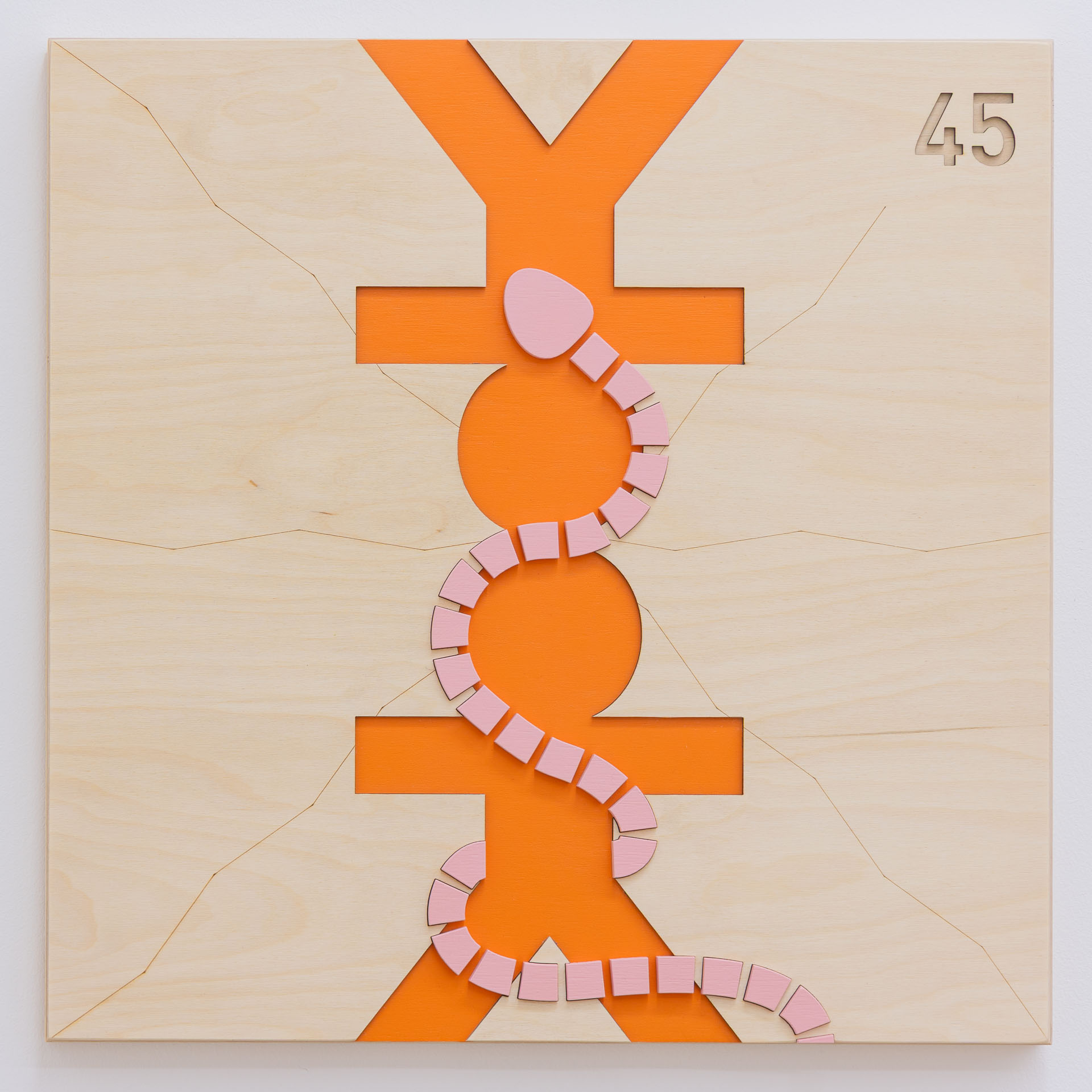
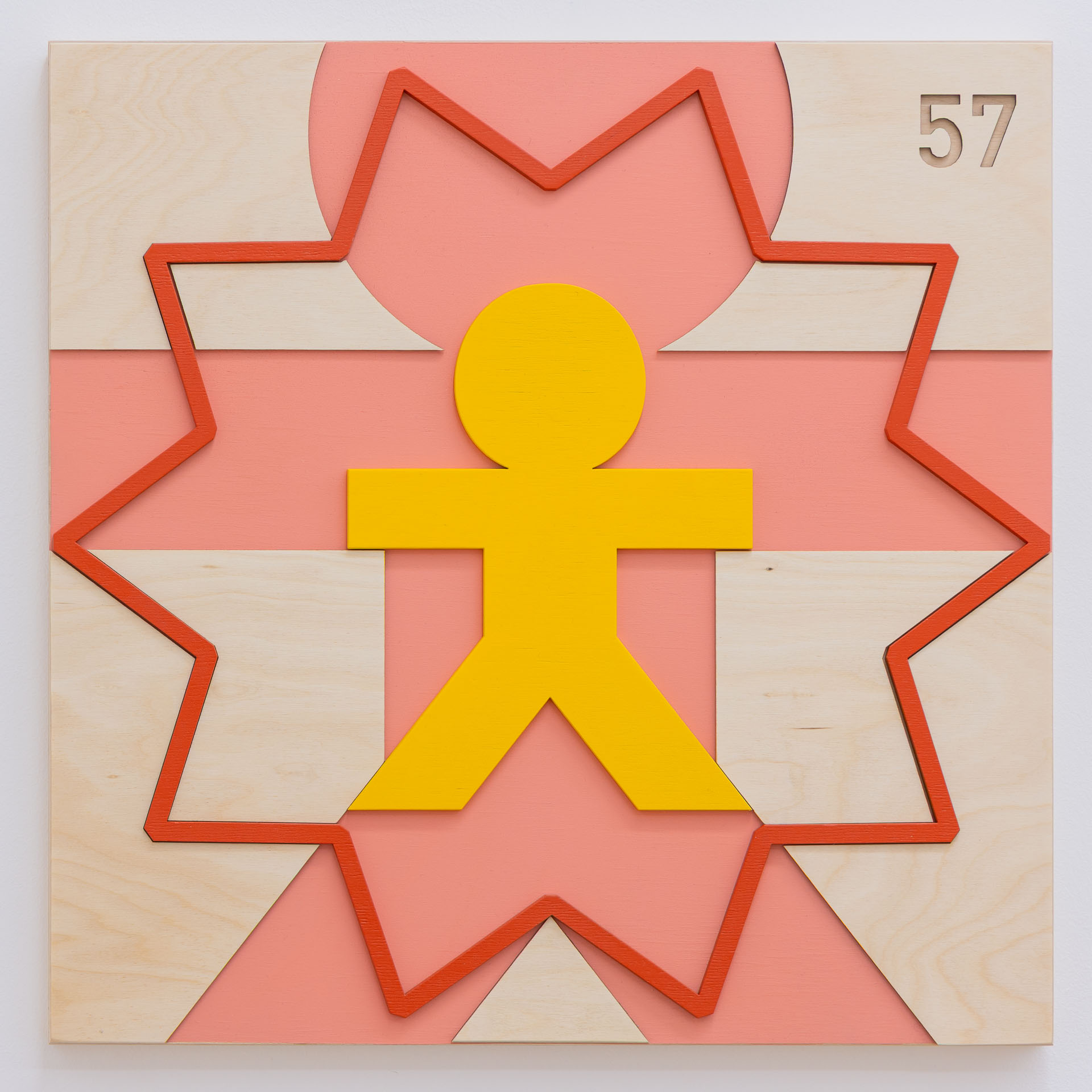
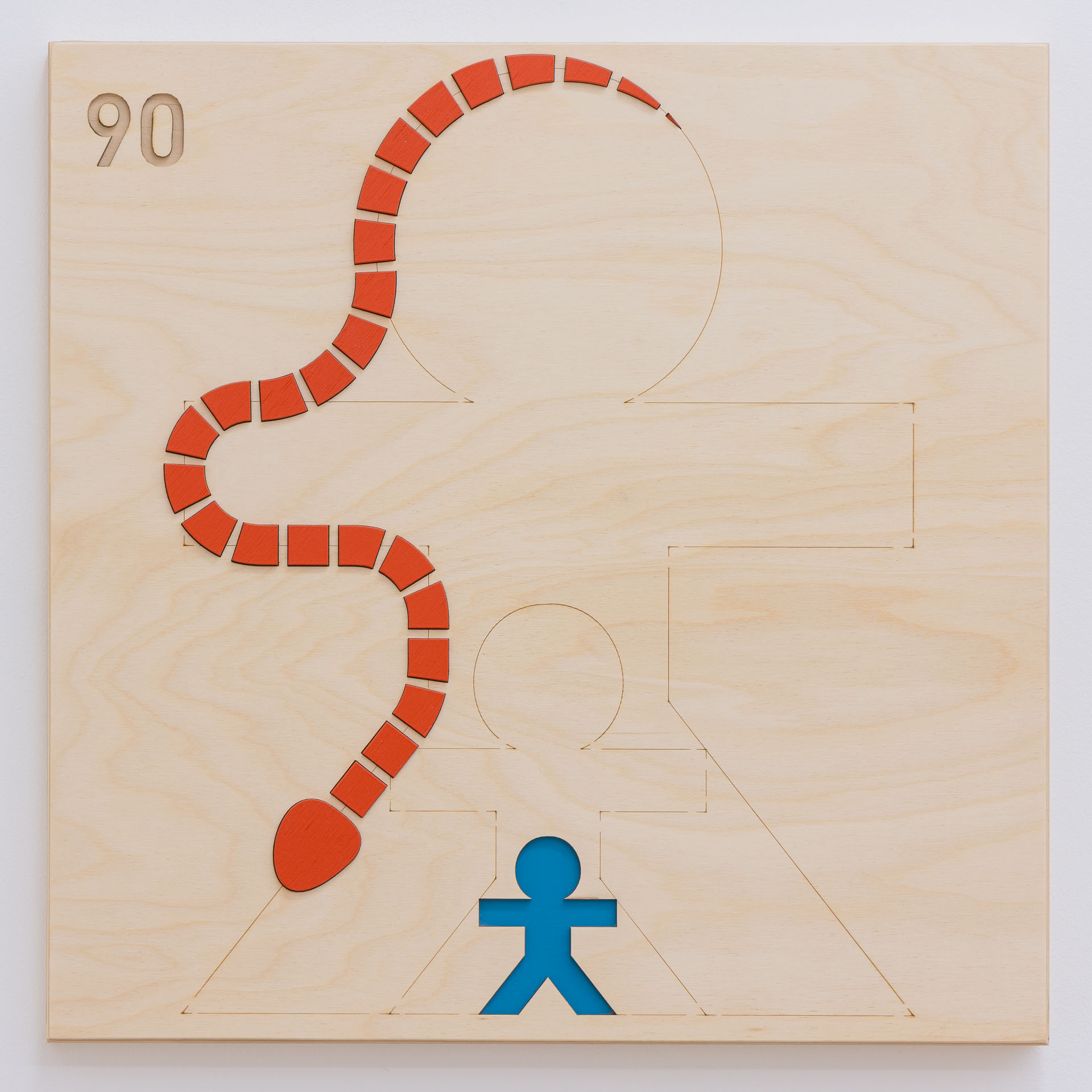
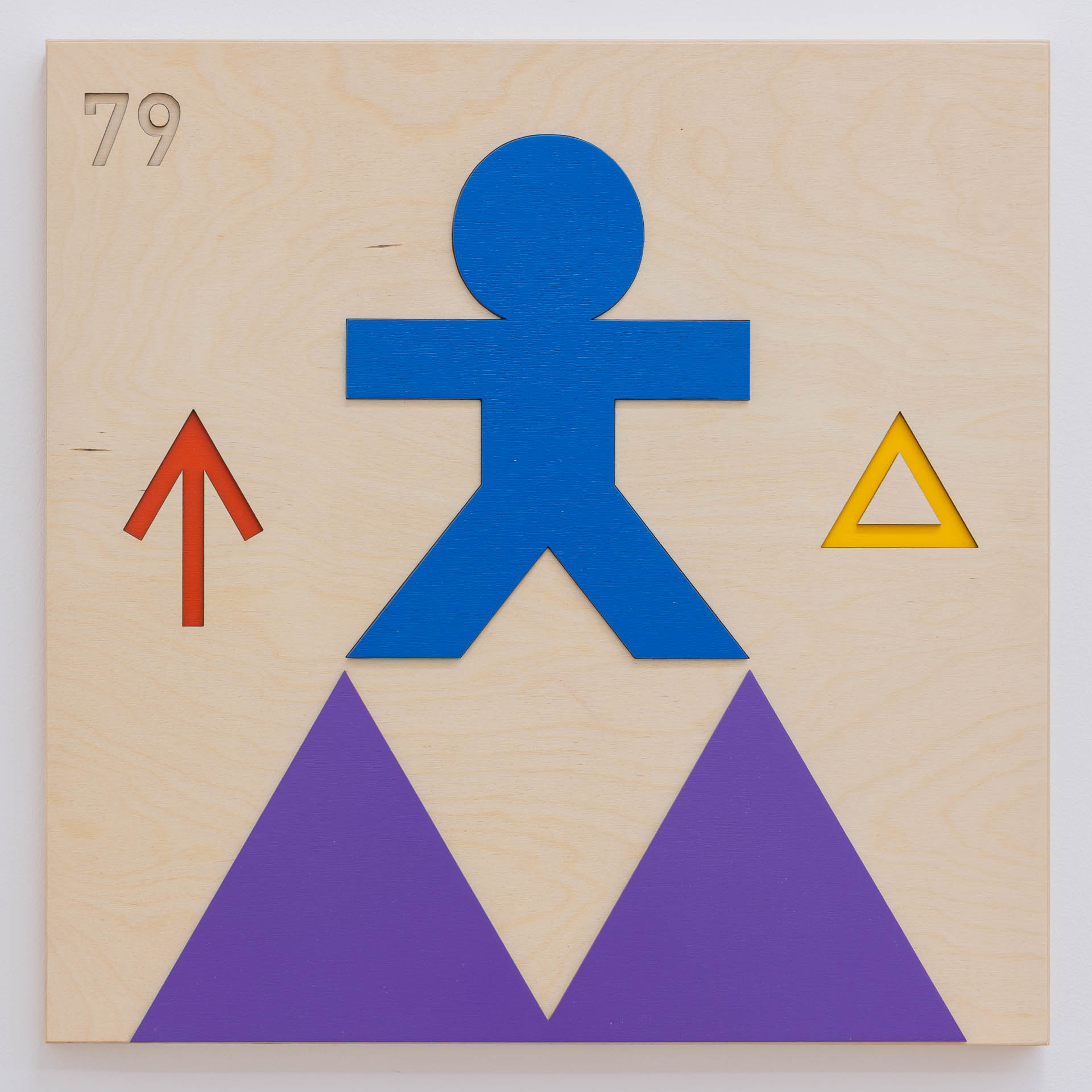
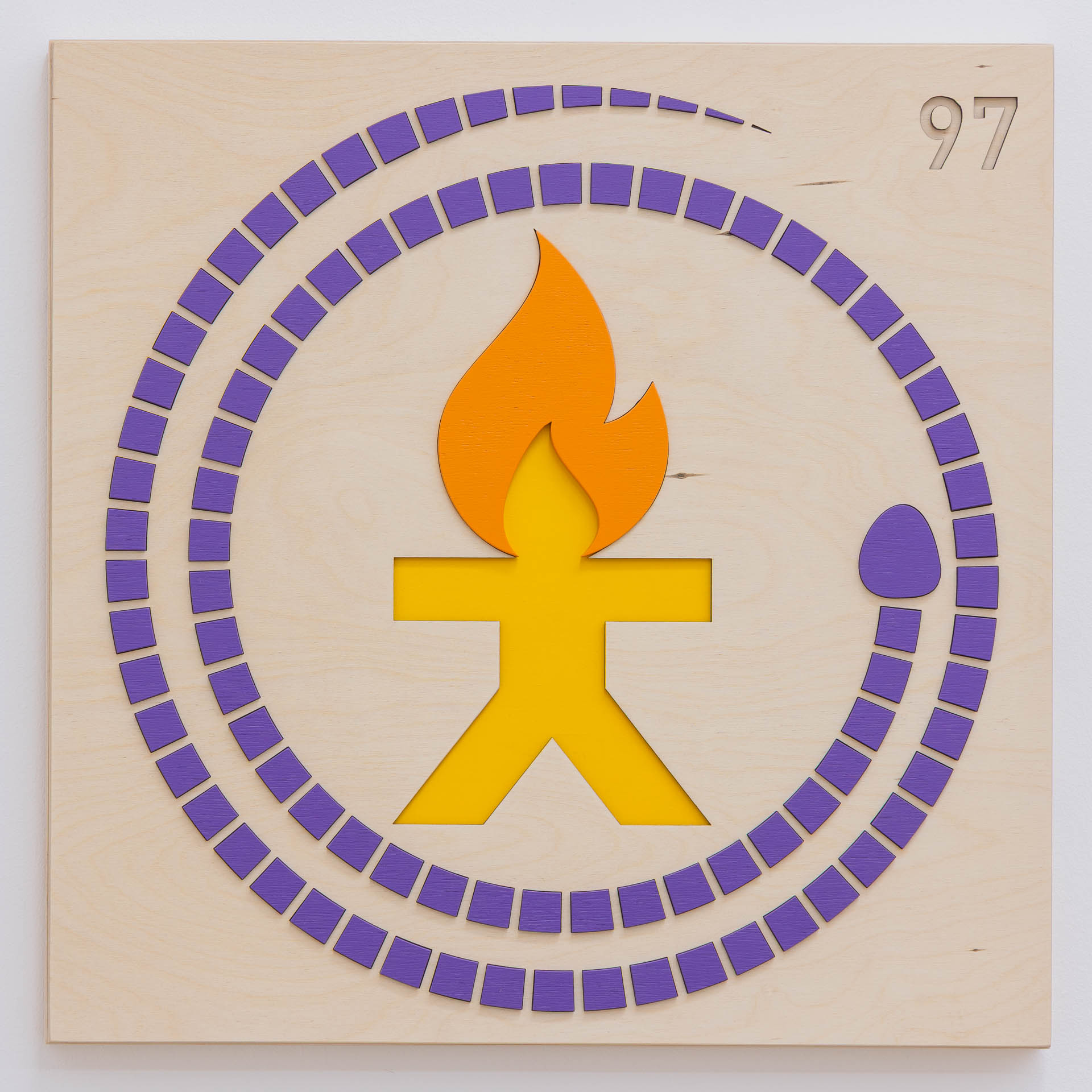
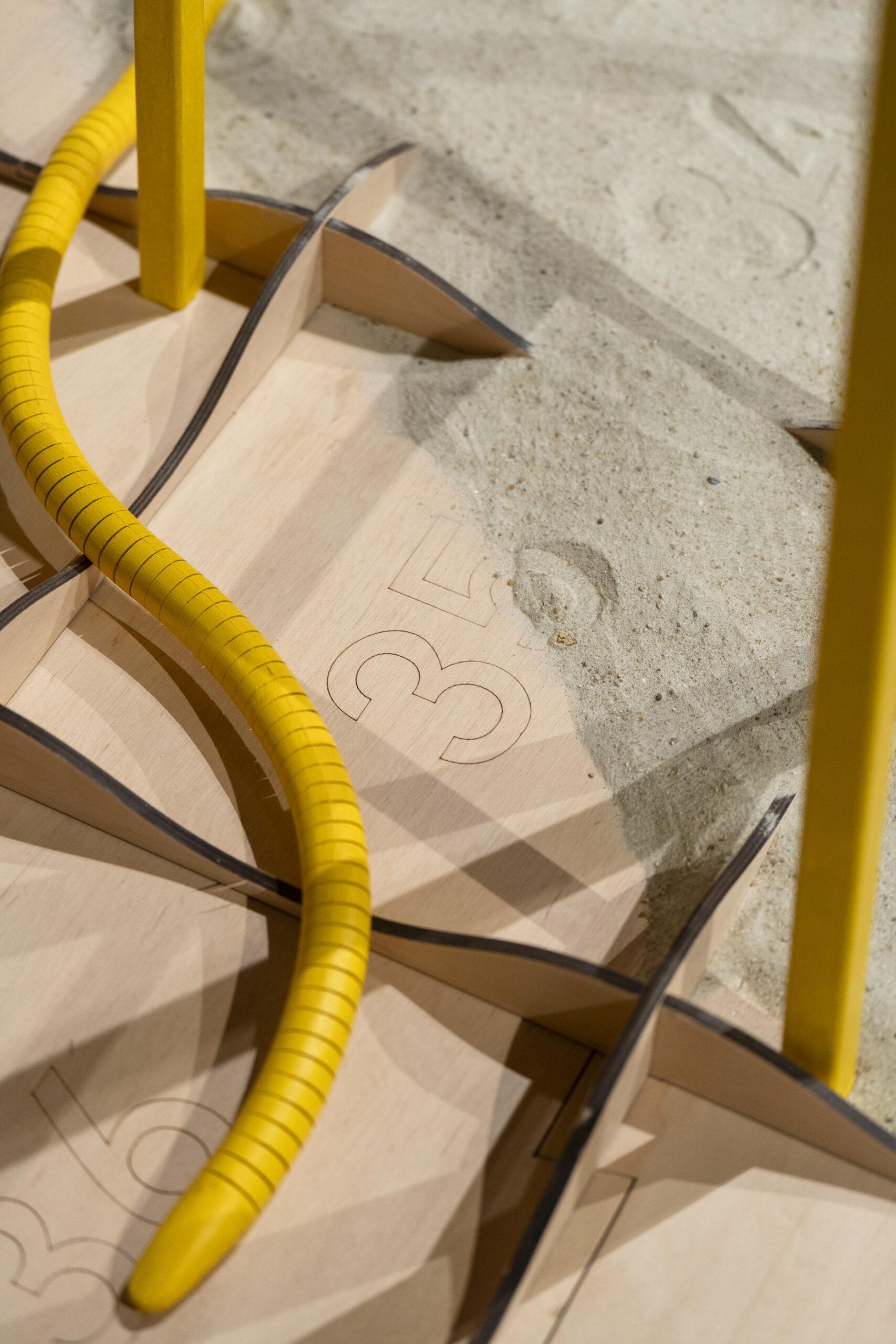
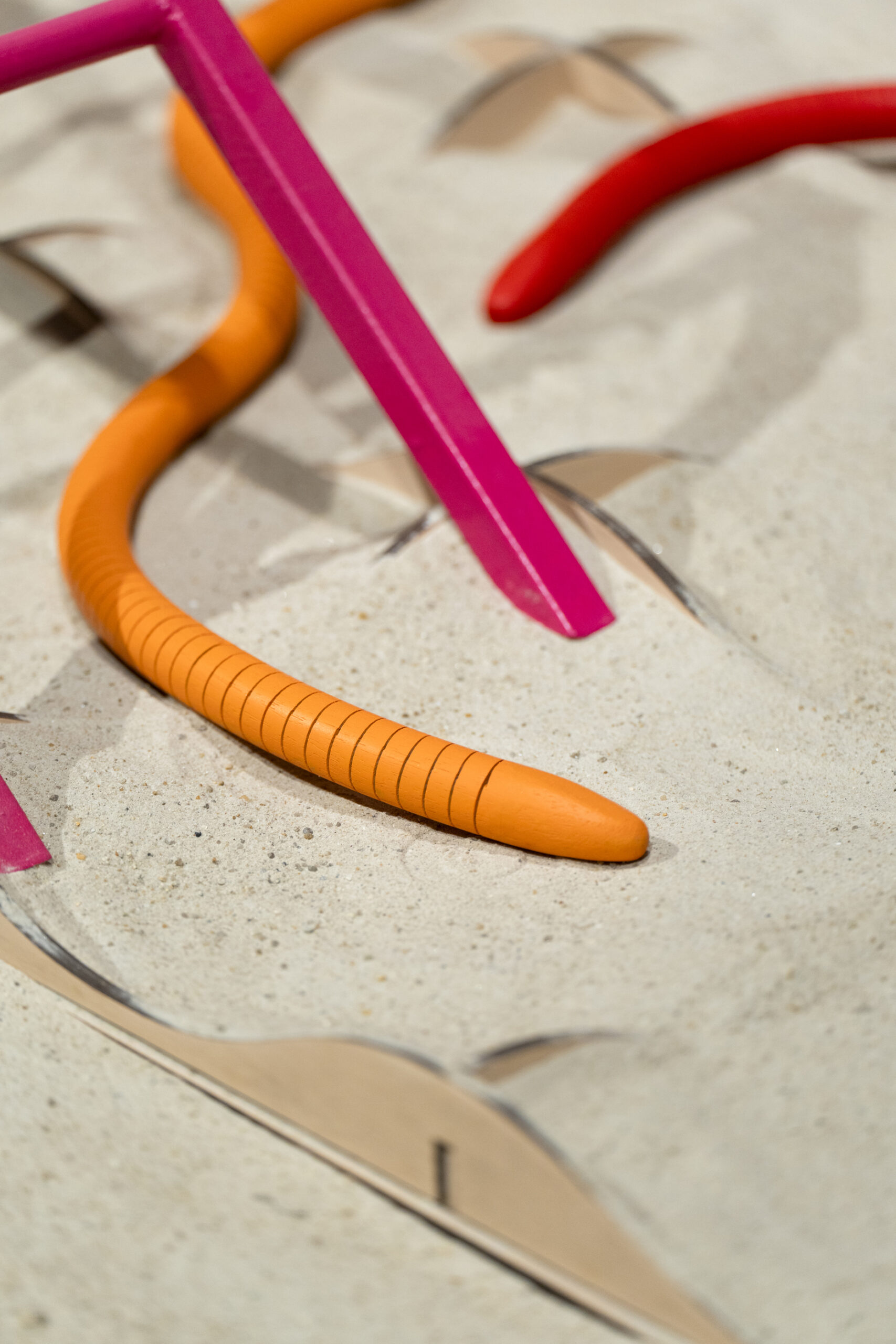
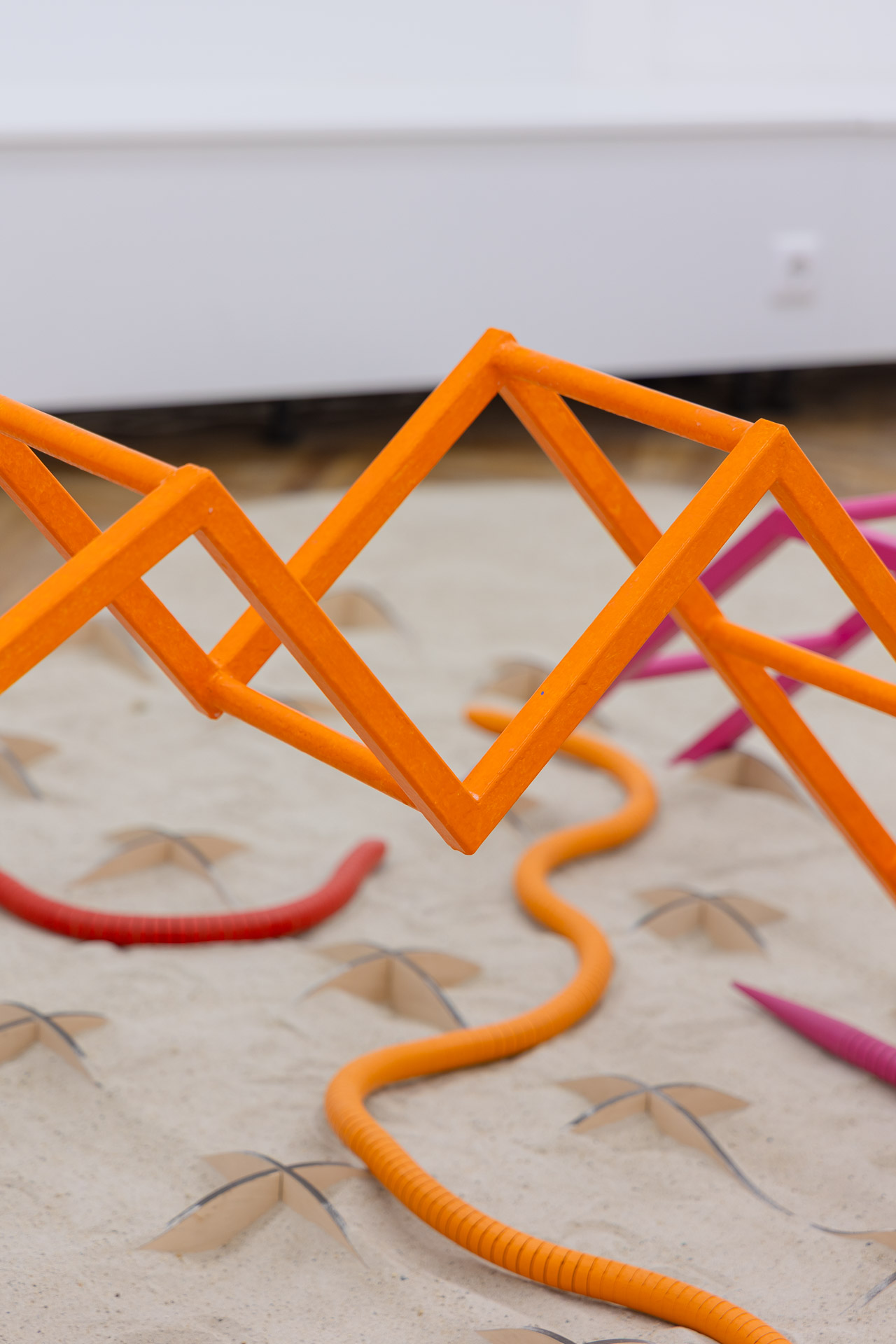
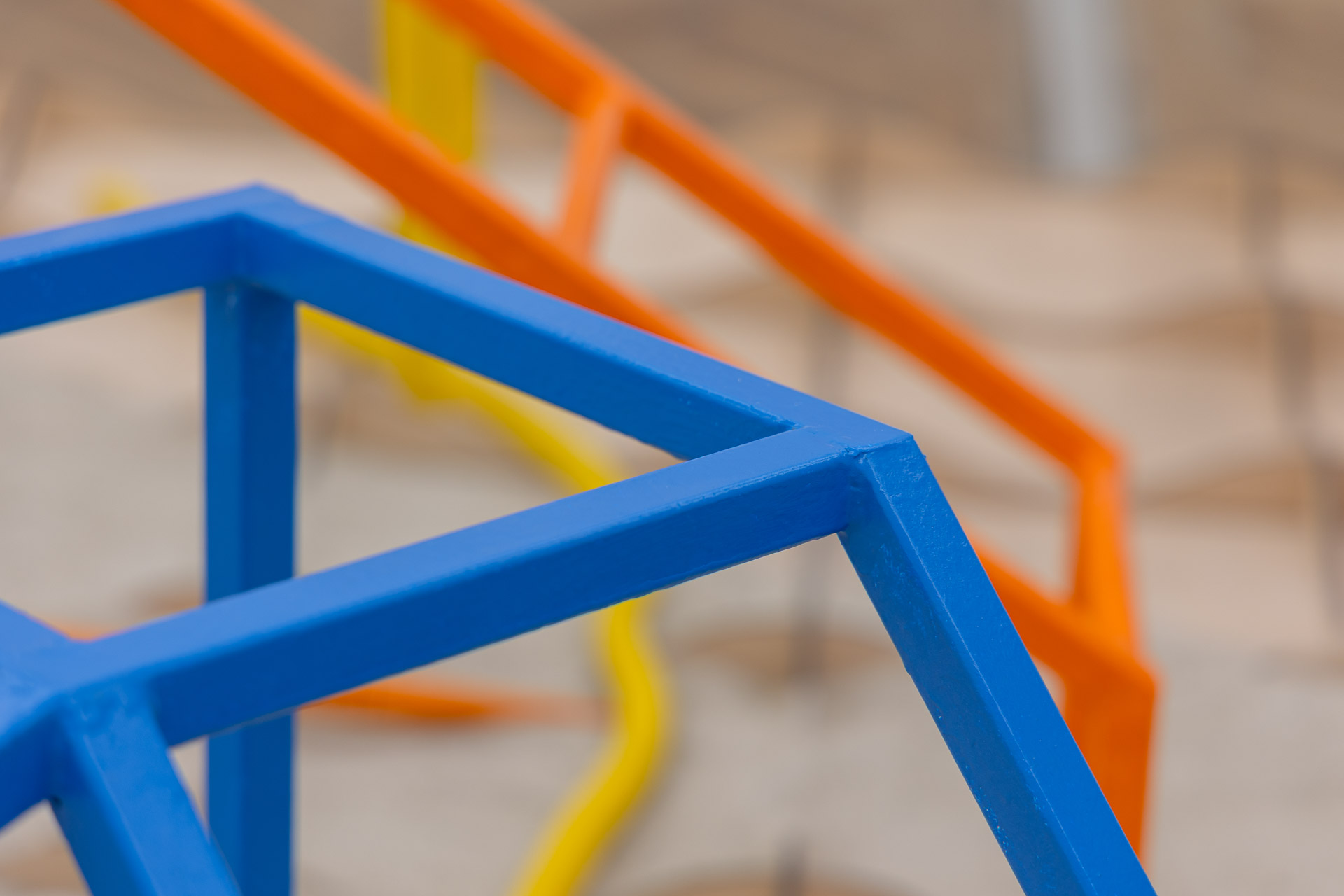
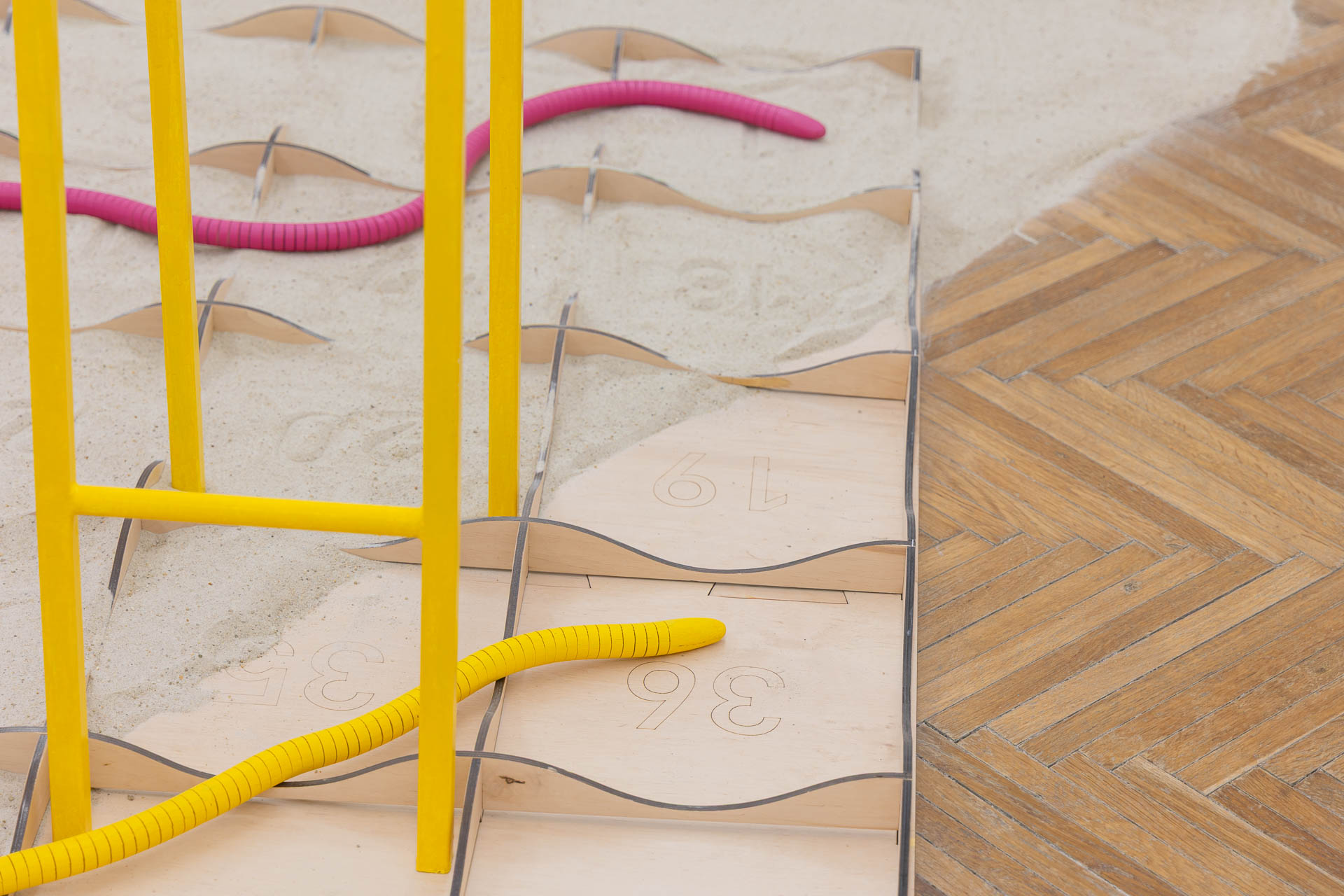
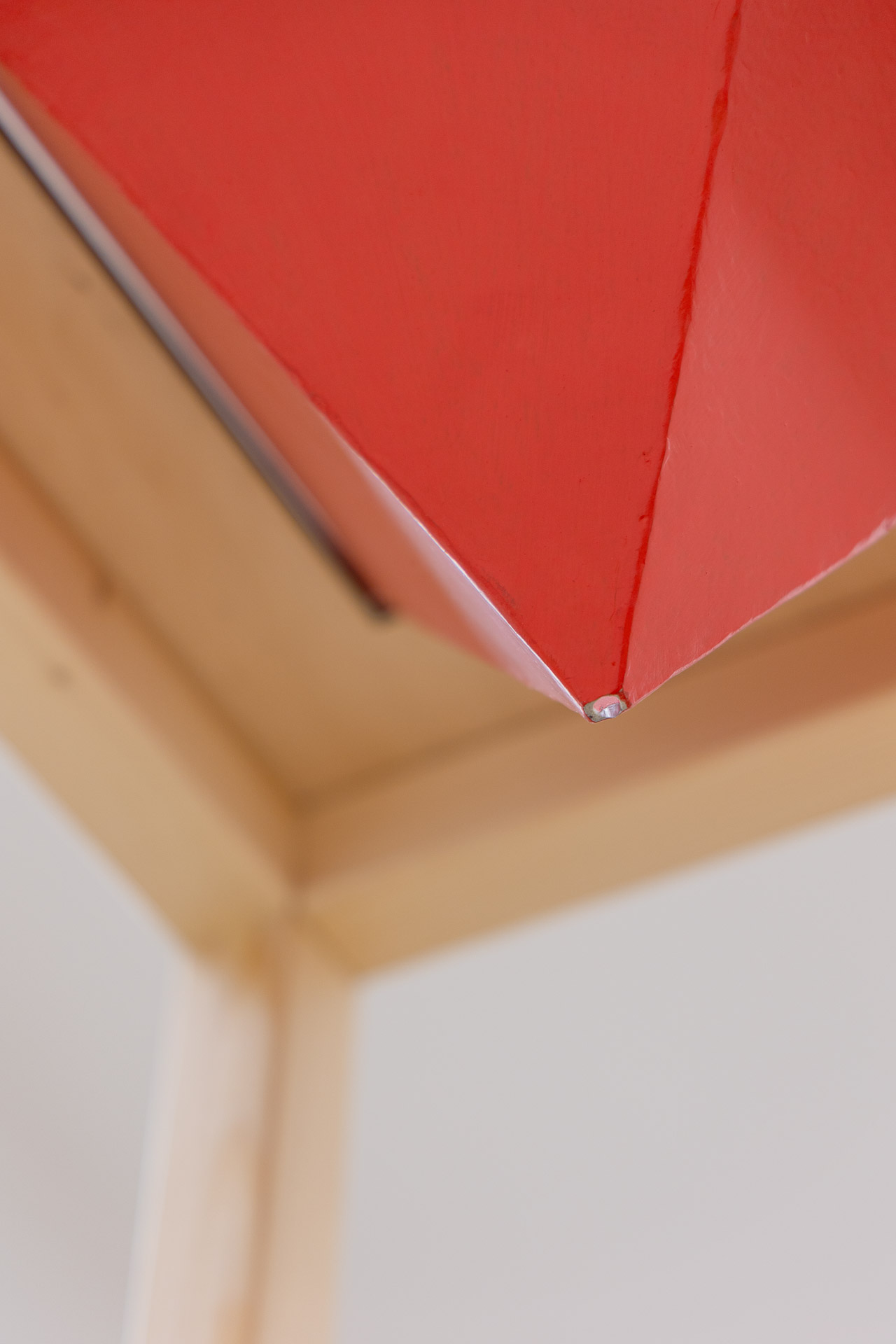
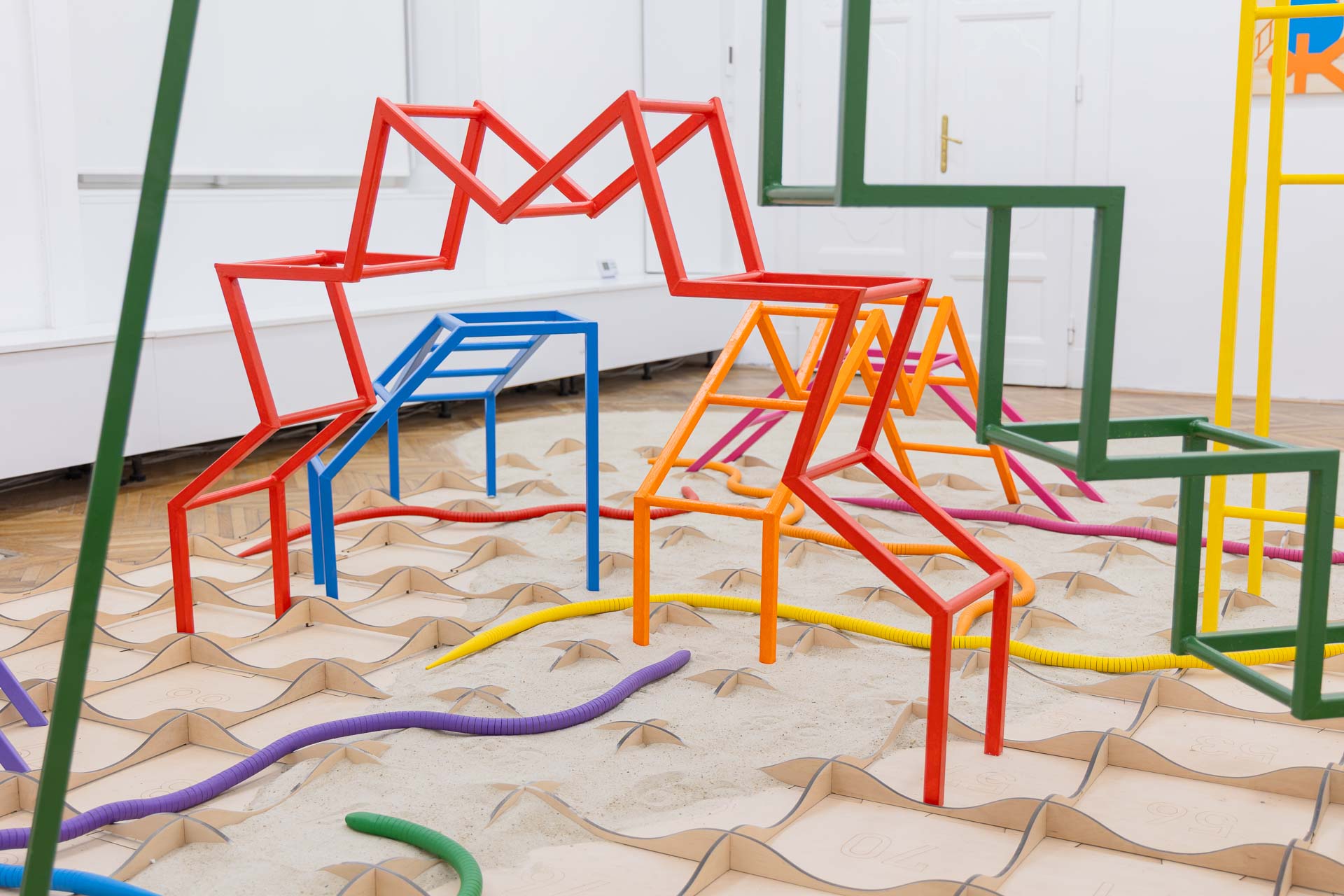
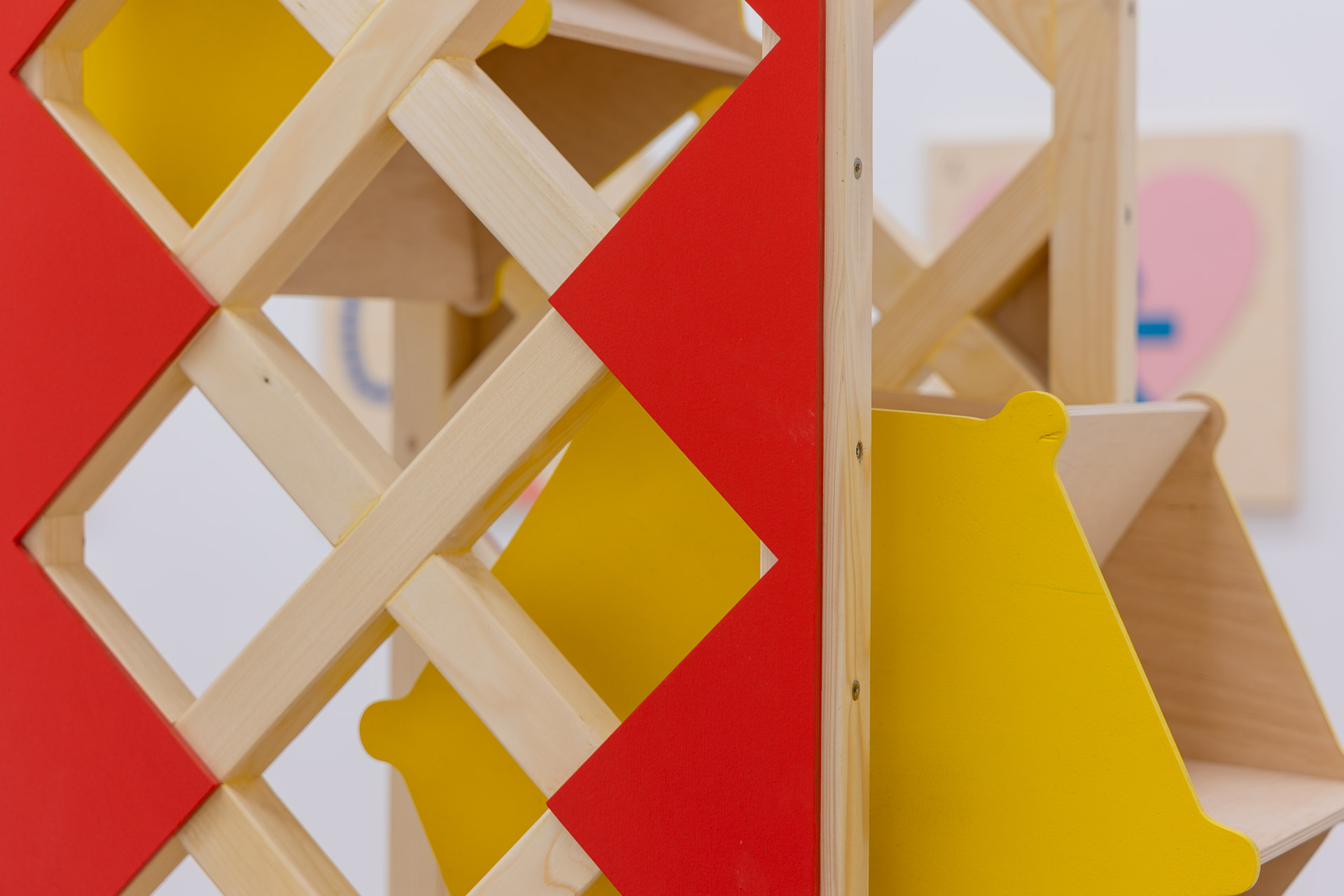
The installation, made of metal and wood elements, visually recalls the spaces of board games, playgrounds, and social structures. The ladders reference the structures of playground climbing frames, while the snakes evoke the aesthetics of wooden toys. The design of the sandpit takes shape both in the game board and in the sand mill, which serves as a „goal.” The sand, serving as the game board, reflects Márk Áron Éber’s model of social structure, which analyzes the class dynamics of Hungarian society after the fall of communism. The placement of the sand and the design of the game elements symbolize the challenges of social mobility and the constraints on individual choices, highlighting the boundaries imposed by social structures. The symbolism of snakes and ladders thus not only retains the game’s heritage but also reimagines its moral and social significance.
In dialogue with the theories of Mark Fisher and Byung-Chul Han, the exhibition explores the imperative of self-optimization and its psychological consequences in neoliberal societies. Following Fisher’s critique of the depressive nature of “capitalist realism” and Han’s critique of the „performance-driven society,” narratives surrounding work, success, and failure are transposed into the realm of play. The question of whether mobility is a genuine possibility or merely constrained by structural forces is not addressed as an abstract theoretical discussion but is instead articulated spatially and symbolically, making it the central organizing principle of the exhibition.






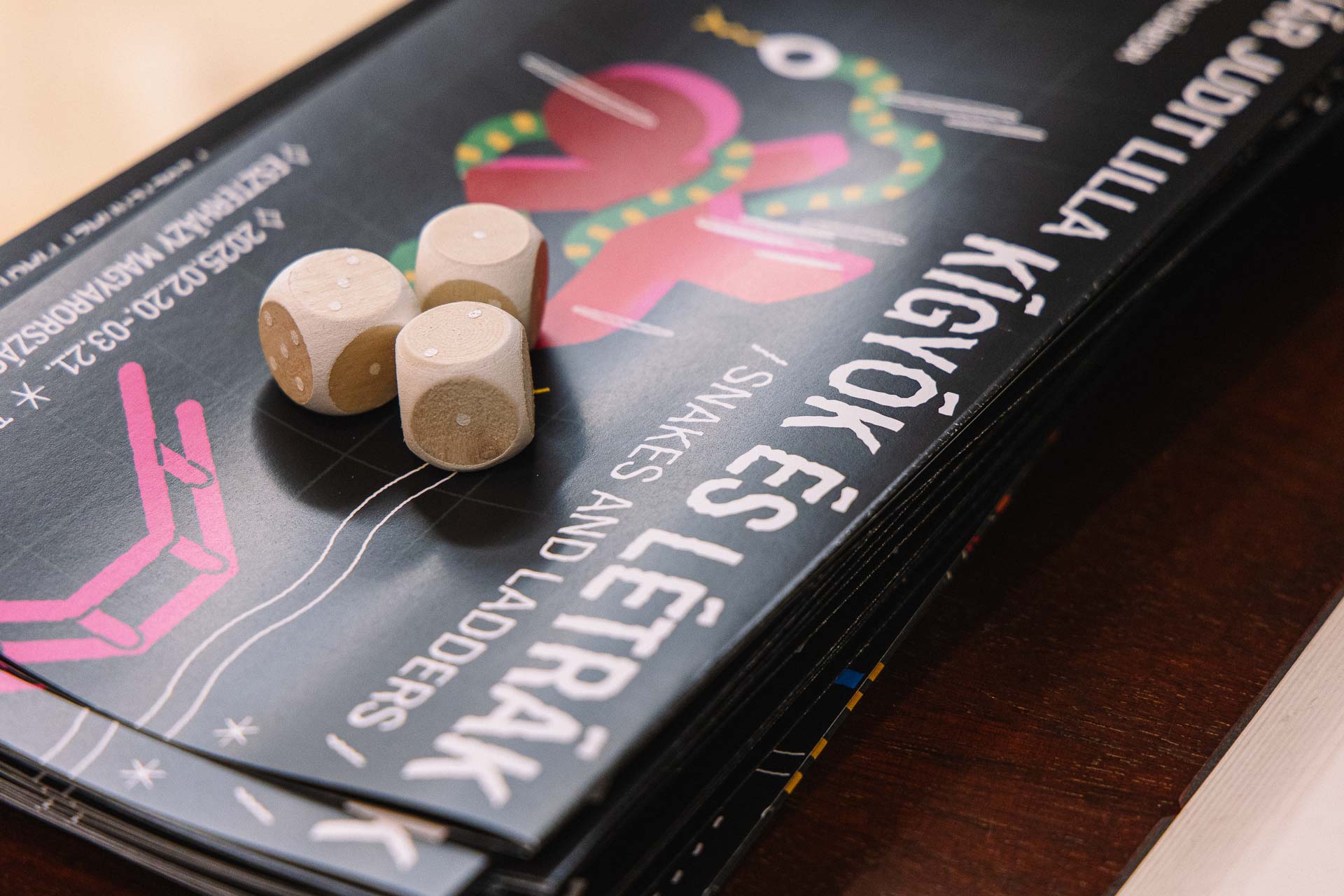
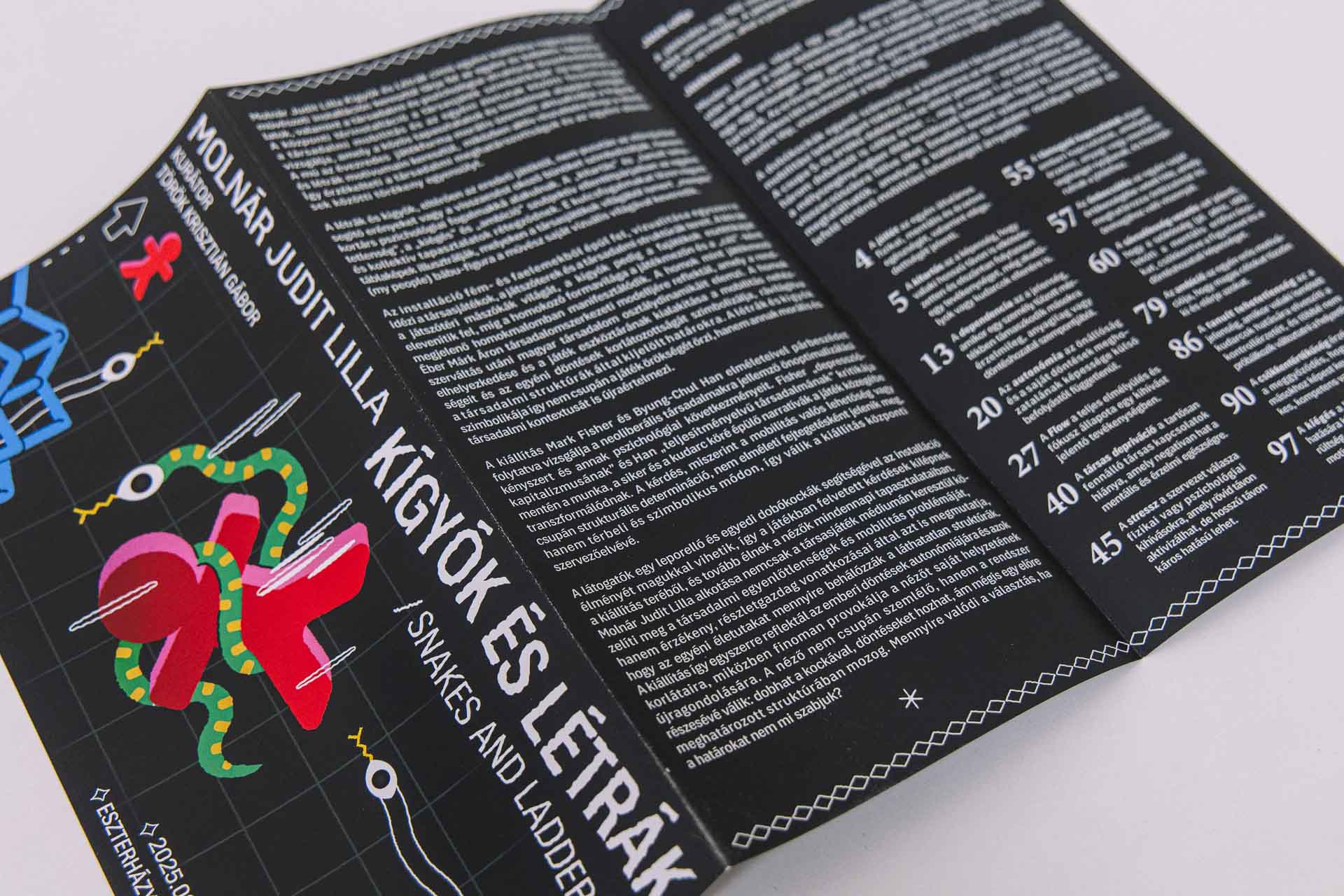
With the help of an accordion booklet and custom dice, visitors can take the experience of the exhibition with them, allowing the questions raised by the game to extend beyond the exhibition space and continue to resonate in the everyday experience of the viewer. Judit Lilla Molnár’s installation not only approaches the issue of social inequalities and mobility through the medium of board games but also demonstrates, with a nuanced and detailed approach, how individual life paths are interwoven with invisible structures. The exhibition reflects both on the autonomy of human choices and their limitations, while subtly prompting the viewer to reconsider their own situation. The viewer is not merely an observer but an active participant in the system: rolling the dice, making choices—yet always within a predetermined structure. How real is choice when we do not define the boundaries?
Krisztán Gábor Török – curator